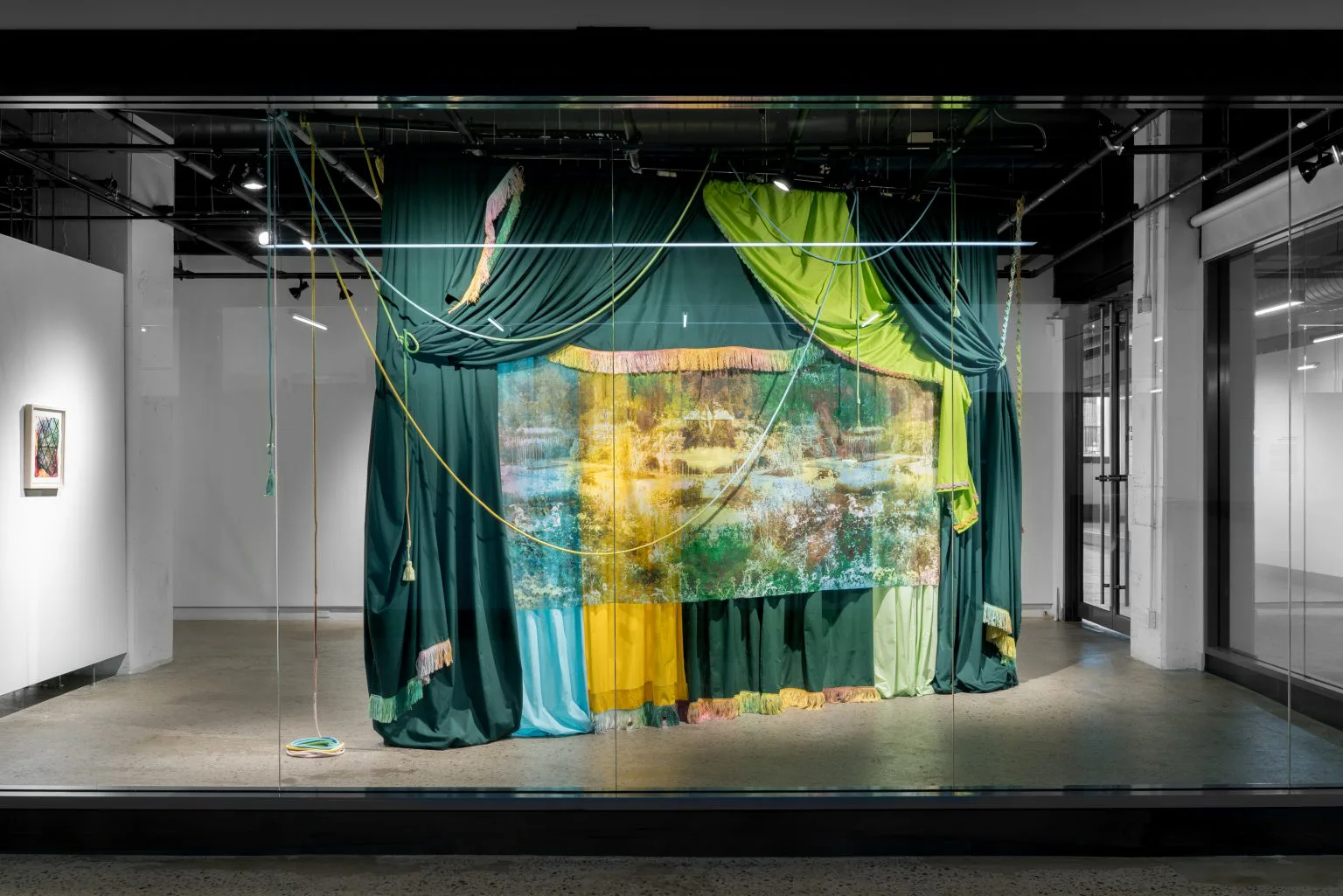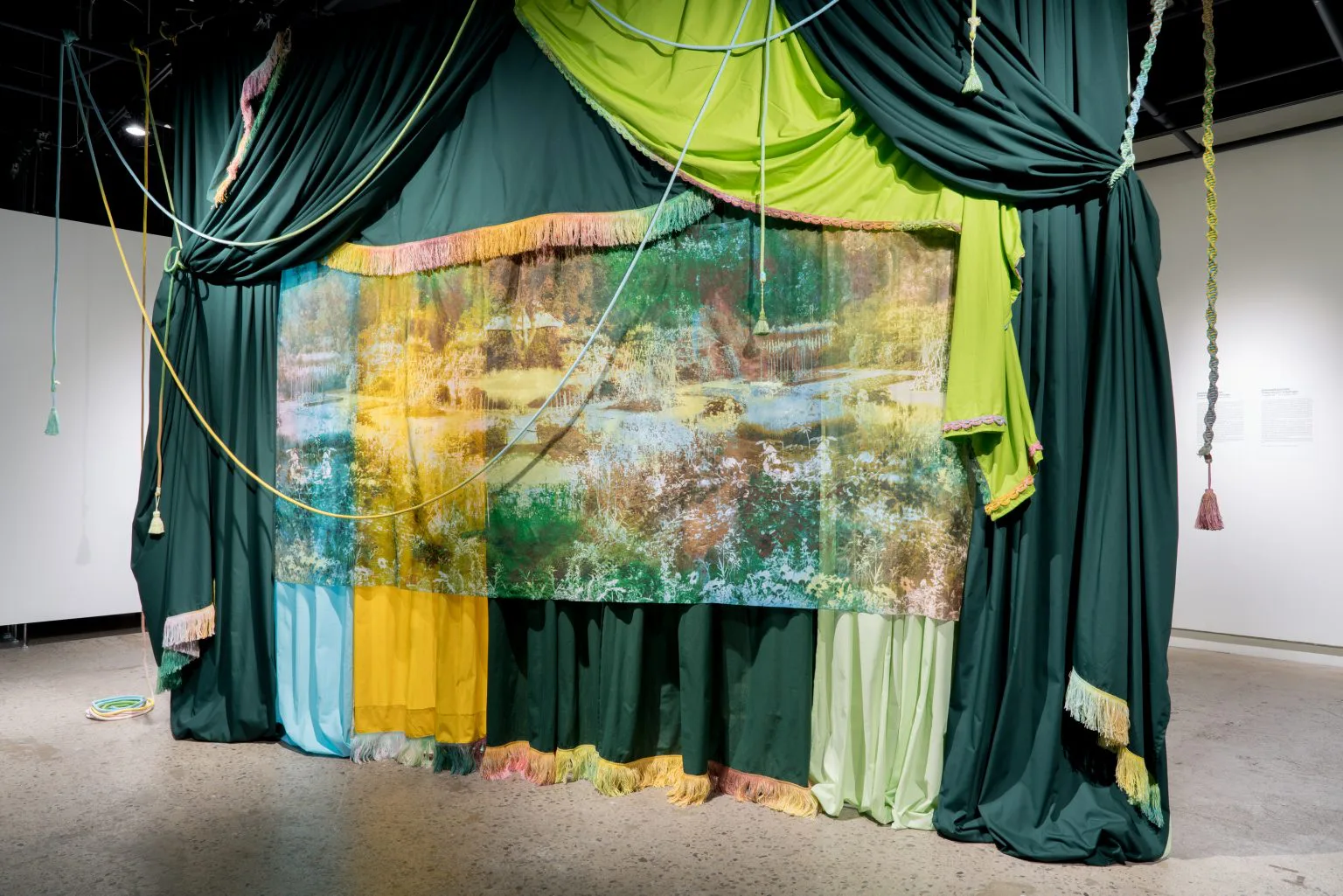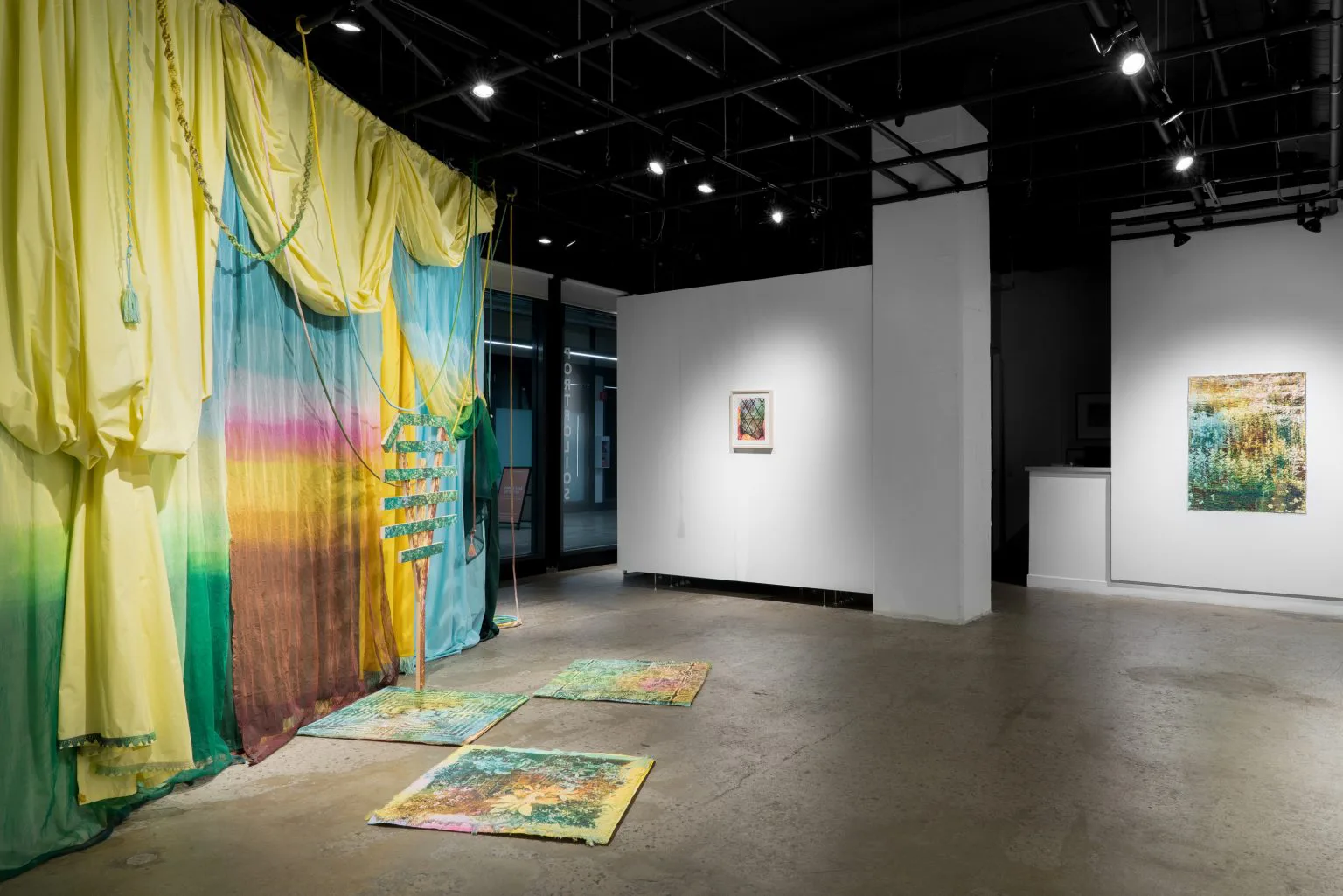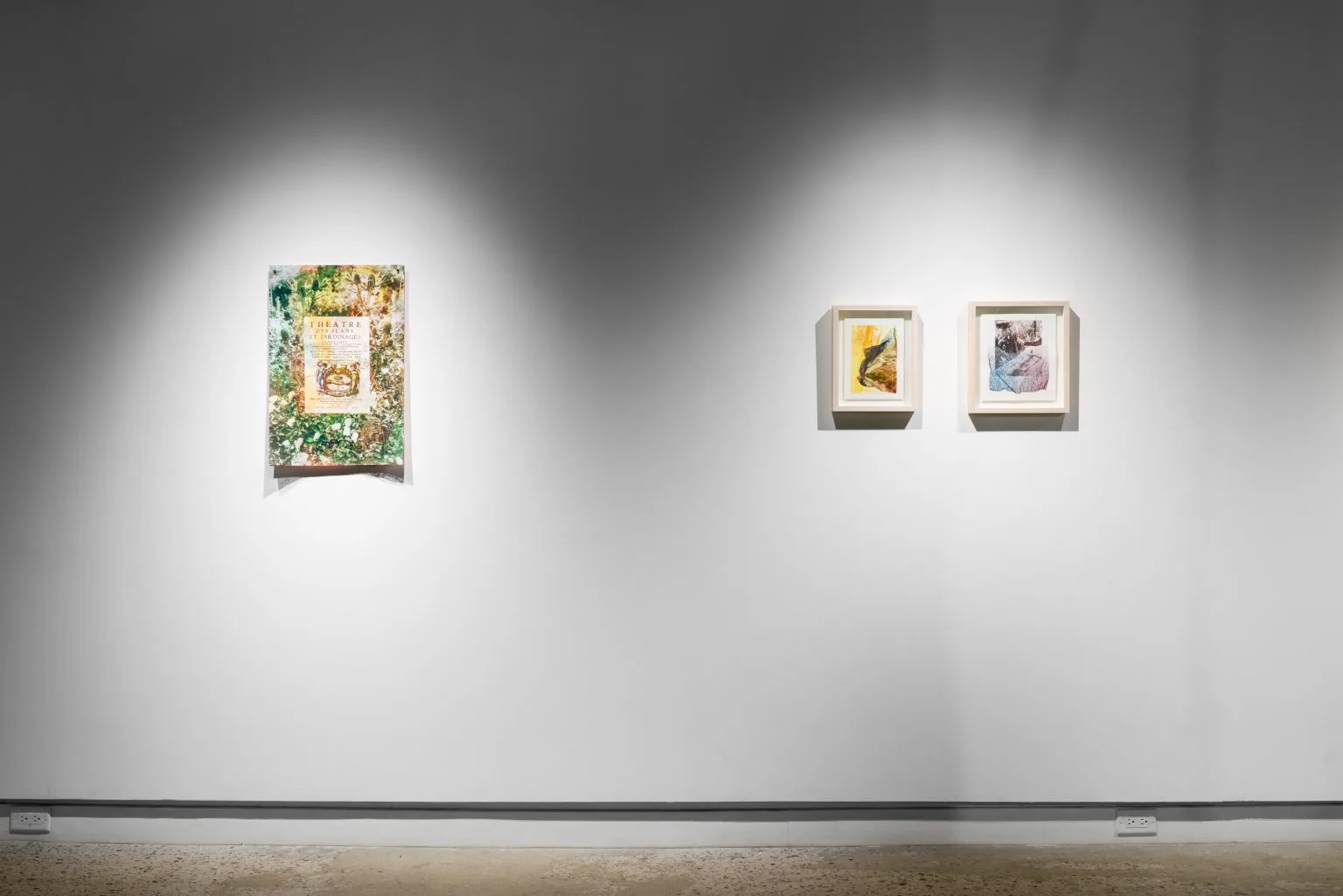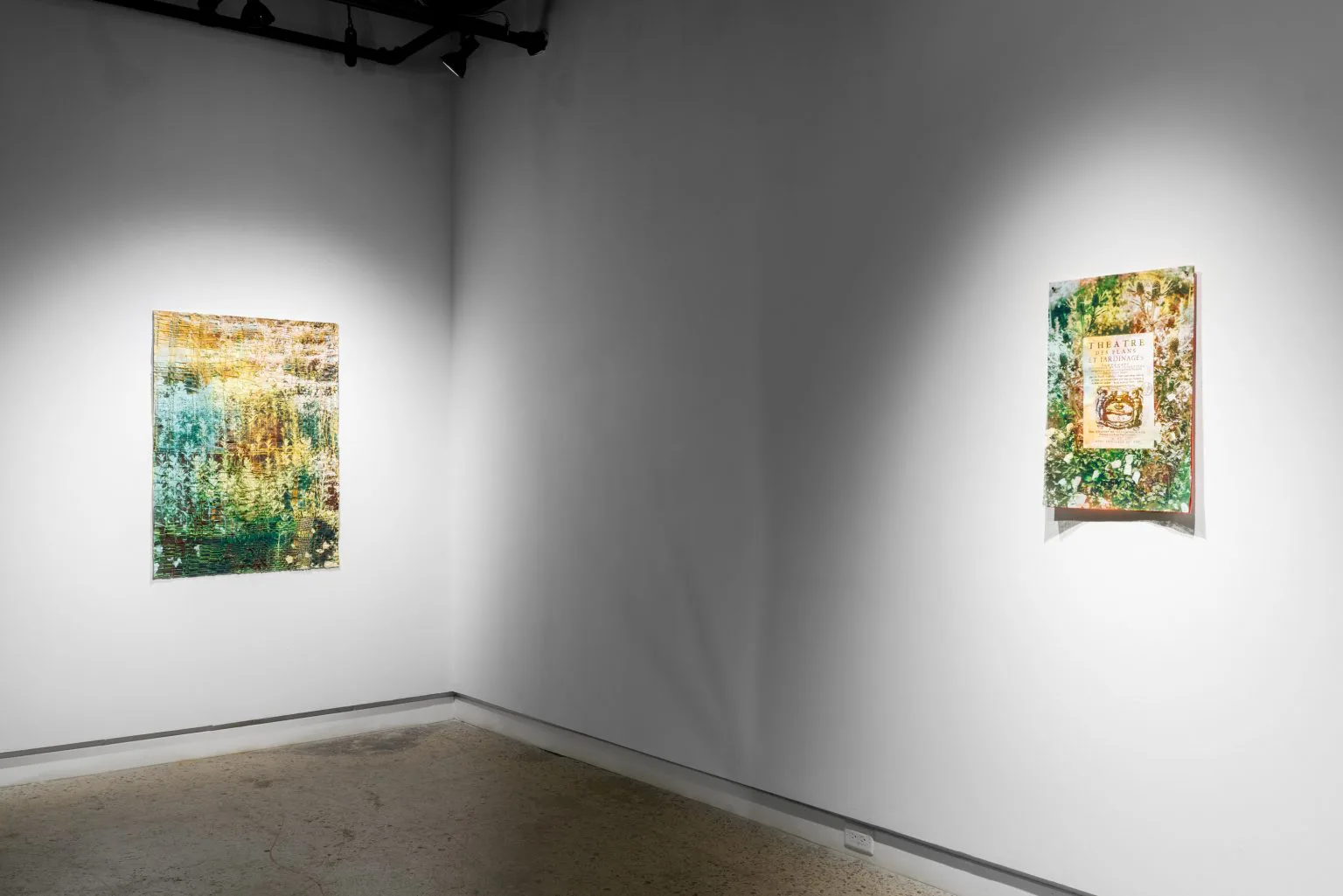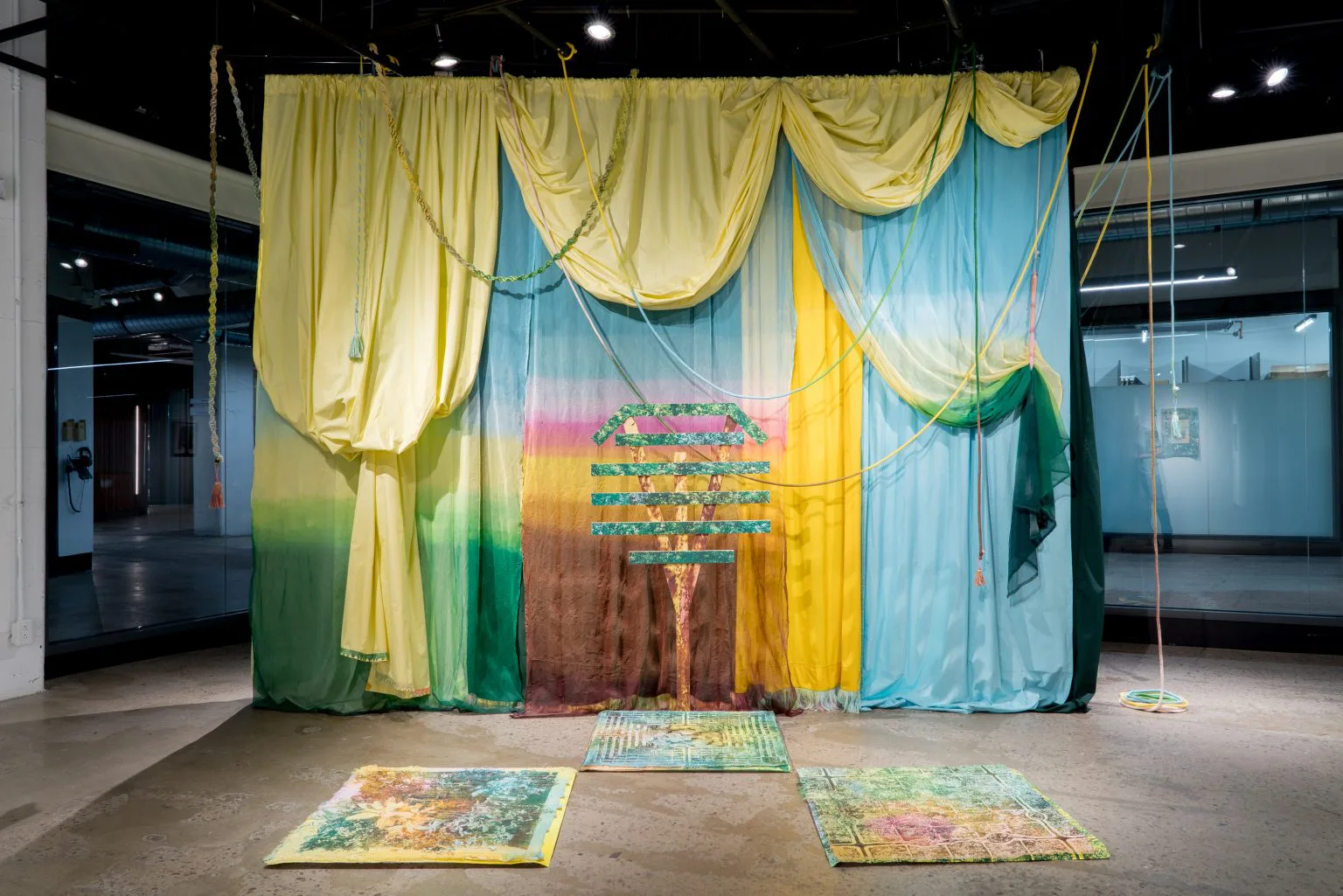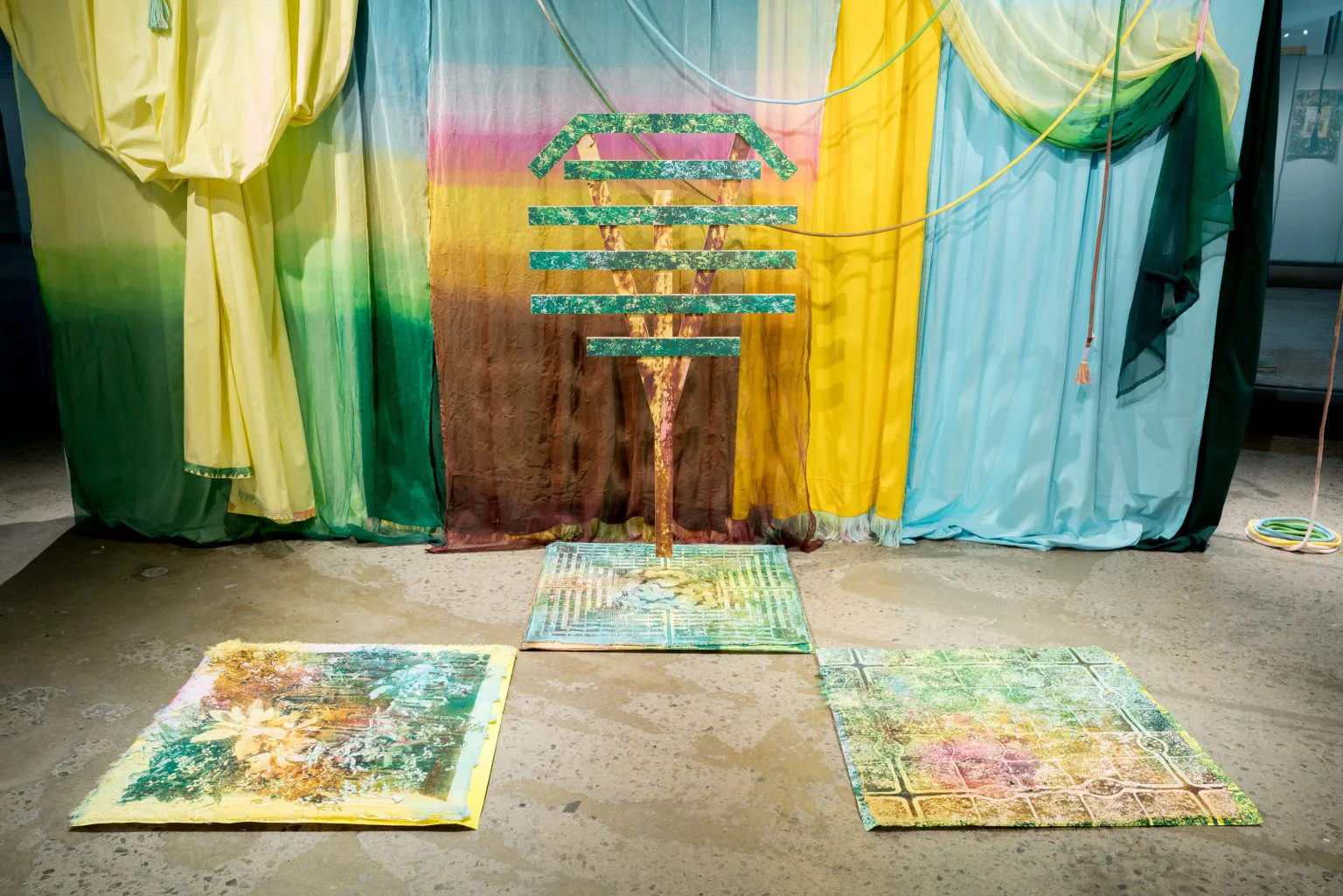
A curtain as an infinite garden; an earth lined with impossible natures… Cassandre Boucher, at Atelier Circulaire, questions our penchant for staging the wild places that surround us, and our impulses to domesticate nature to satisfy our desire of control over it or to indulge into aesthetic concerns.
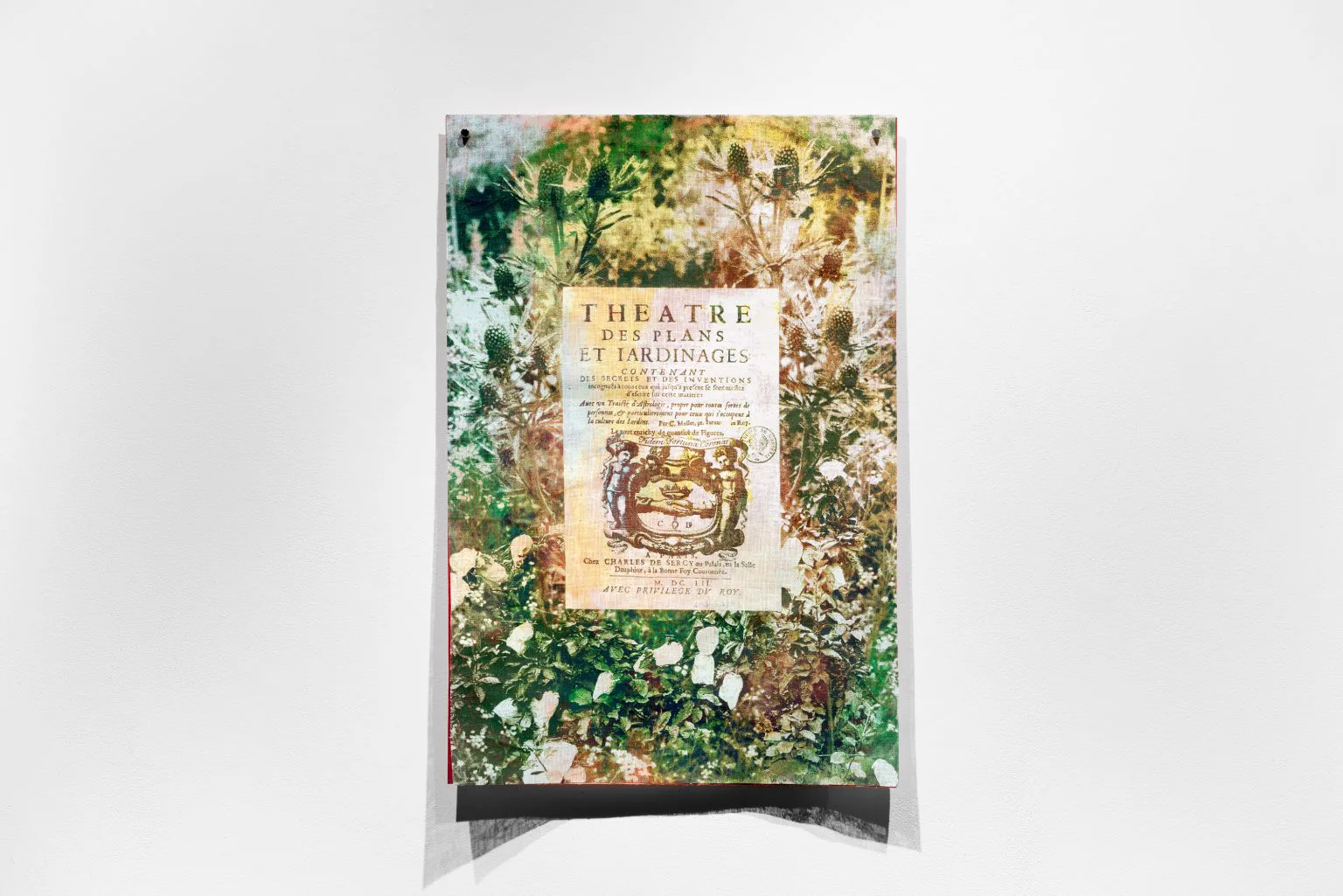
Her recent discovery of Claude Mollet’s “Théâtre des plans et jardinages”, published in 1652, quickly became the inspiration for her current body of work. Claude Mollet was the first gardener of the king under the reigns of Henri IV and Louis Xiii, and Mollet’s treatise reflects on the principles of pruning and cutting that lead to the trend of maintaining a well-tended garden far removed from the chaos of nature. Boucher was fascinated by this space, almost entirely shaped by human hands, described and enhanced by the man who was to look after the “Jardin des Tuileries” in France for many years. The artist sees in it a “disturbing form of contamination” between the notions of theater and gardening.
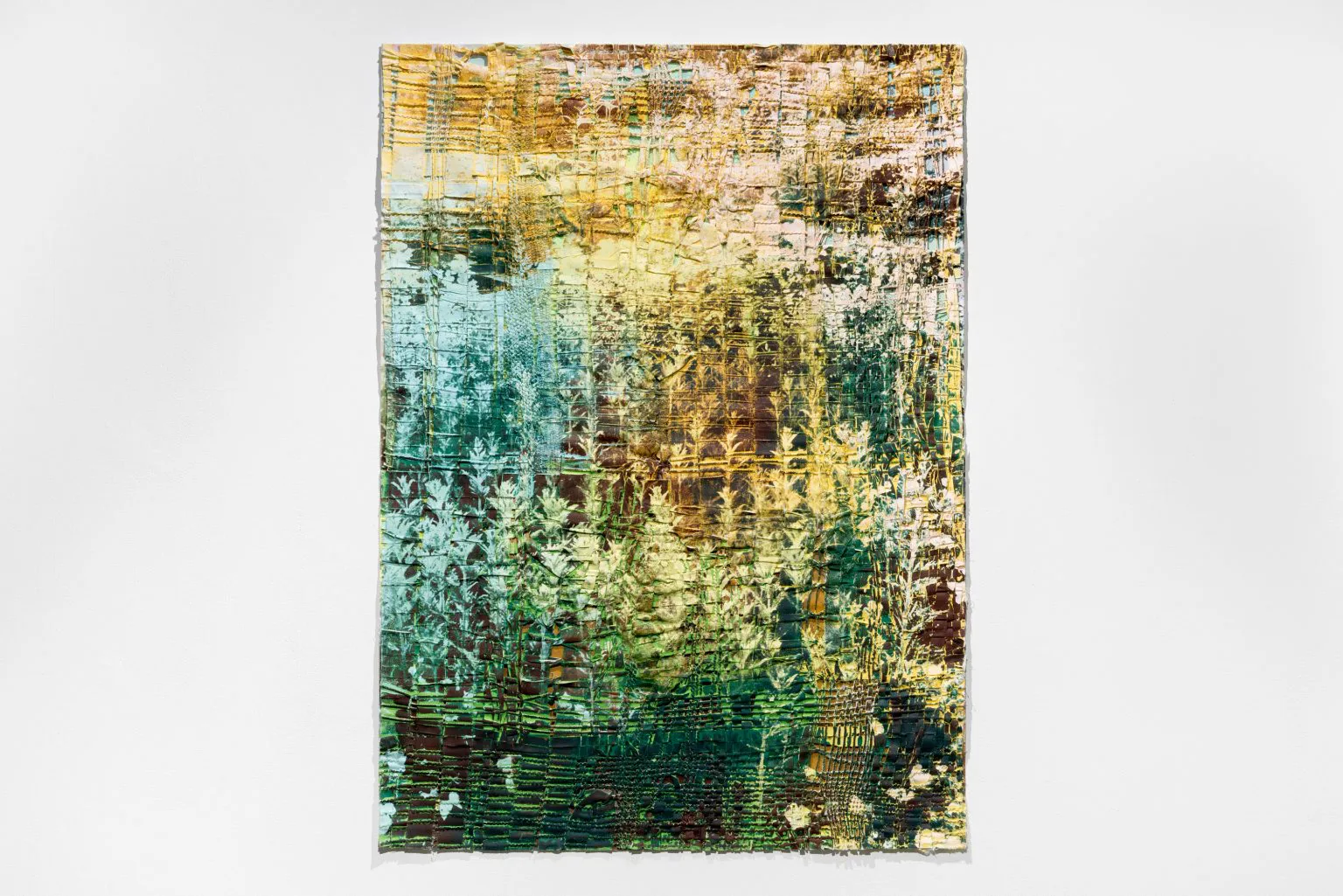
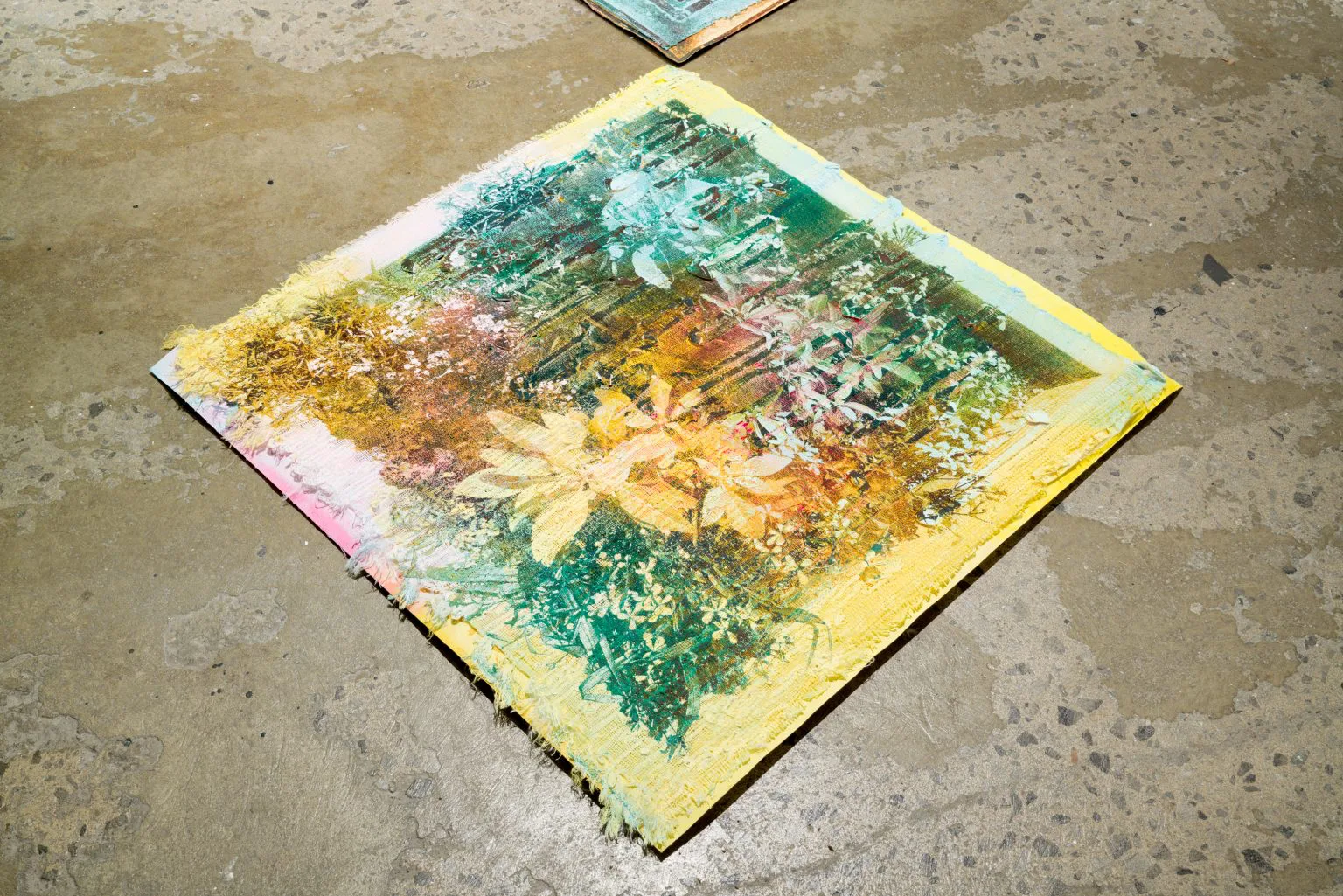
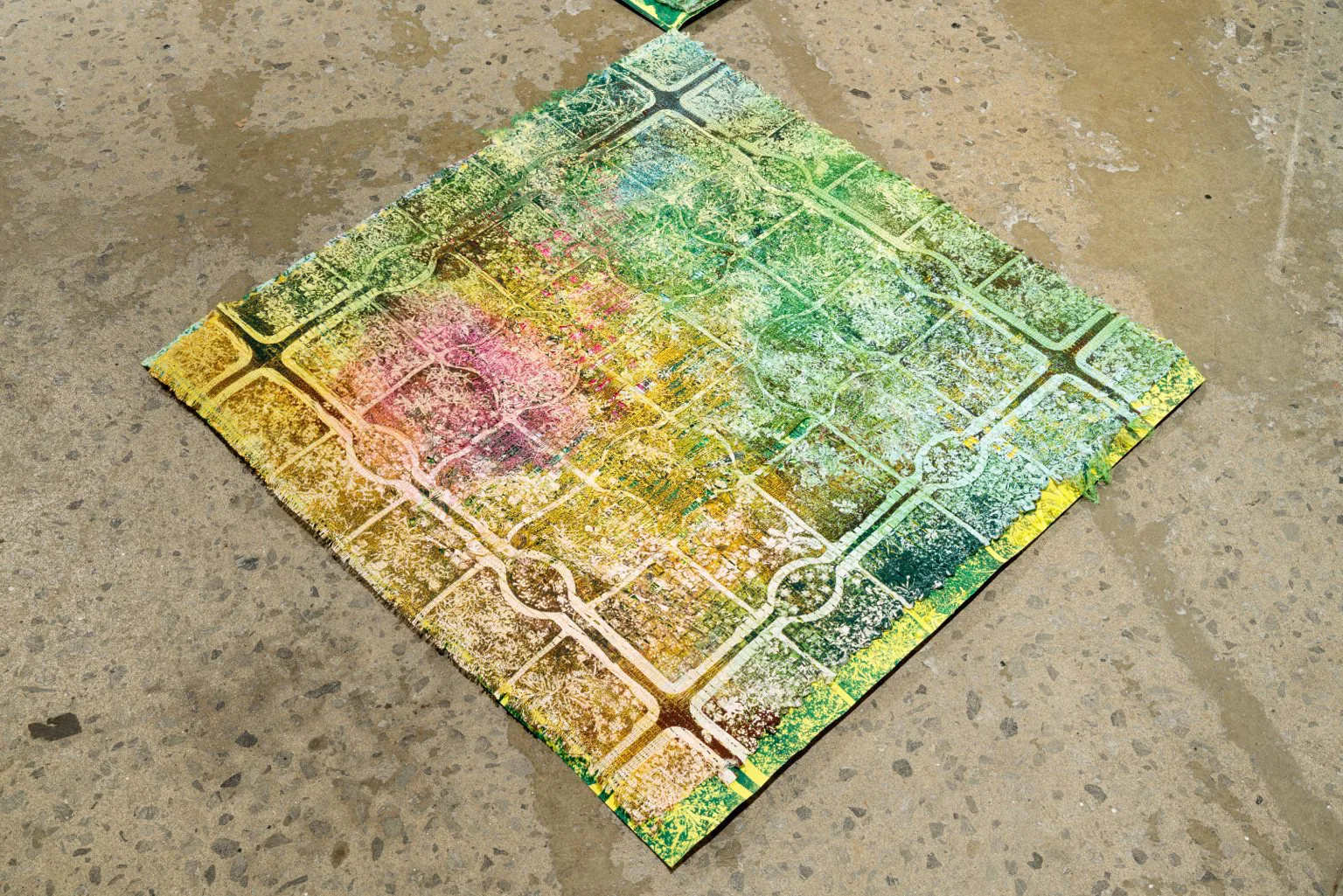
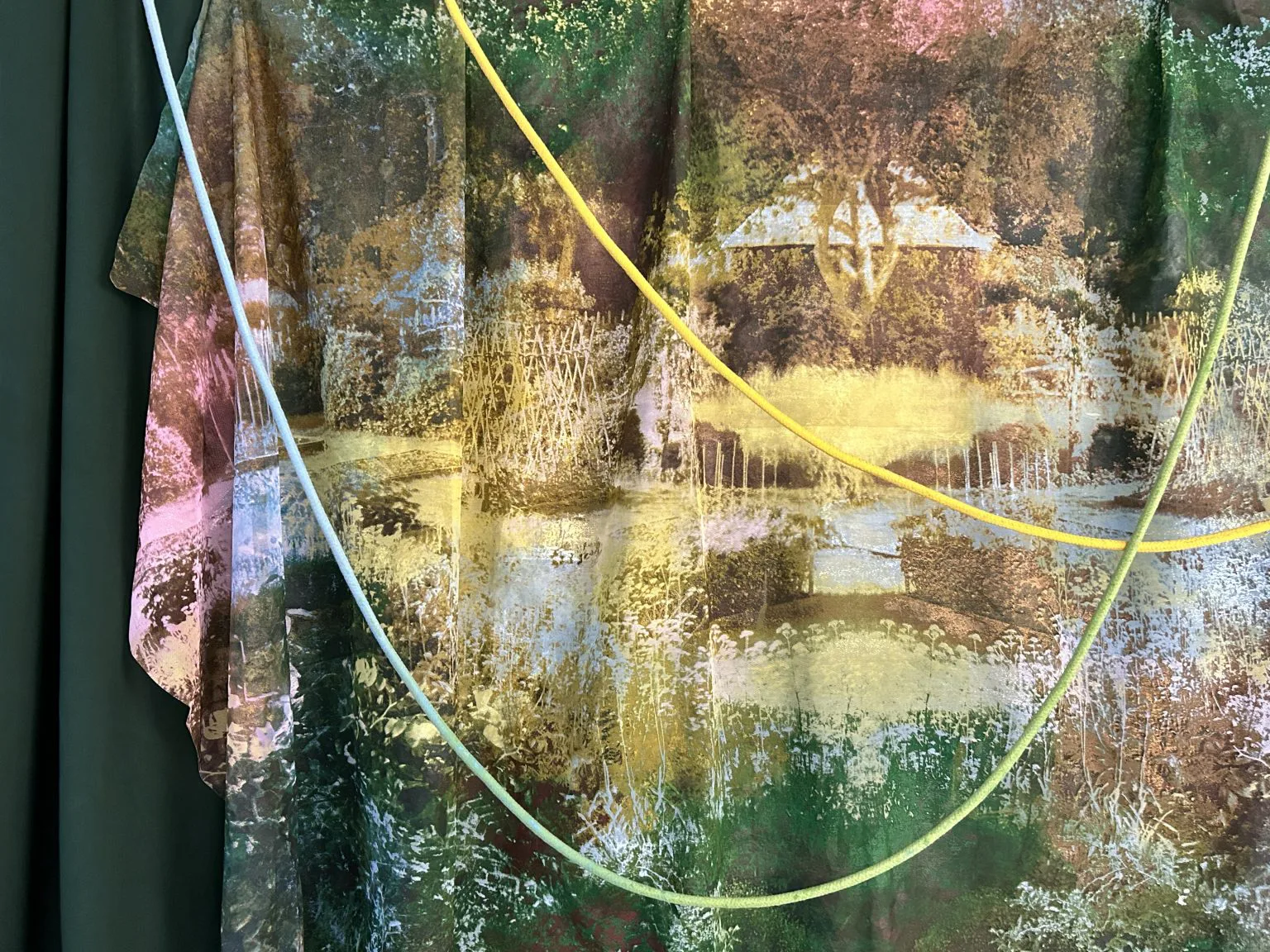
She alludes to Monet’s gardening techniques and innovation, and celebrates its theatrical aspects, by presenting us a proscenium-like drapery that uses recycled and woven pieces with screen-printed patterns of plants.
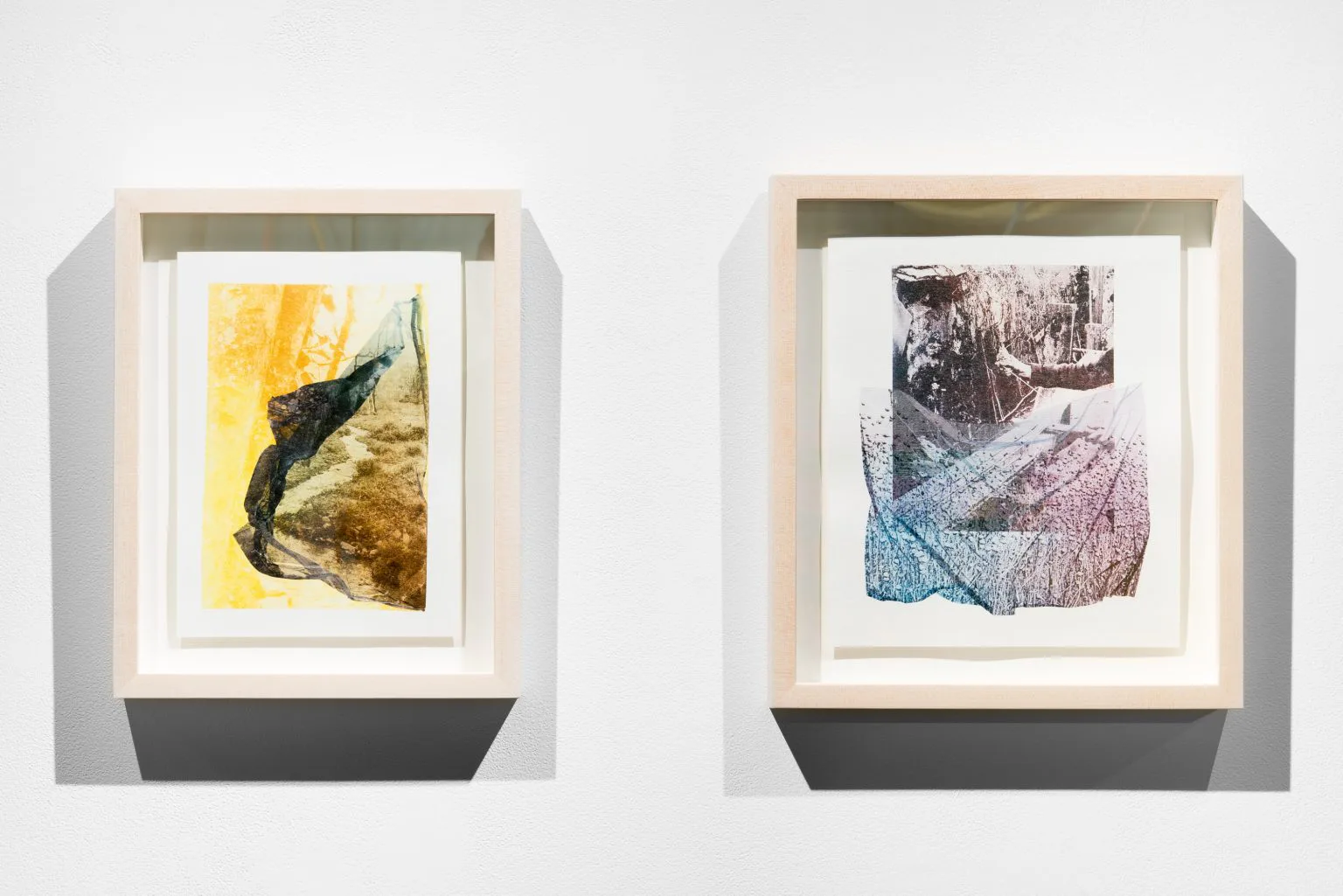
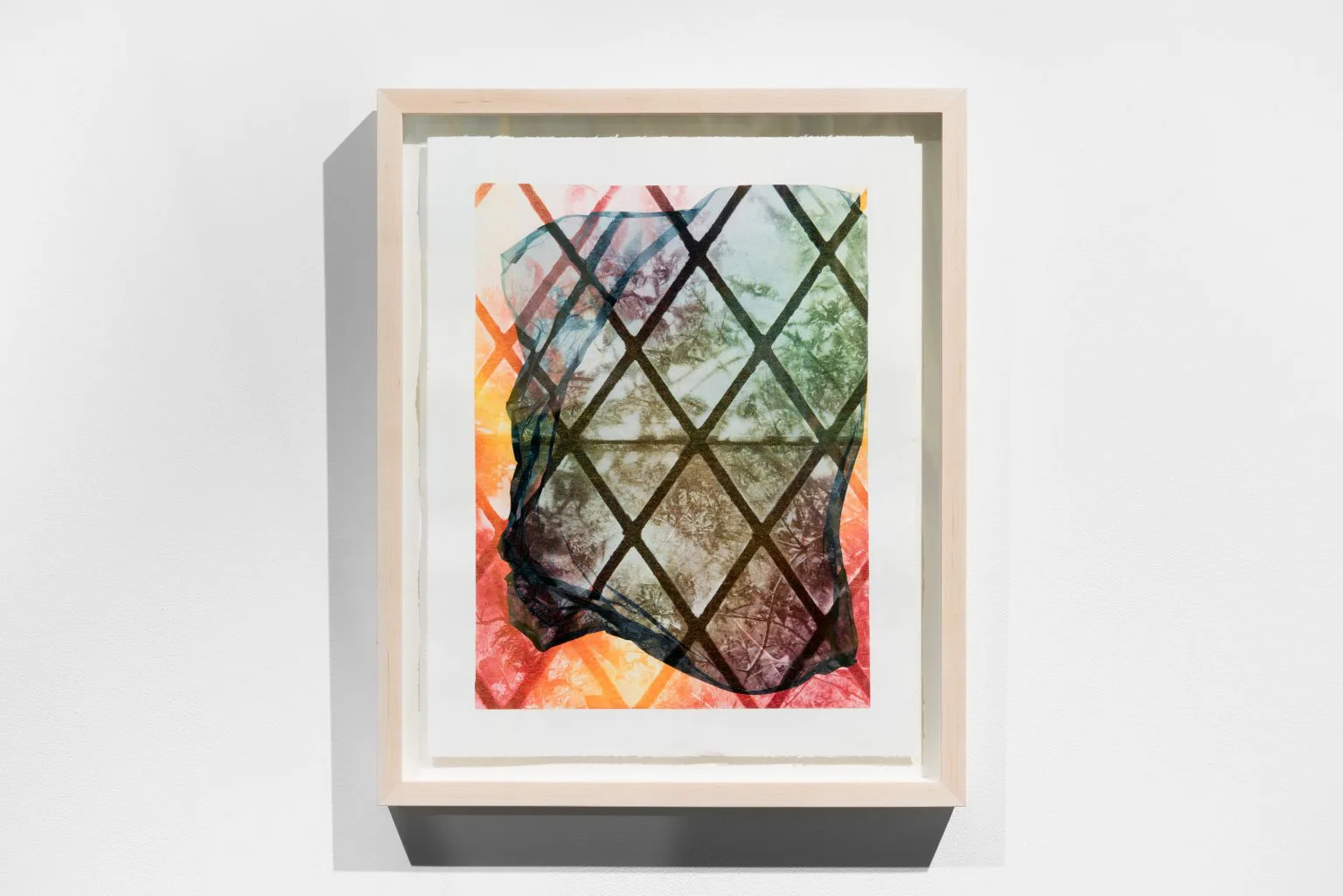
It is the technique of catalognia fabric that guides the construction of these wefts. In doing so, the artist activates a filiation in the resumption of these gestures, repeated so many times by our elders, and mobilizes her concerns for the environment by recovering discarded fabrics that will help to constitute these pieces. The curved, organic shapes of the textiles embrace the plantations and hedges seen from above, which were photographed and then used for the fabric prints. Using, in a playful way, opacity and transparency, the prints sometimes “cross the canvas to reach the light”, and at other times show colored overlapped layers.
The garden, like a plot of land in the landscape, chosen by man and changed by her gestures, thus enters the exhibition space, redrawing the contours of our ways of approaching nature and the Western models that have informed them.
Text by Galadriel Avon and translated by Denis Chabot
Cassandre Boucher is a Canadian visual artist living and working in Paris (France). She holds a Bachelor of Visual & Media Arts, and a Master’s Certificate in Teaching in Higher Education, both from the Université du Québec à Montréal (UQAM, Canada). She also holds a Master’s of Fine Arts in Printed Image from the École des Arts Décoratifs (ENSAD, Paris). Her work has been exhibited across Canada, as well as in France, Portugal and Switzerland. She has held residencies at the Fabric Workshop and Museum (Philadelphia, USA), The Icelandic Textile Center (Blönduós, Iceland), and Villa Belleville (Paris, France). Her work has received support from both the Quebec Council for the Arts, and the Canadian Council for the Arts. In 2023, she received the Grand Jury Prize of the Trois-Rivières’ Printmaking Biennale (Canada), and in 2024, received the Lieux-Communs Prize, awarded by the art centre Lieux-Communs in Namur (Belgium).
I am interested in the temporal and emotional relationships that link human beings to their environments. I pursue a protean approach to textile arts where weaving, etching, and the pictorial possibilities of screen printing are combined and utilized within both two-dimensional and installation-based works. Driven by an interest in nature as well as traditional methodologies of craft and labour, I draw inspiration from recent social histories and the rural Quebec surroundings in which I grew up, in order to imagine alternative relationships between manual labour and our natural world. Through an eco-feminist approach, I consider the notions and implications of time and repetition inherent to the production of textile arts as tools to examine and address the conventional relationships of exploitation and domination by Western societies.
Instagram @cassandre.boucher_
Meeting and presentation of the artist’s work
September 7, from 2 to 4 p.m.
Cassandre Boucher would like to thank the Canada Council for the Arts for its support, and Dominique Desbiens, Xavier Orssaud and Liz Xu for their precious contribution to the realization of this project.