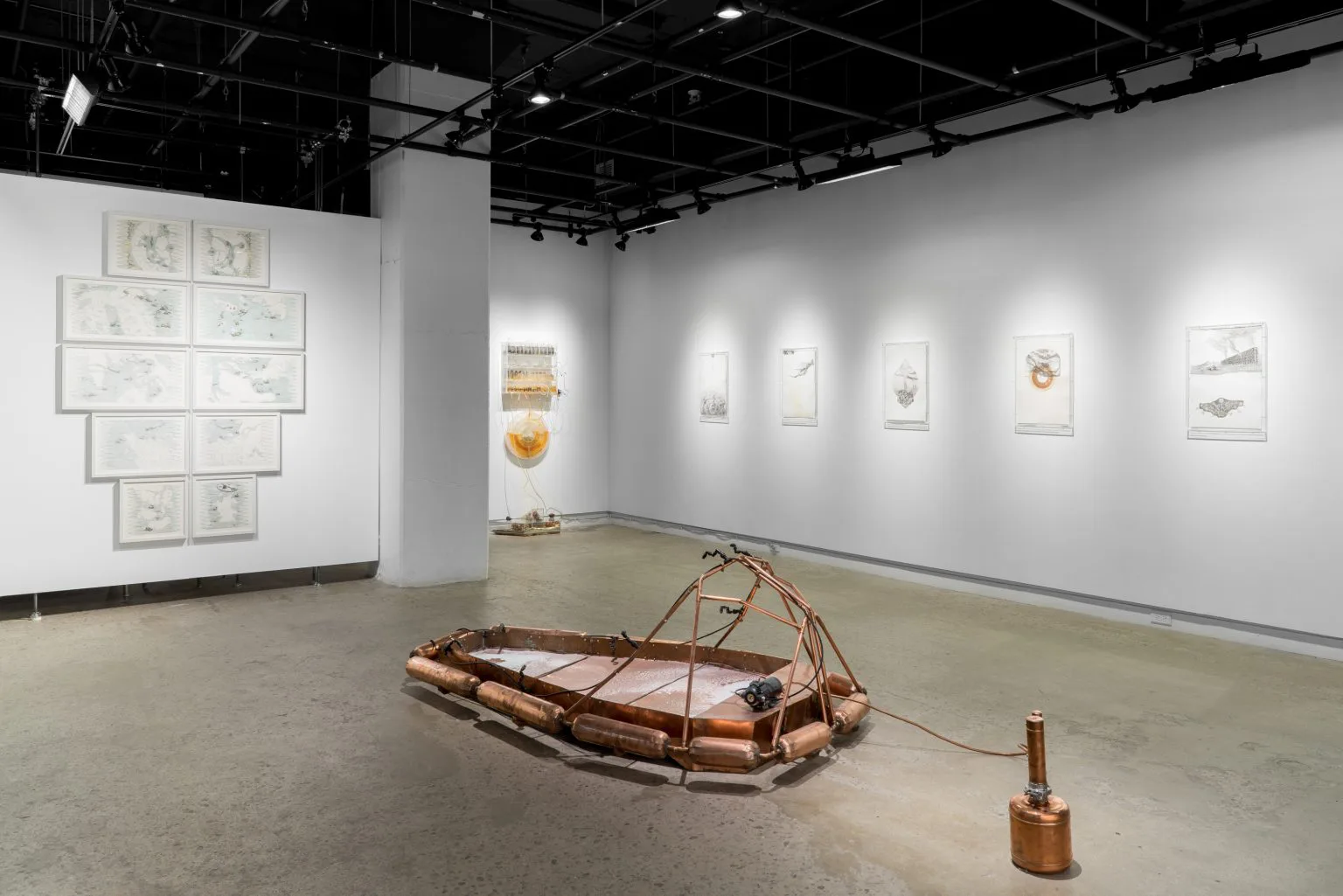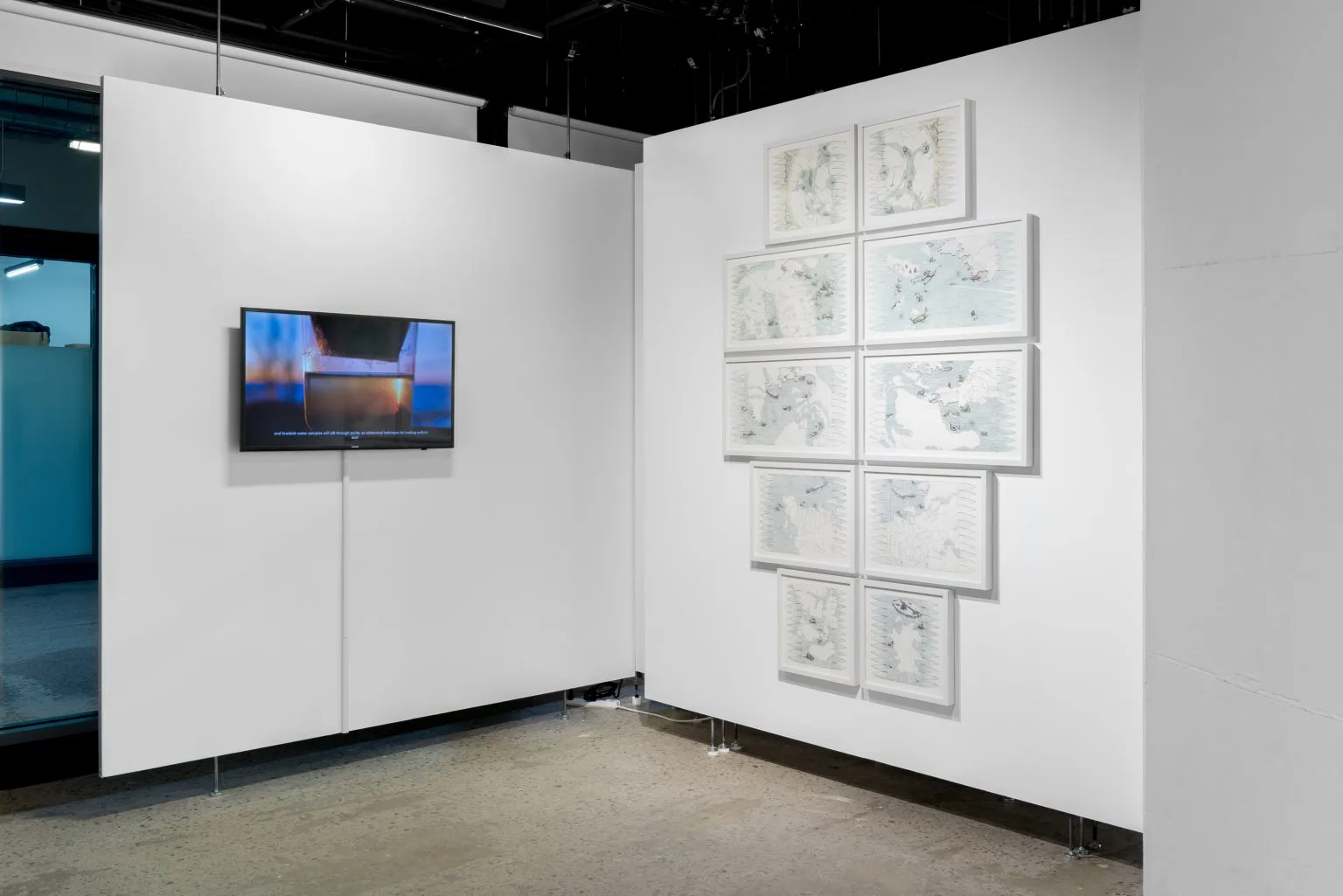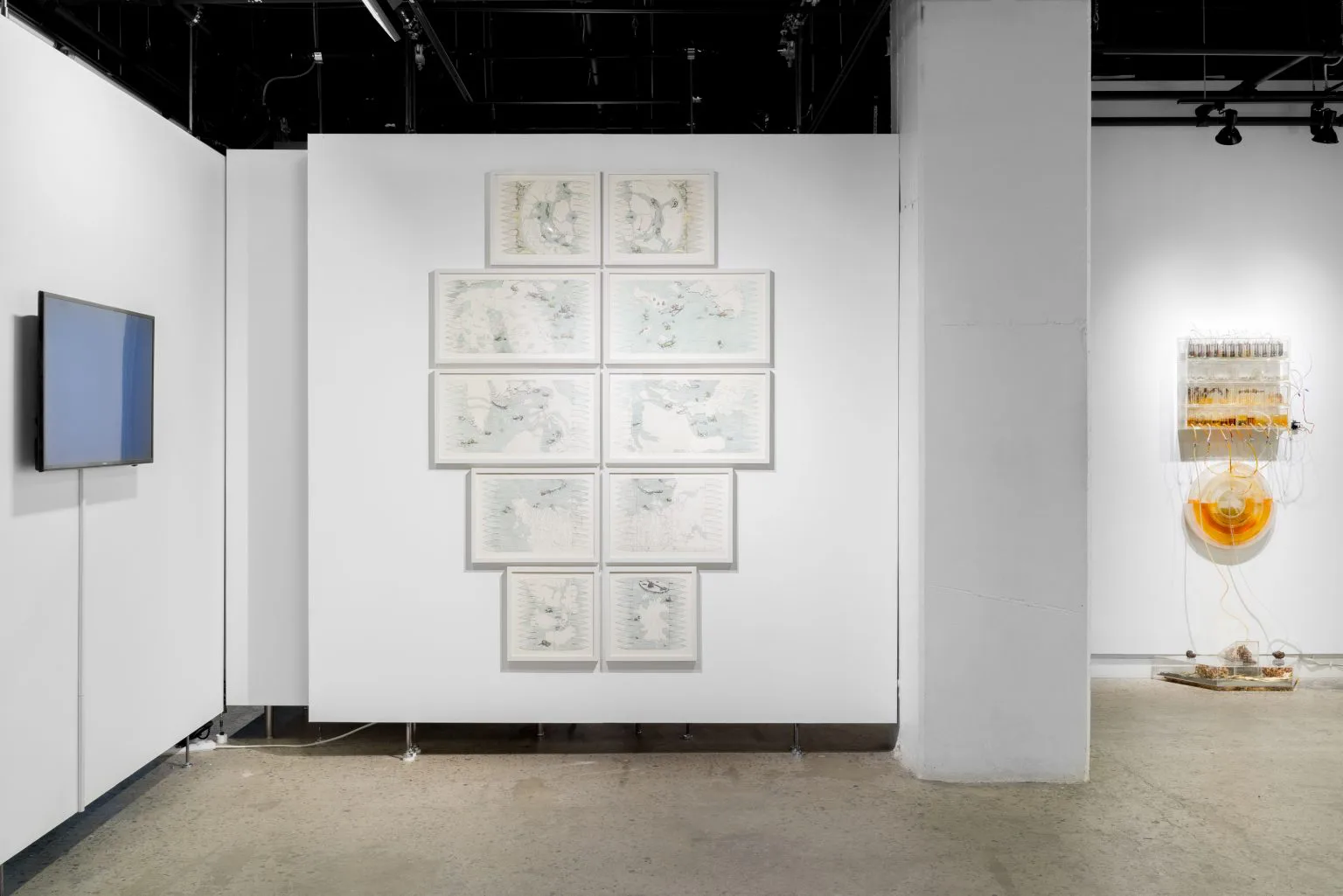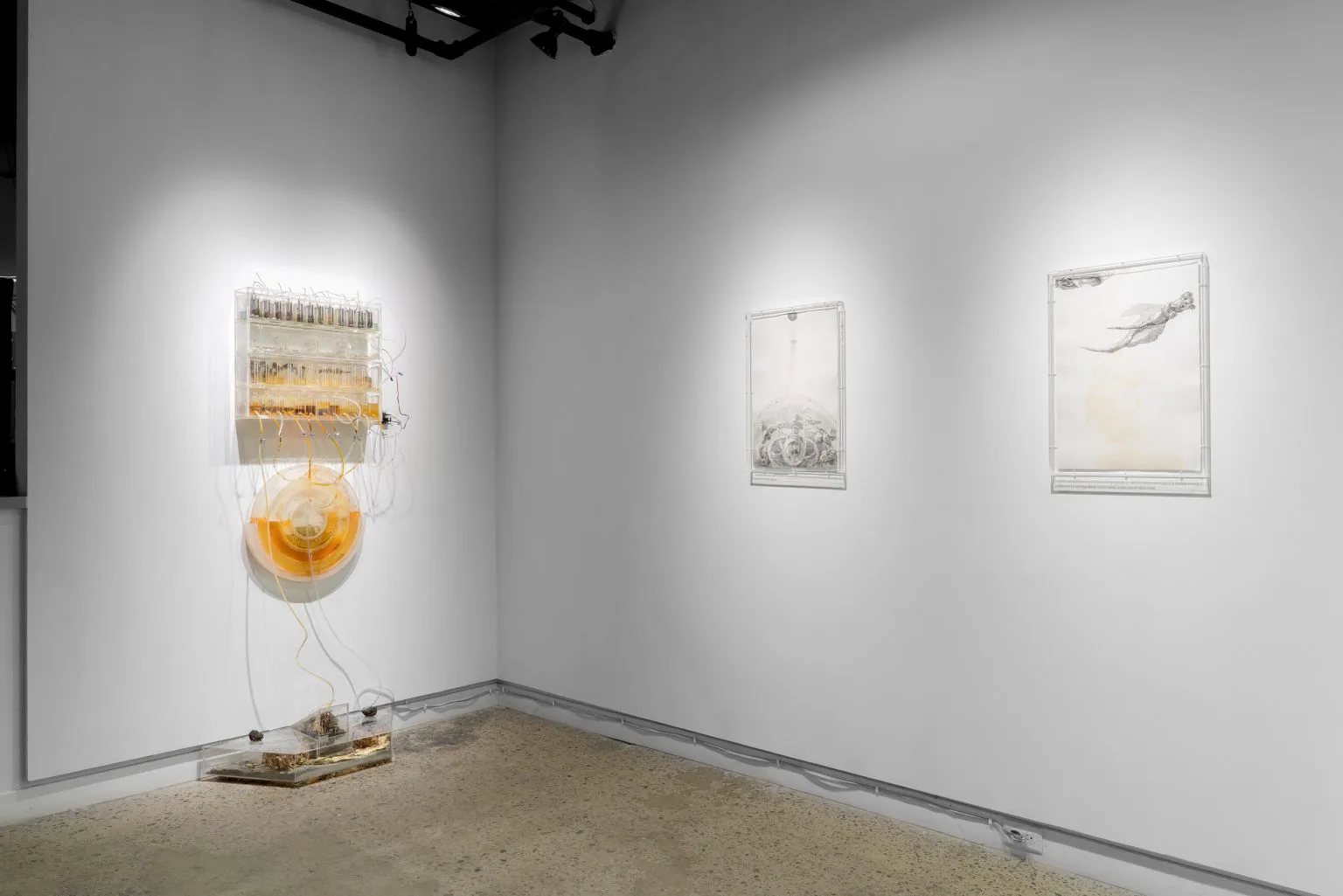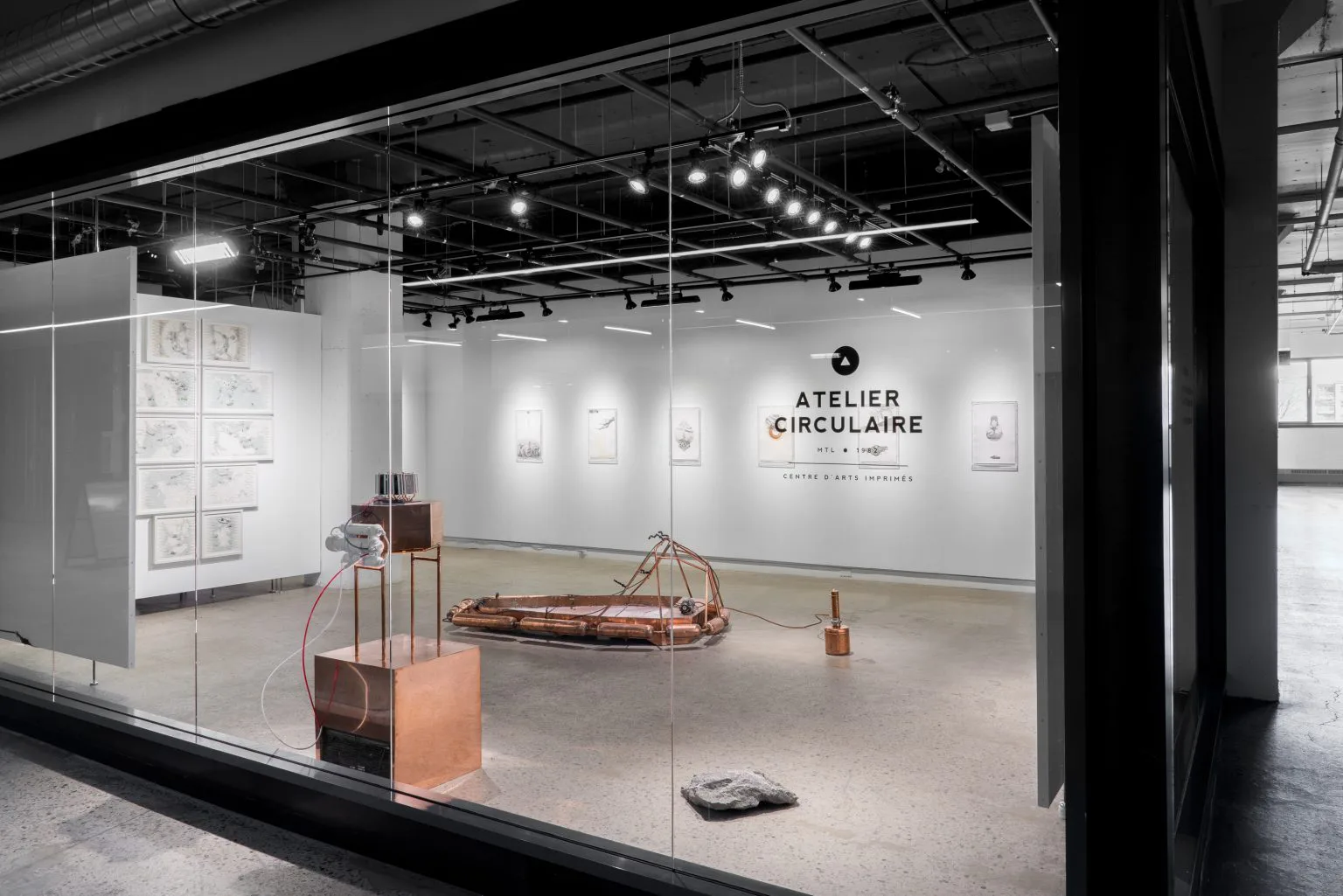
In connection with his exhibition We will find salvation in strategic chemical spills, Colin Lyons will discuss several recent projects which have brought him to sacrificial landscapes such as tailing piles, decommissioned landfills, historic flood infrastructure, and remote islands, to develop contingency plans for the post-extraction landscapes we leave behind. Fusing printmaking, installation, and chemical experiments, Lyons’ work considers post-industrial landscapes through the lens of geoengineering, extraction, and alchemy. These prototypes weave together speculative climate engineering trials to desalinate arctic waters, phyto-remediate contaminated soils using invasive plant species, and fertilize coastal ecosystems using dissolved industrial artifacts. However, instead of practical climate solutions, these bubbling, self-destructive systems embrace humor, futility, and feedback-loops, laying bare the folly of our desire to find salvation in the fine balance of strategic chemical spills, and proposing rituals which blend the sacred and scientific to question what kind of nature we hope to approximate within a techno-solutionist future.
We will find salvation in strategic chemical spills began with what may seem an absurd question: What might our climate-engineering technologies look like if they were designed by alchemists? But extending further, are the aspirations of geoengineers, whose radical climate solutions seek to mimic, accelerate, or amplify natural processes of carbon reduction using highly invasive means, already verging on a kind of planetary-scale alchemical transmutation?
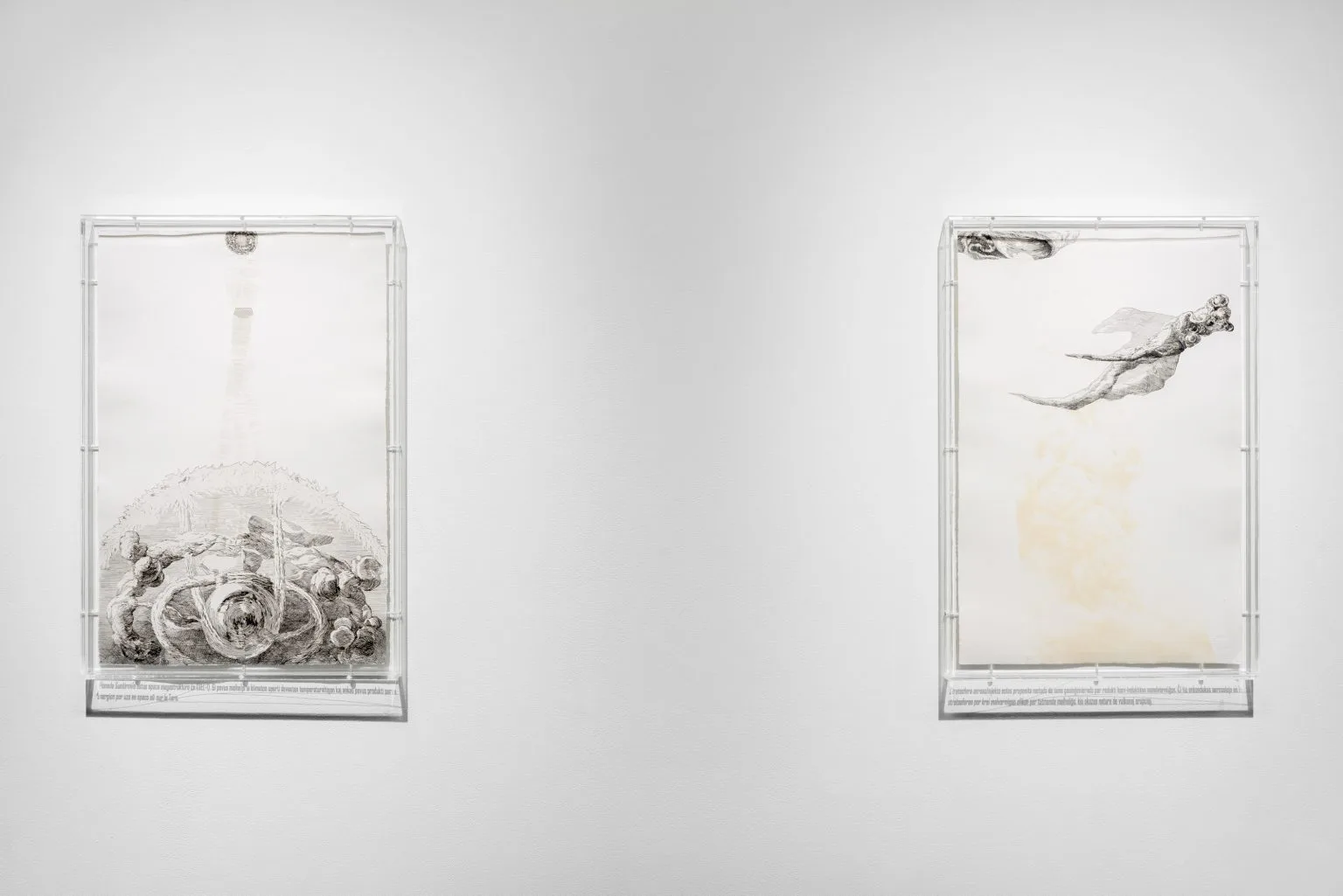
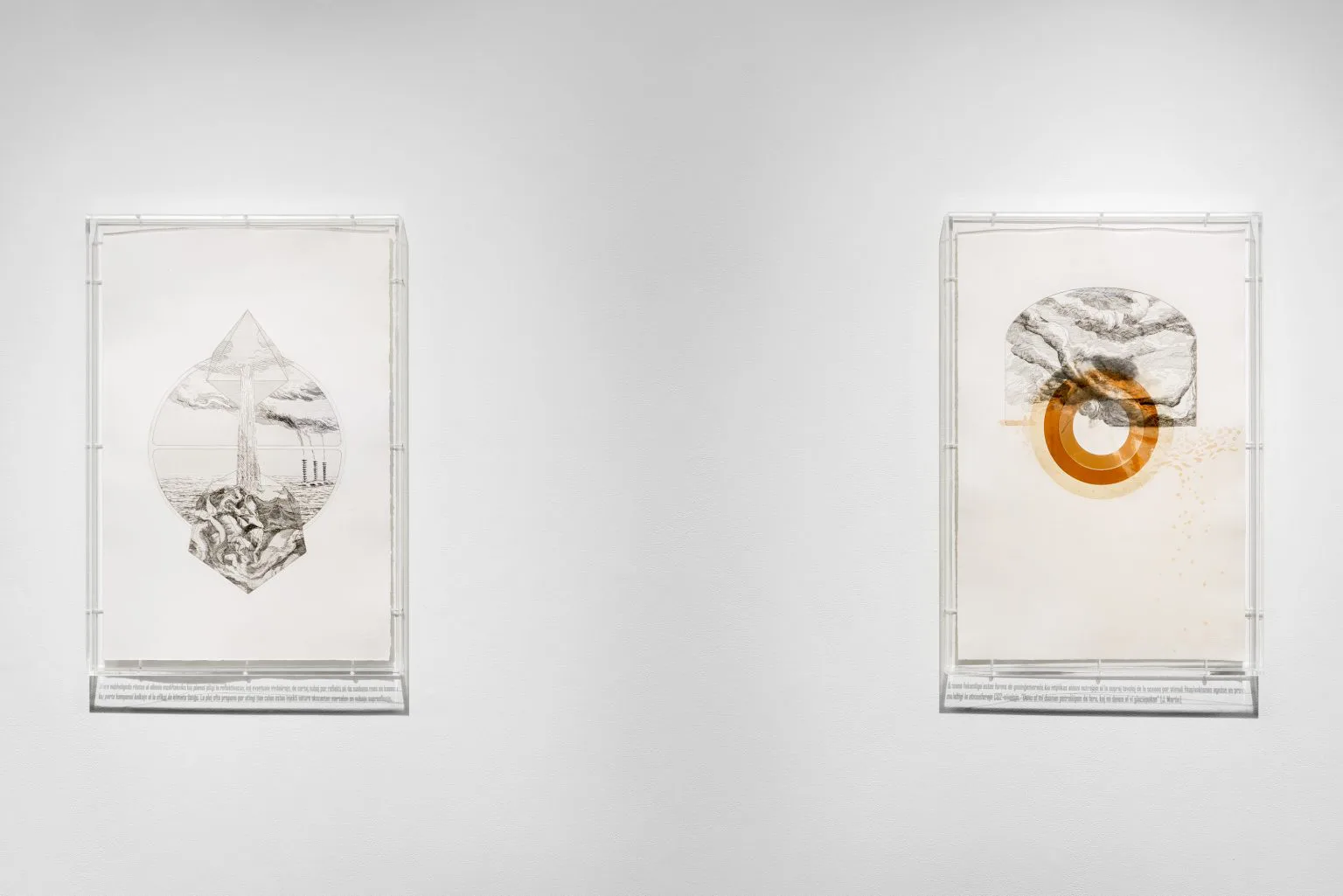
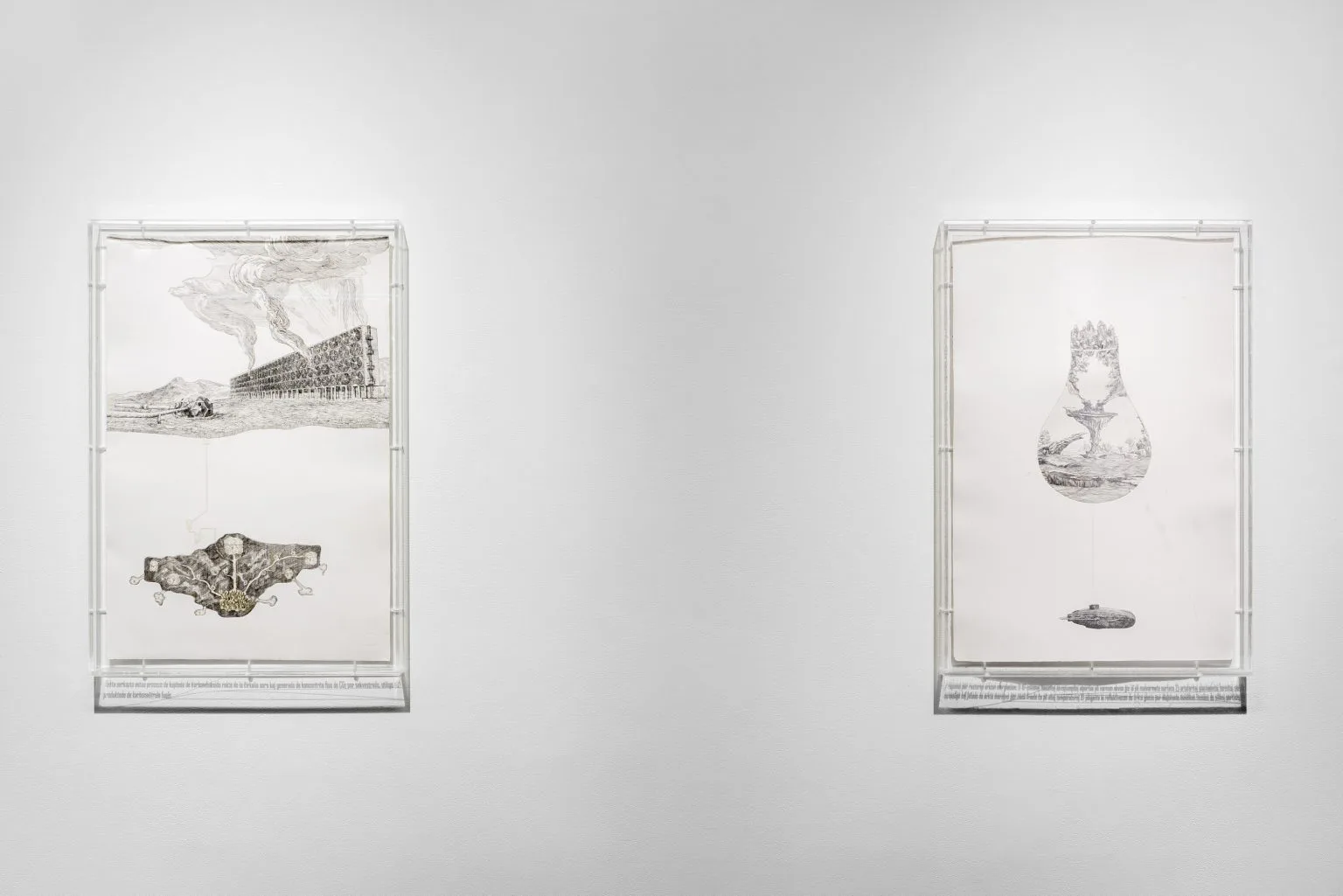
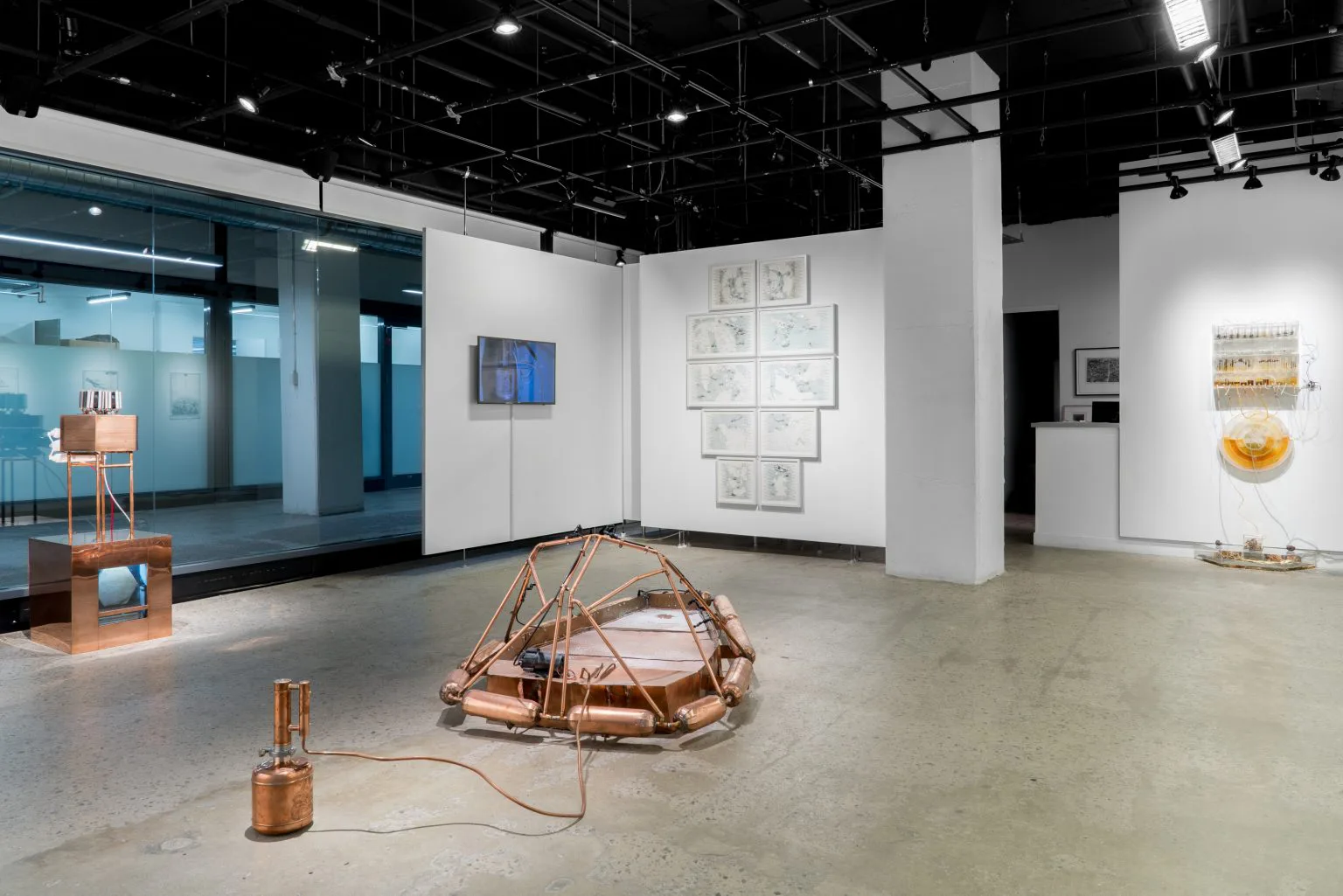
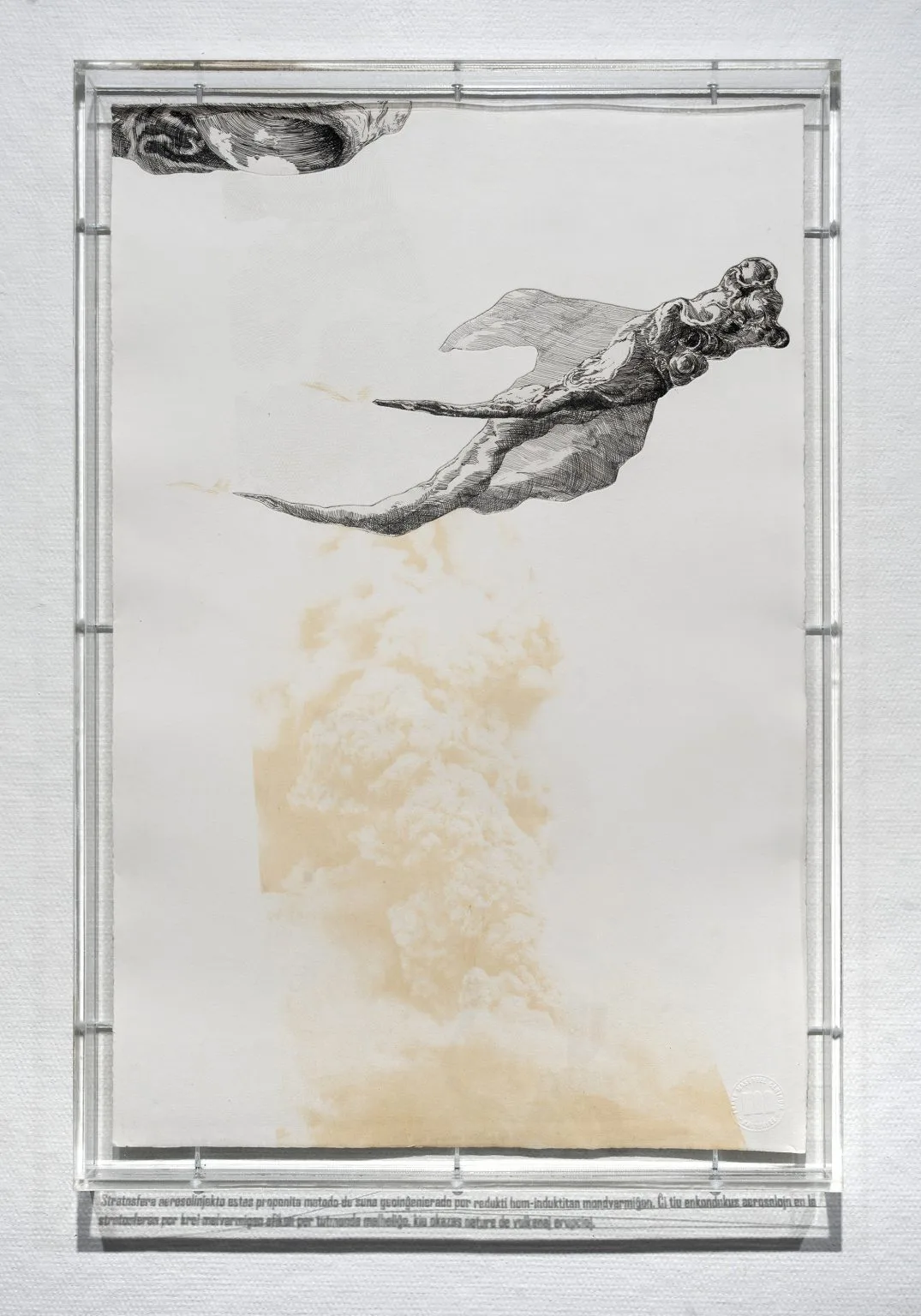
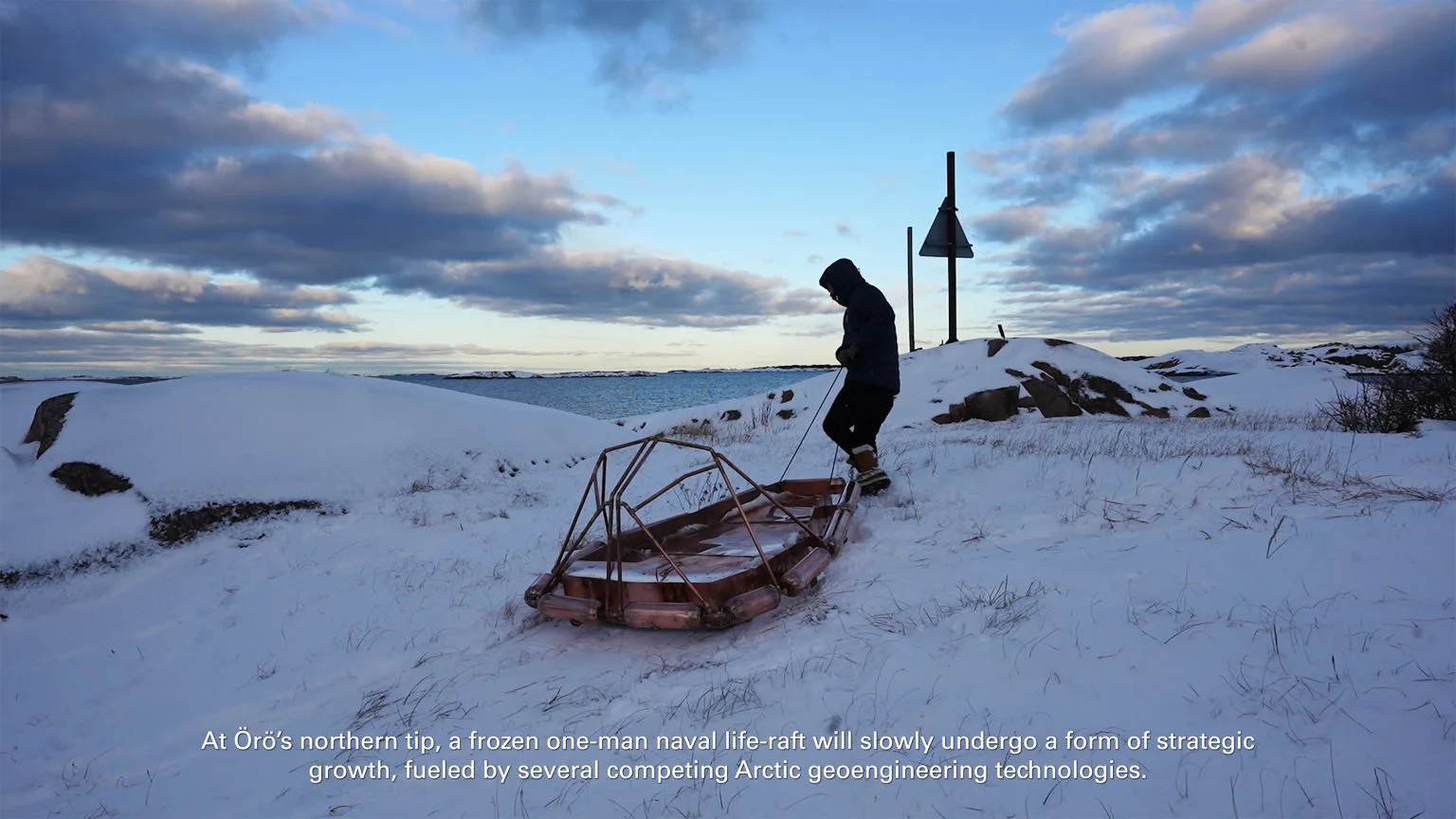
Fusing printmaking, installation, and chemical experiments, this exhibition brings together auto-destructive etchings, where geoengineering technologies replace the gods to infiltrate 16th century cloudscapes; Arctic geoengineering tests off the coastline of a decommissioned Tsarist military fortress island, designed to thicken the rapidly melting sea ice; and etched copper tailings extracted from North America’s oldest known copper mining site, active since Lake Superior itself was forming from the receding glacial ice.
These projects employ the chemistry of printmaking to reflect on issues around geo-engineering, extraction, alchemy, and brownfield rehabilitation, forming contingency plans for the post-extraction landscapes we leave behind. However, instead of practical climate solutions, these prototypes lay bare the folly of our desire to find salvation in the fine balance of strategic chemical spills, and propose rituals which blend the sacred and scientific to question what kind of nature we hope to approximate within a techno-solutionist future. These rituals attempt the transmutation of our most base material – industrial waste – and frame the printmaking matrix as a fossilized record; connecting the threads of our legacy of extraction to the dystopian but perhaps inevitable climate-engineering ‘solutions’ on our horizon.
Colin Lyons grew up in the birthplace of the North American oil industry, Petrolia, Ontario; an experience that has fueled his interests in sacrificial extraction landscapes. Lyons received his BFA from Mount Allison University and MFA in printmaking from University of Alberta. His most recent site-based installations have been located in sacrificial landscapes such as tailing piles, decommissioned landfills, historic flood infrastructure, urban brownfields, and remote islands.
In recent years, Lyons has participated in residency programs at The Arctic Circle (Longyearbyen, Svalbard), Öres (Örö Island, Finland), MacDowell (Peterborough, NH), Frans Masereel Centrum (Kasterlee, Belgium), Rabbit Island (Lake Superior), The Grant Wood Fellowship (University of Iowa), Klondike Institute of Art & Culture (Dawson City, YK), and Kala Art Institute (Berkeley, CA). His ongoing project, We will find salvation in strategic chemical spills, has been shown in solo exhibitions at Galleria Ratamo (Jyväskylä, Finland), Mesaros Gallery (West Virginia University), and Rosemary Duffy Larson Gallery (Davie, FL). His work has been included in group exhibitions at International Print Center New York, Krakow International Print Triennial, International Print Biennale Yerevan, International Printmaking Biennial Douro, Platform Stockholm, Museum London, and The Soap Factory, among others. He currently lives in Binghamton, NY, where he is an assistant professor at Binghamton University.
My recent projects have brought me to sacrificial landscapes such as mine tailings, decommissioned landfills, historic flood infrastructure, and remote islands, to develop contingency plans for the post-extraction landscapes we leave behind. These installations employ the chemistry of printmaking to reflect on issues around geo-engineering, extraction, alchemy, and brownfield rehabilitation. Within these projects, I strive to bring to the forefront the behind the scenes, labor intensive and chemical roots of printmaking, while exploring the possibilities for transmutation beyond the natural life-cycle of the printmaking matrix. Through these rituals, I use the etching process to compress historical and geological time; connecting the threads of our legacy of extraction to the dystopian but perhaps inevitable climate-engineering solutions on our horizon.
However, instead of practical climate solutions, my prototypes lay bare the folly of our desire to find salvation in the fine balance of strategic chemical spills; proposing rituals which blend the sacred and scientific to question what kind of nature we hope to approximate within a techno-solutionist future. Together, these projects pose what may seem at first an absurd question: What might our climate-engineering technologies look like if they were designed by alchemists? But extending further, are the aspirations of geoengineers, whose radical climate solutions seek to mimic, accelerate, or amplify natural processes of carbon reduction using highly invasive means, already verging on a kind of planetary-scale alchemical transmutation?
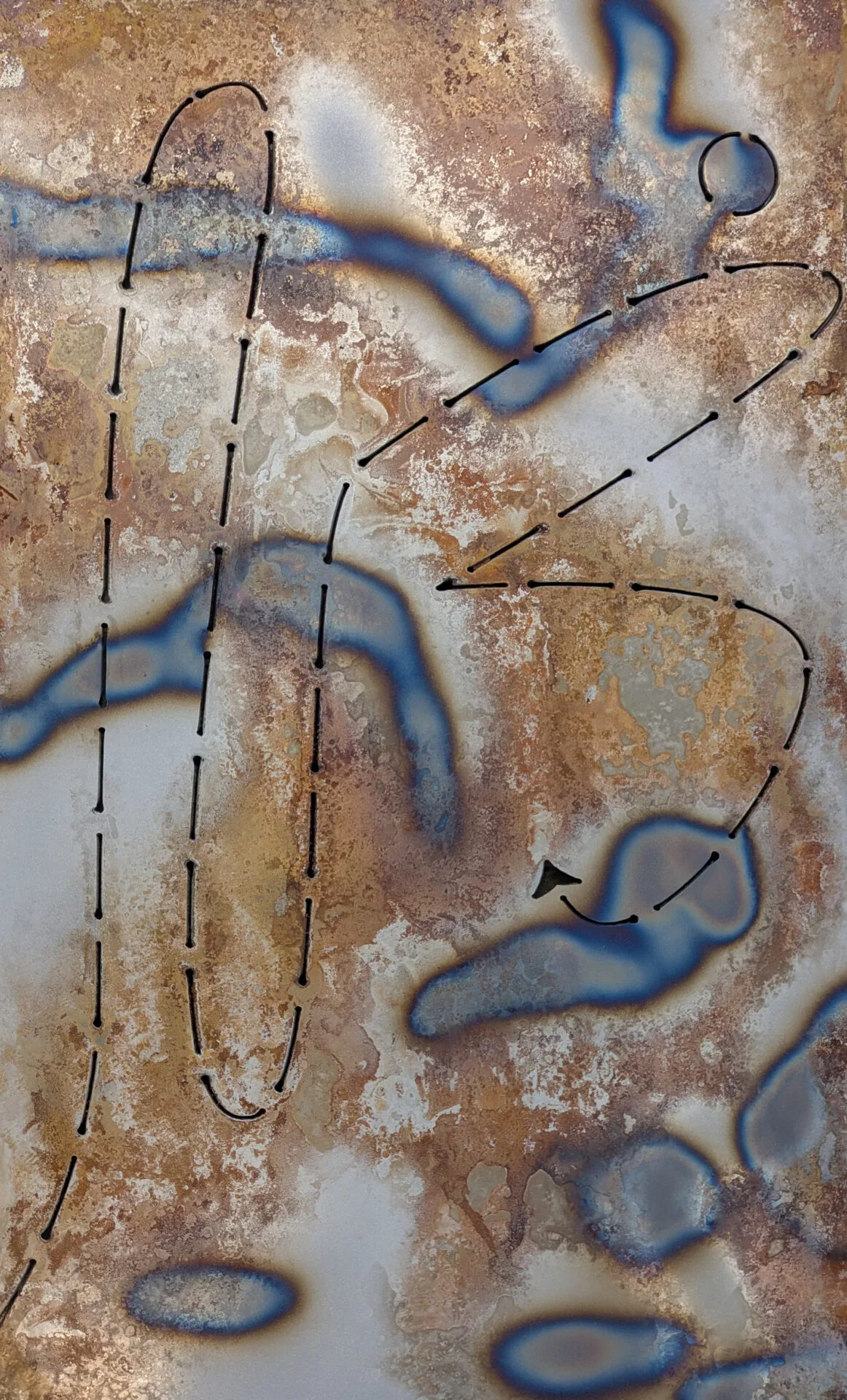
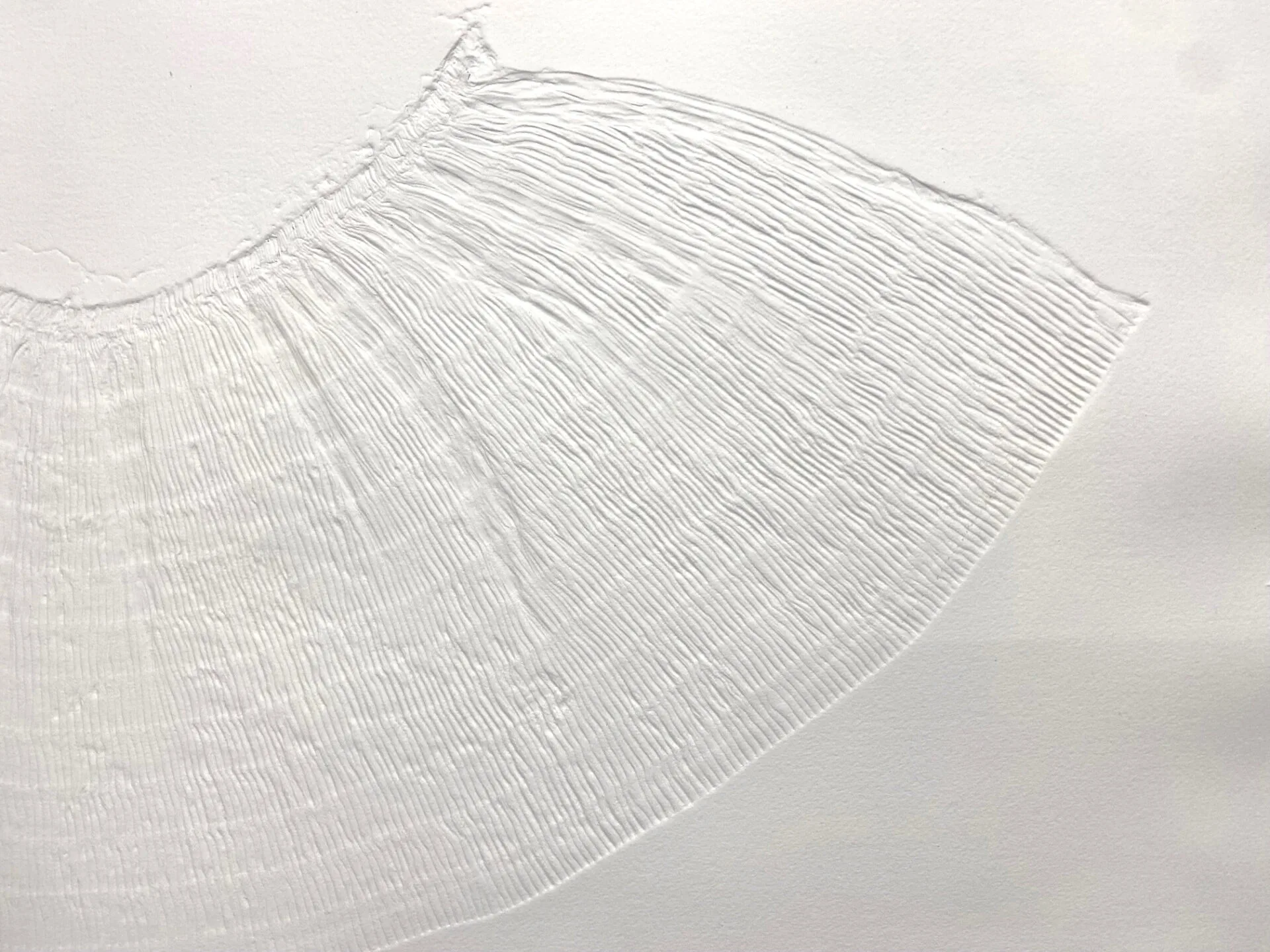
We will find salvation in strategic chemical spills: Stratospheric Aerosol Injection
etching, silkscreen (printed with sulfuric acid and limestone), laser engraving, 22”x15”, 2022.
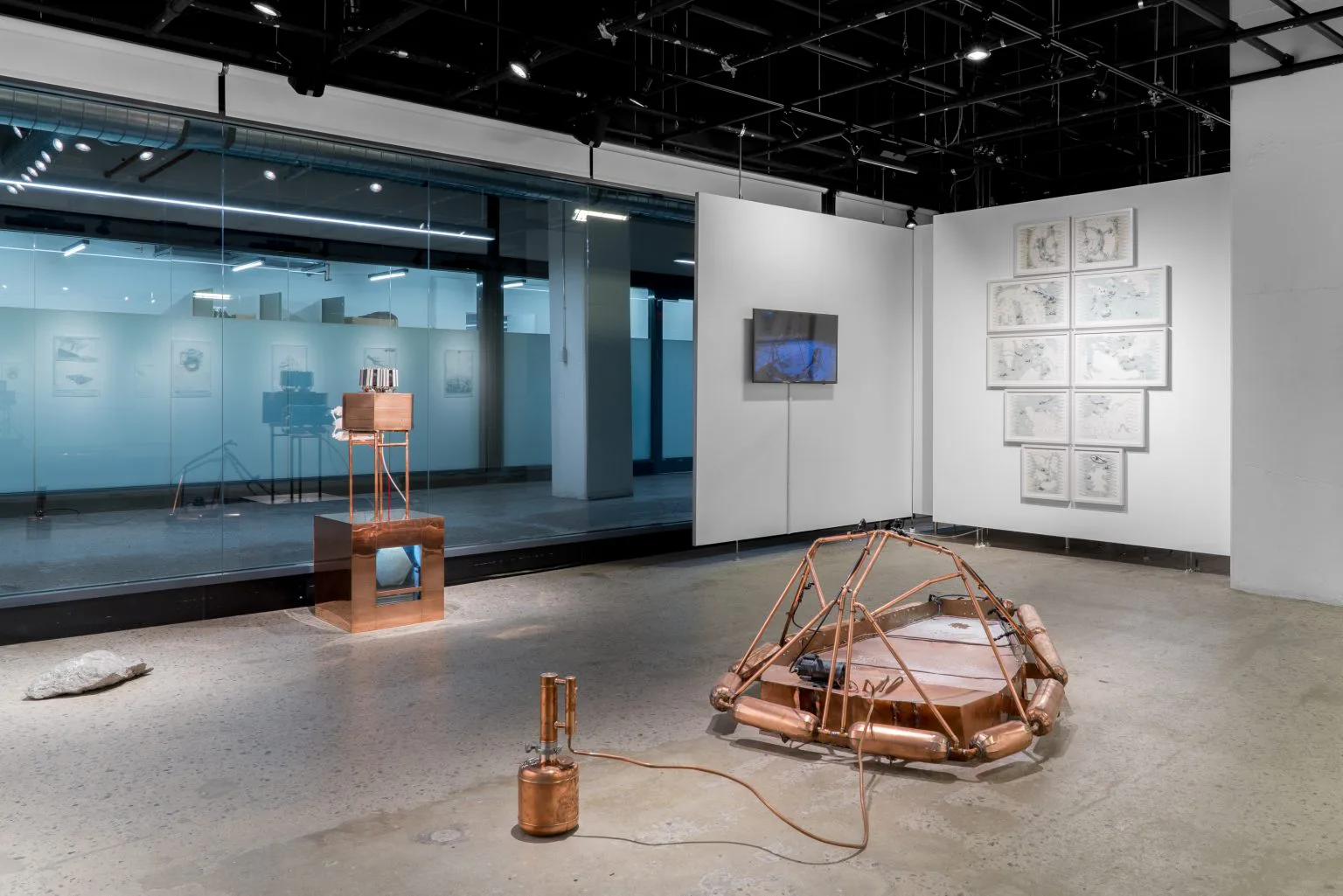
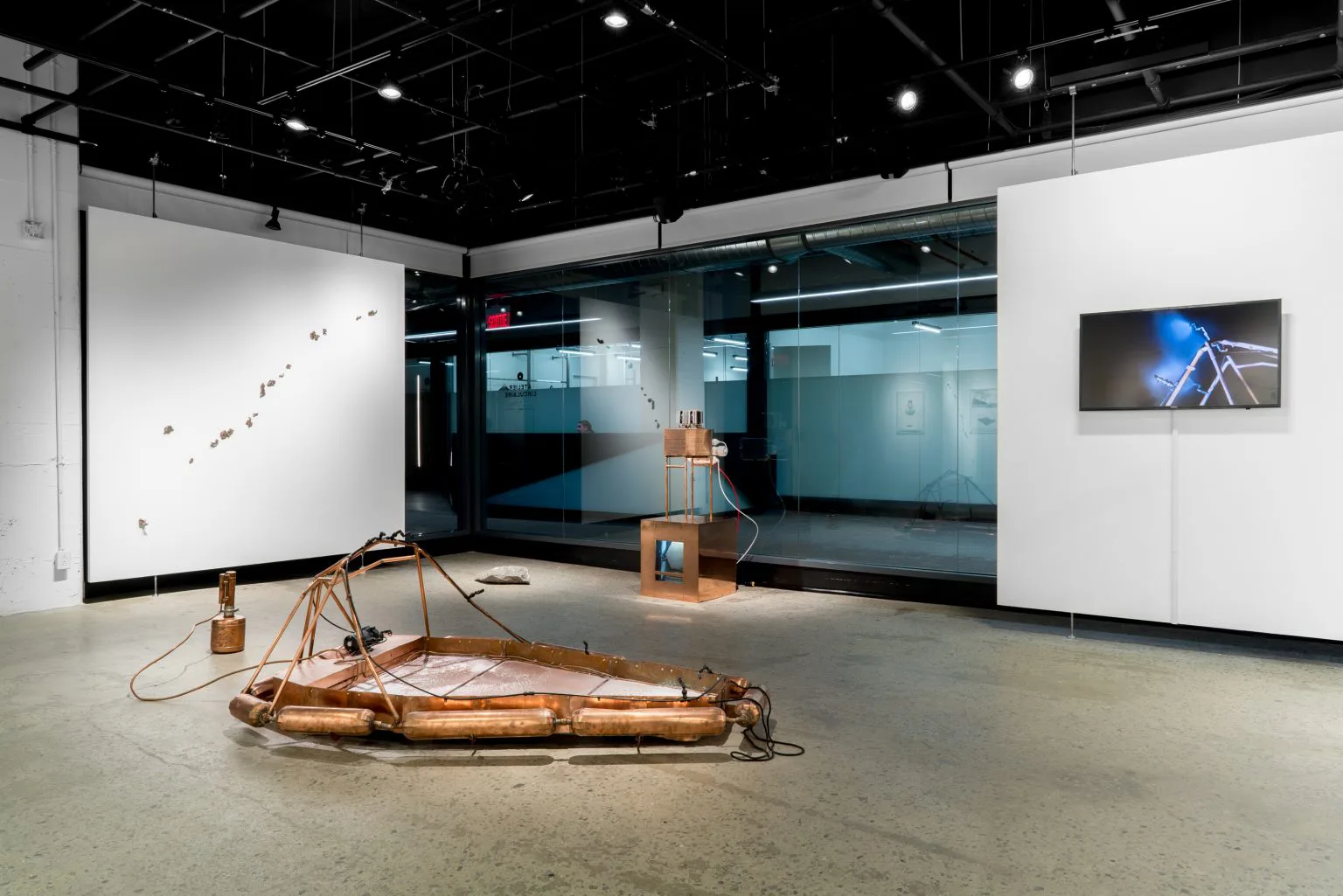
Operation Habbakuk (Video Still: Örö Island, Finland)
copper etching plates, mist system, pykrete (wood pulp and ice), silica, etched copper still, pyrite, iron sulfate, water samples (Baltic Sea), geoengineered ice, 2022.
Artist talk (in English)
Satuday, April 27, at 3 p.m.
He would like to thank the Canada Council for the Arts for their generous support of this project.