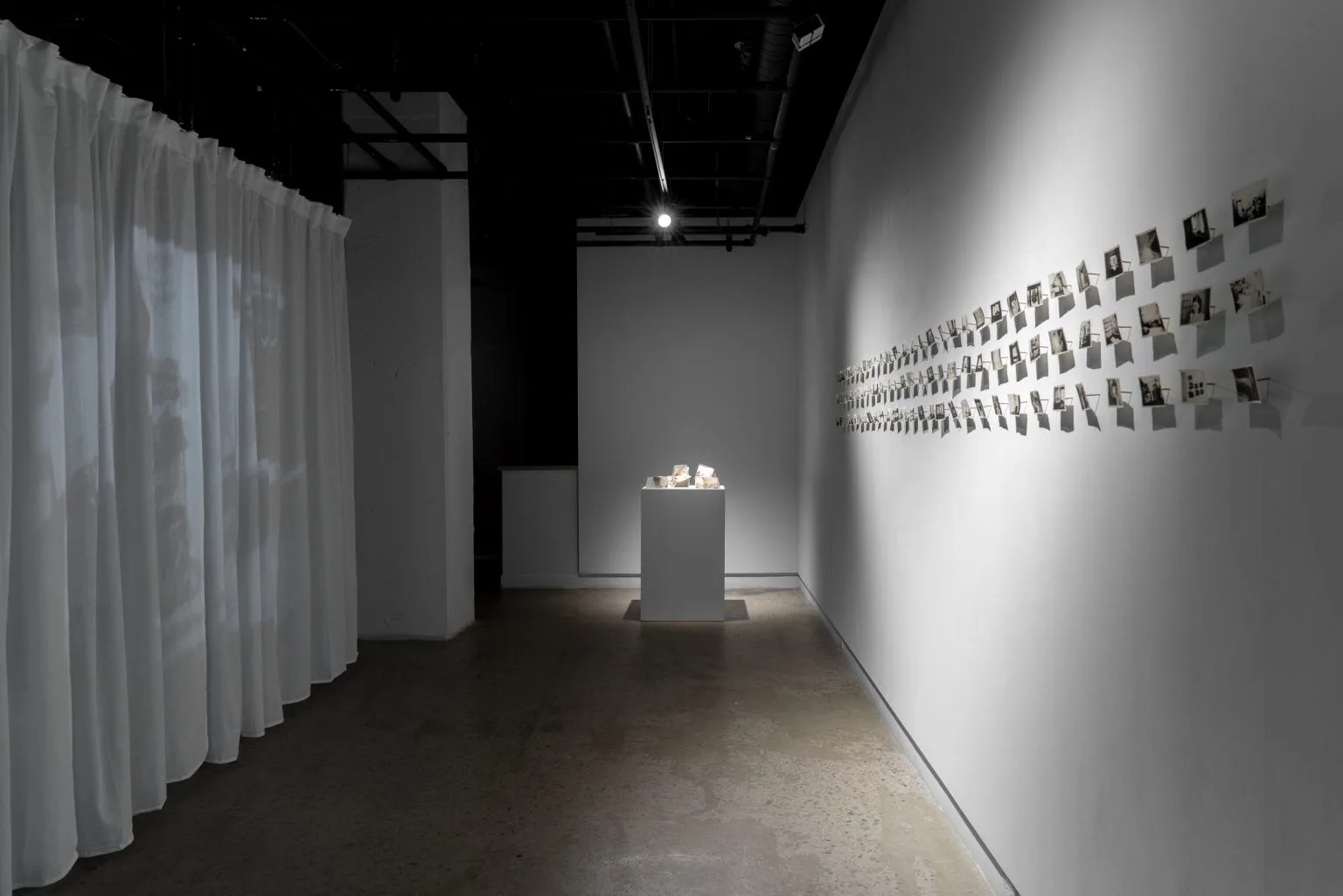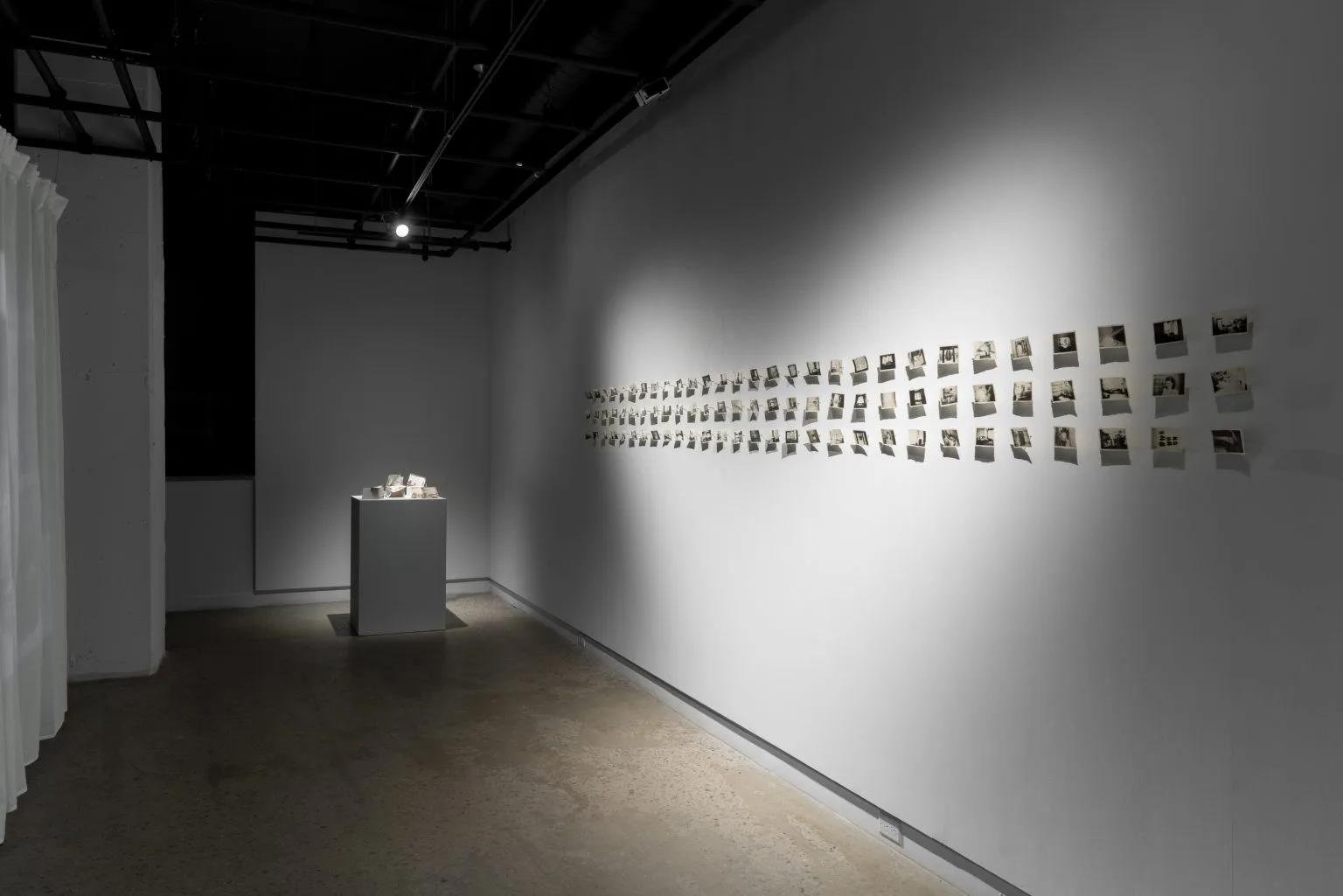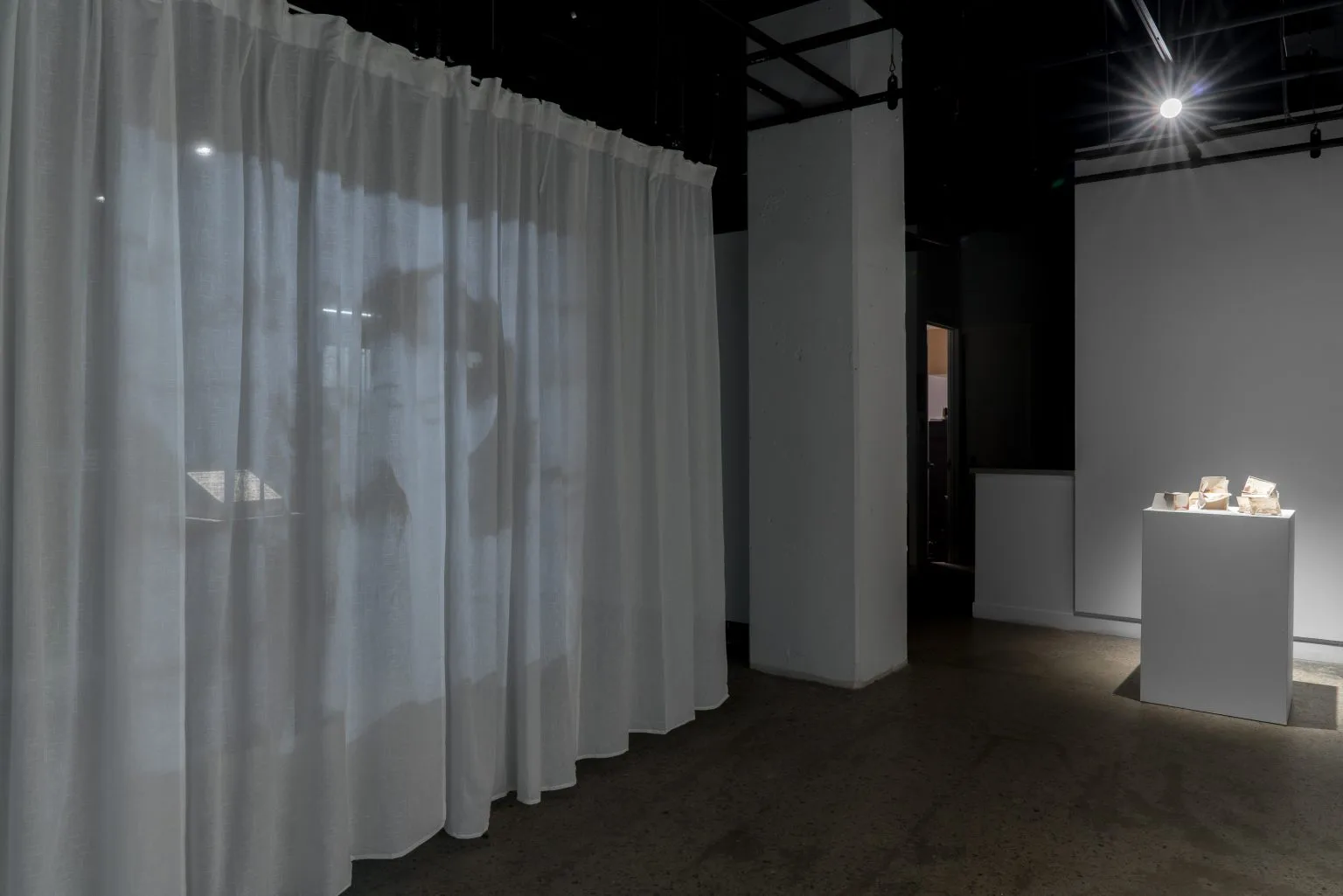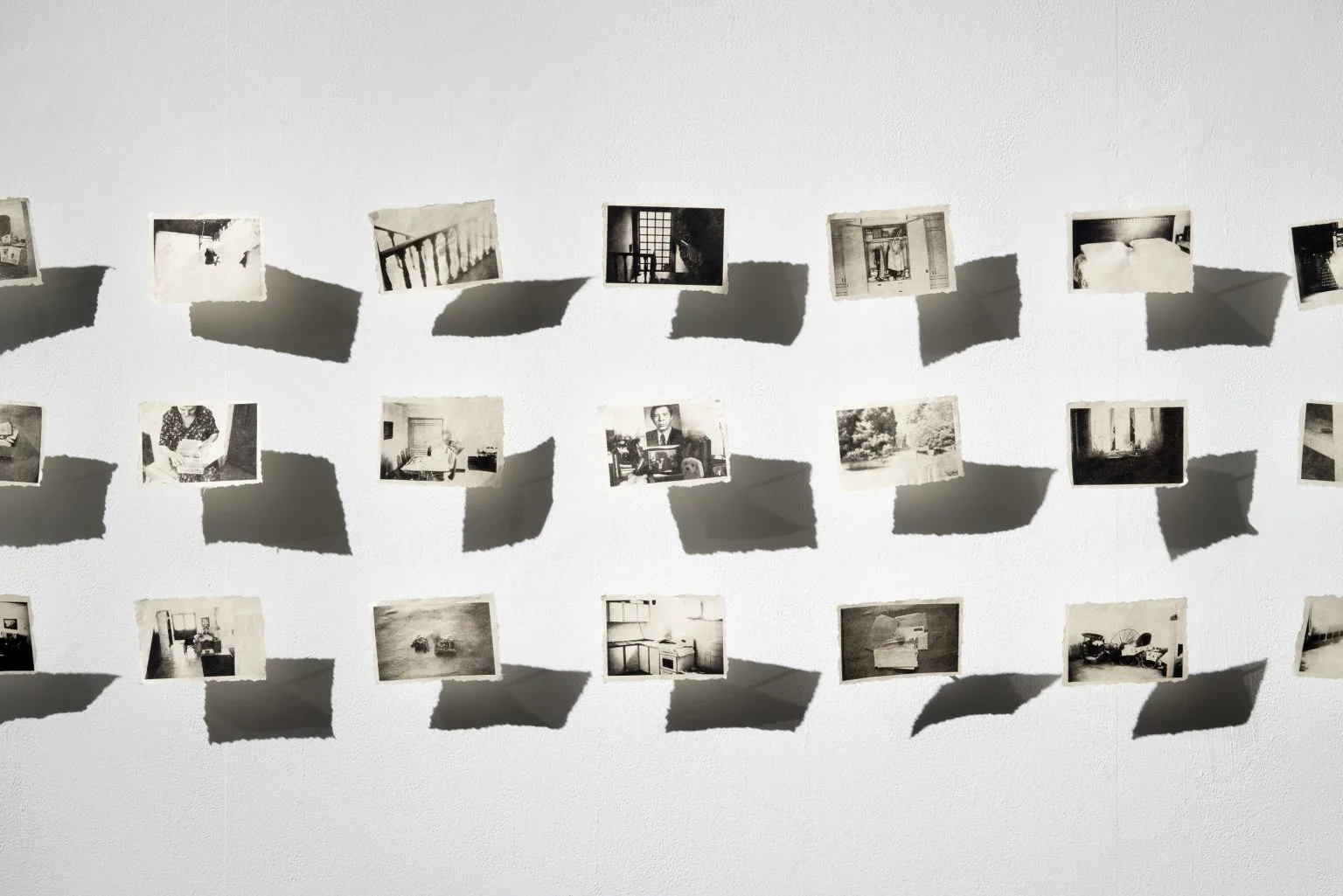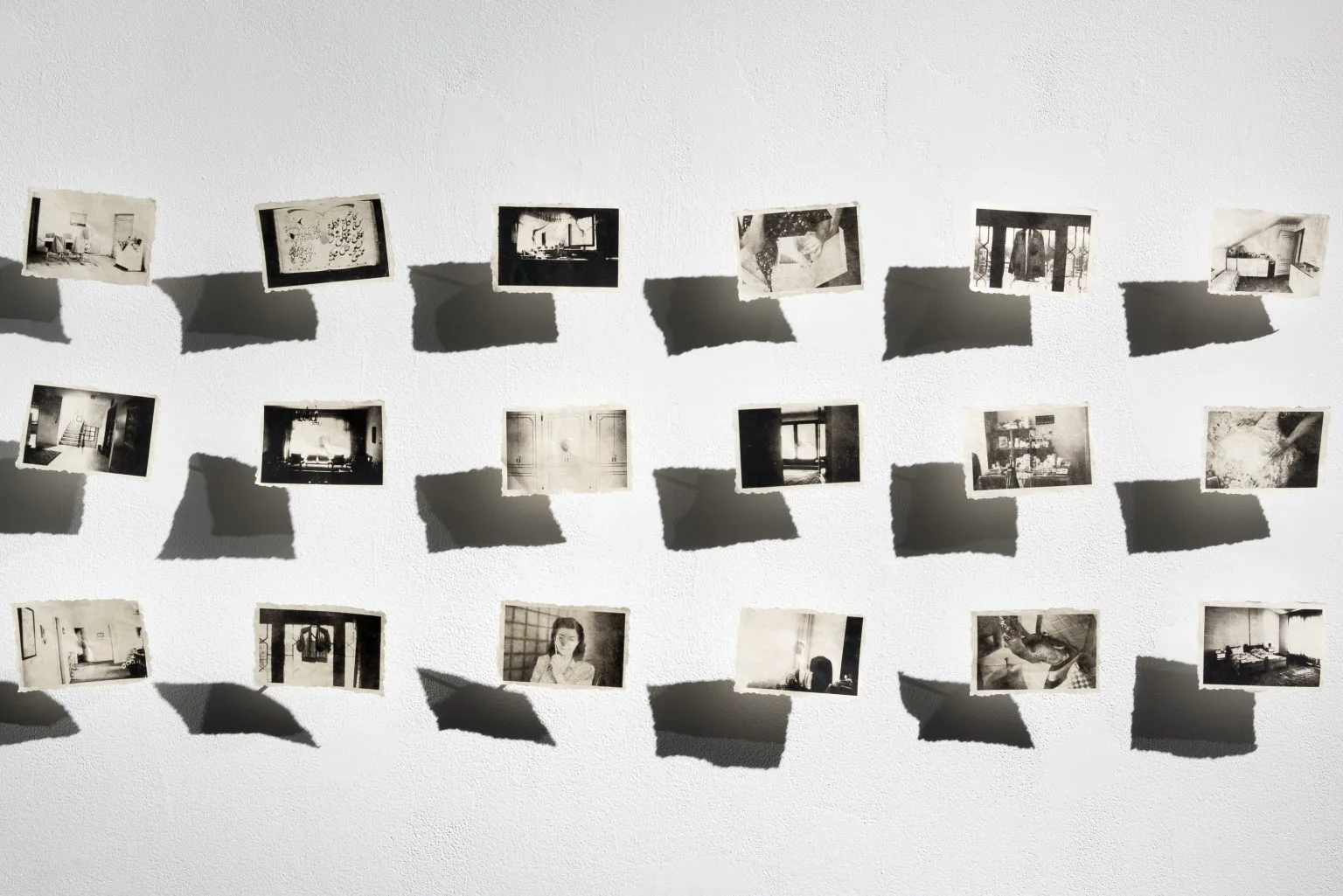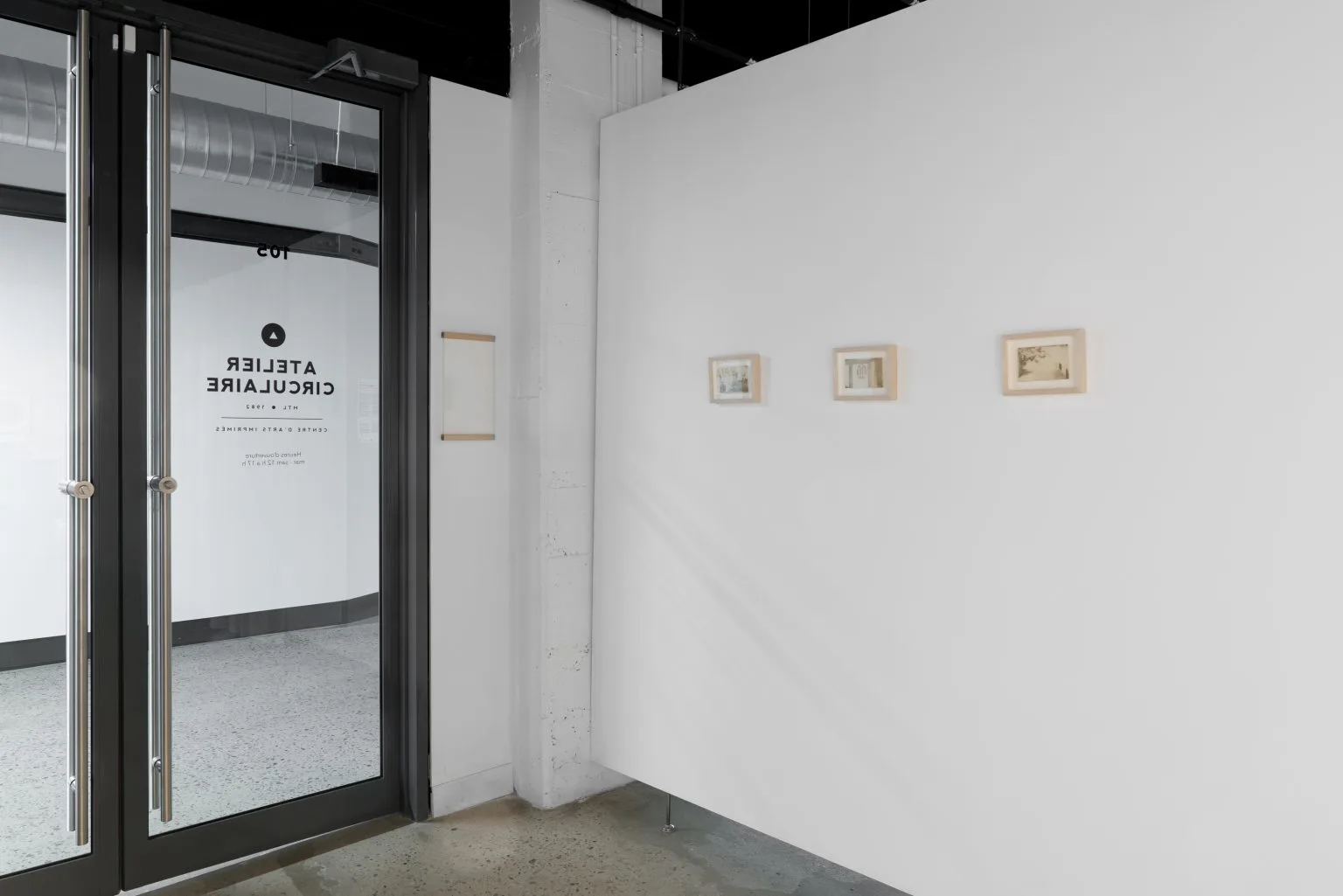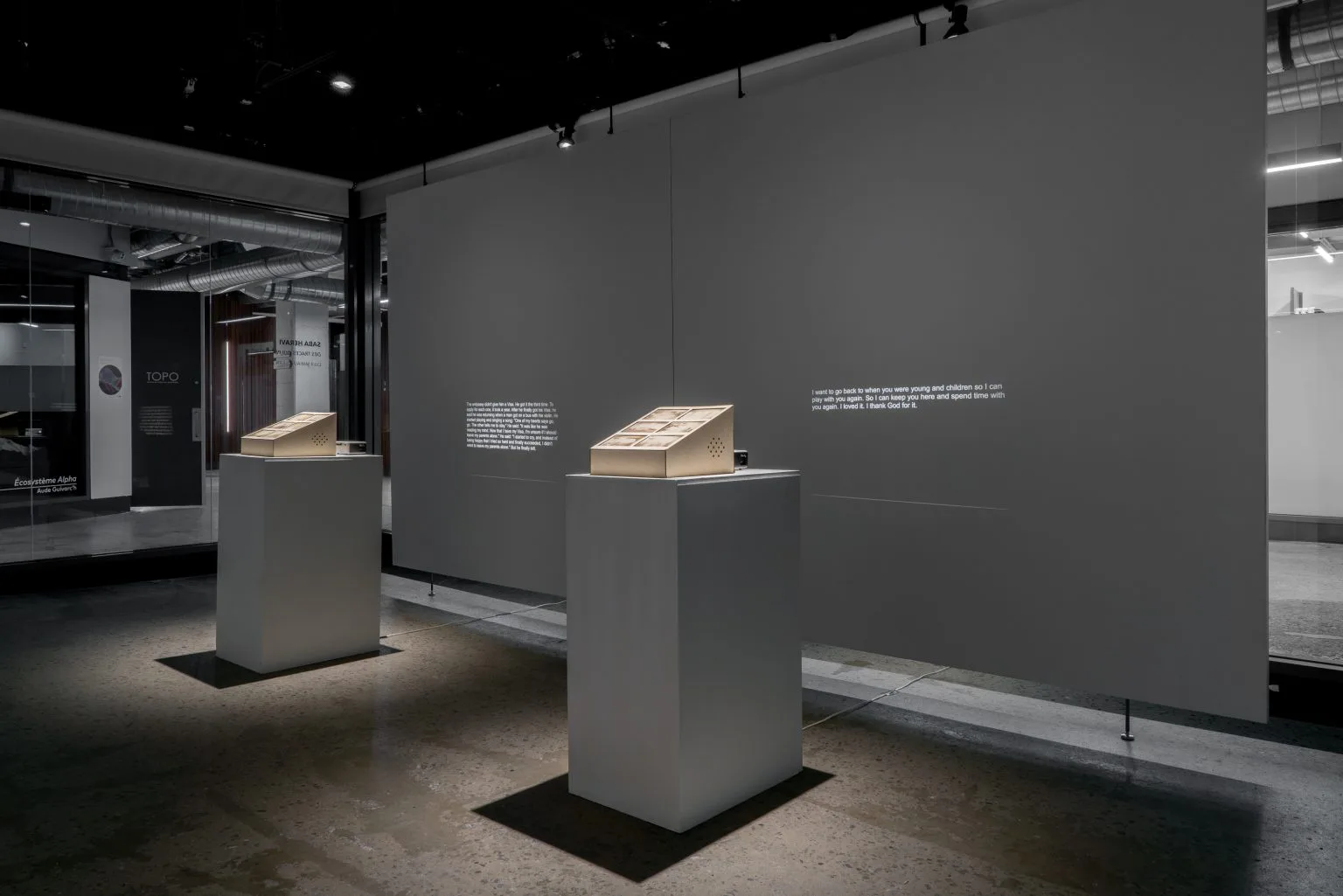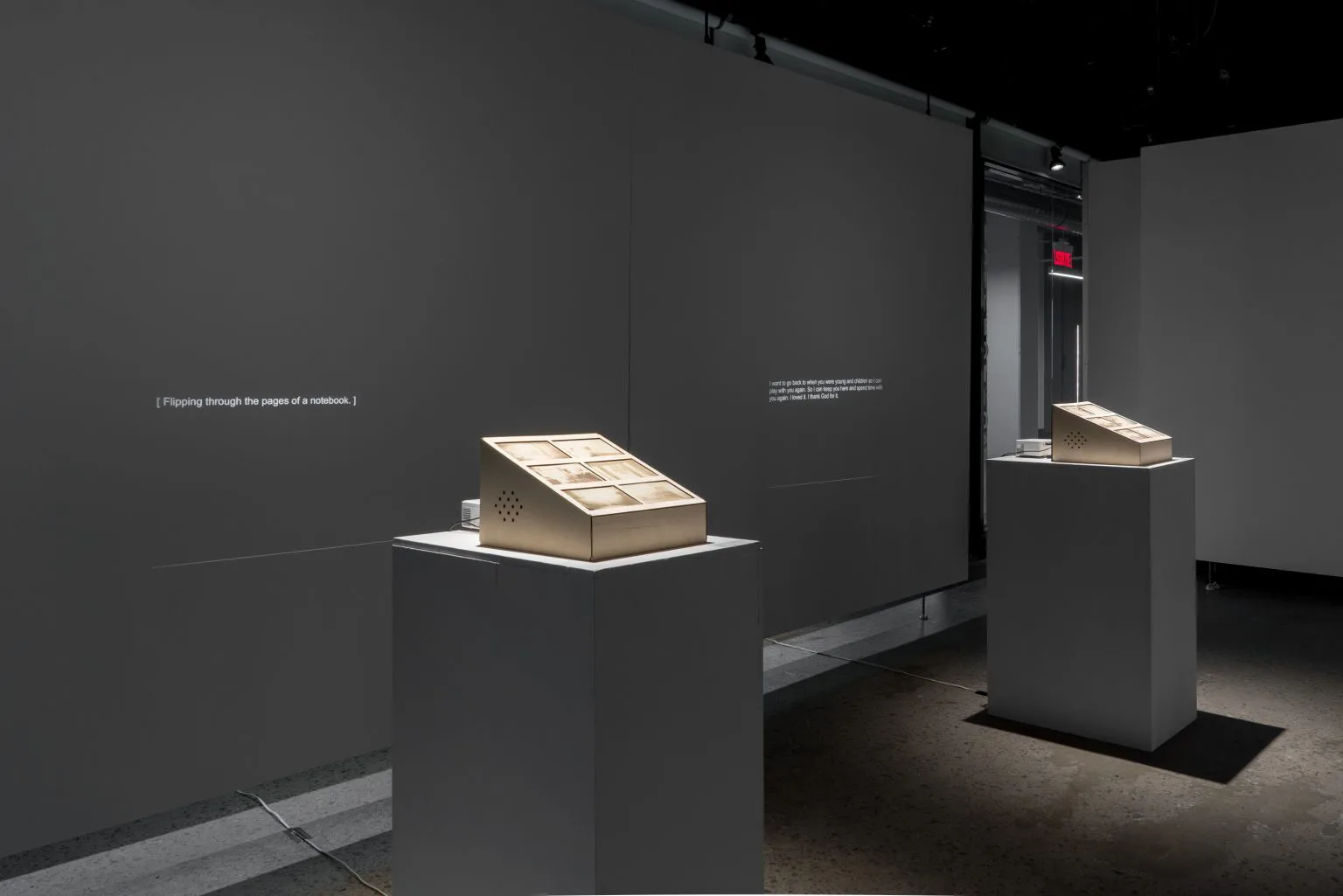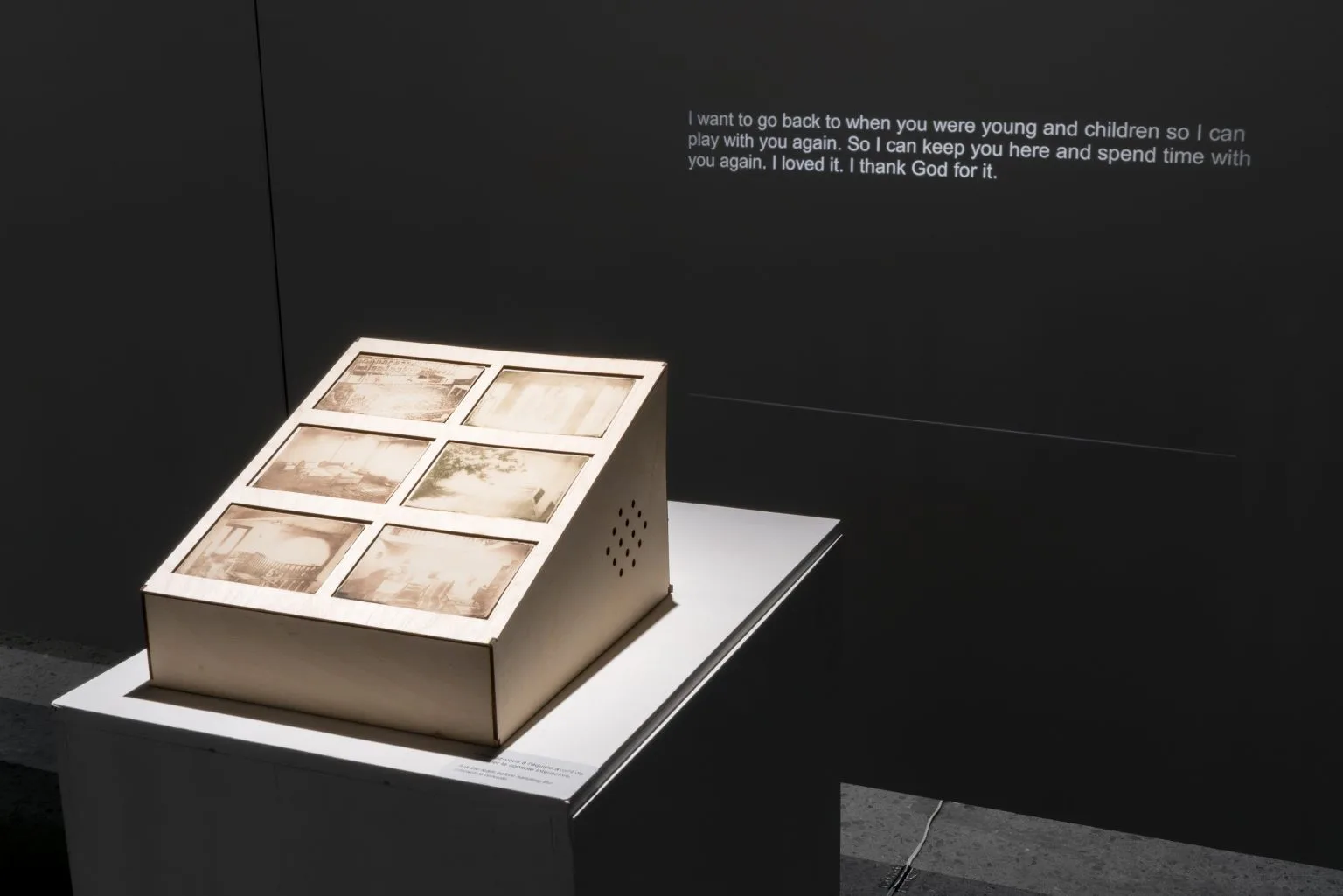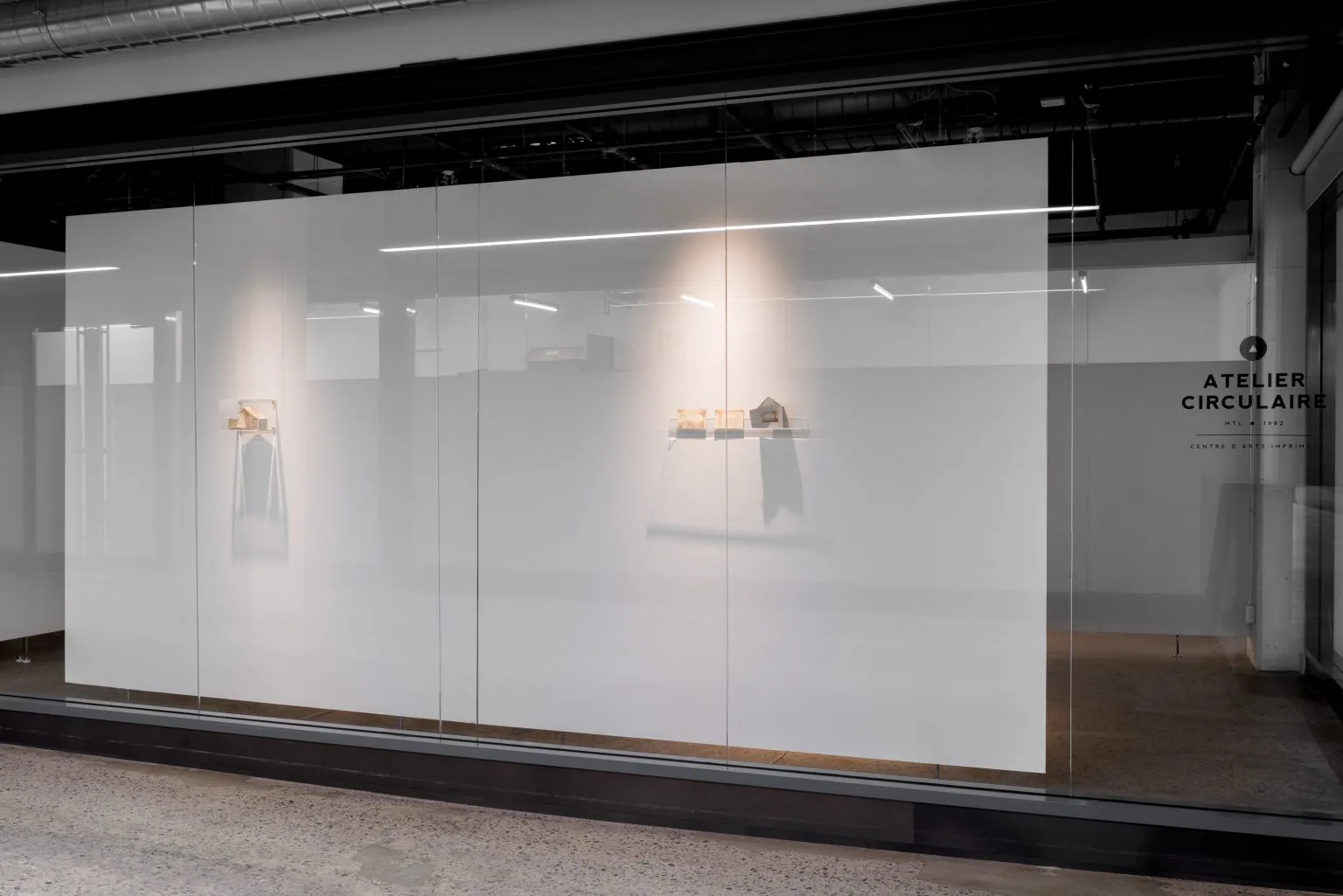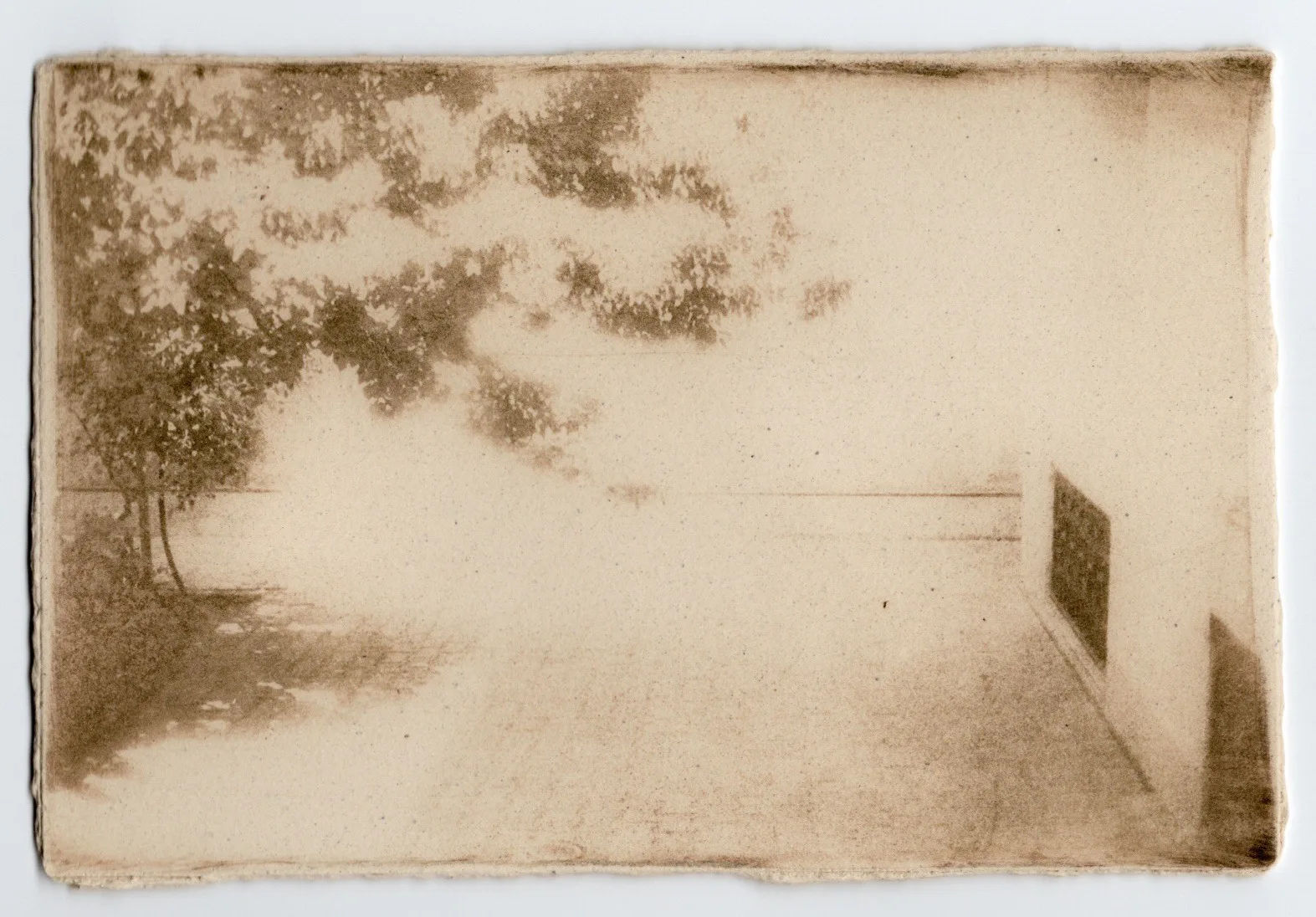
Saba Heravi’s Lingering Traces corpus is part of a movement of personal archive and autobiographical exploration of identity. It is anchored in the photographic documentation of the family home in Iran and the recording of testimonies by the artist’s grandmother, relating different moments in her life.
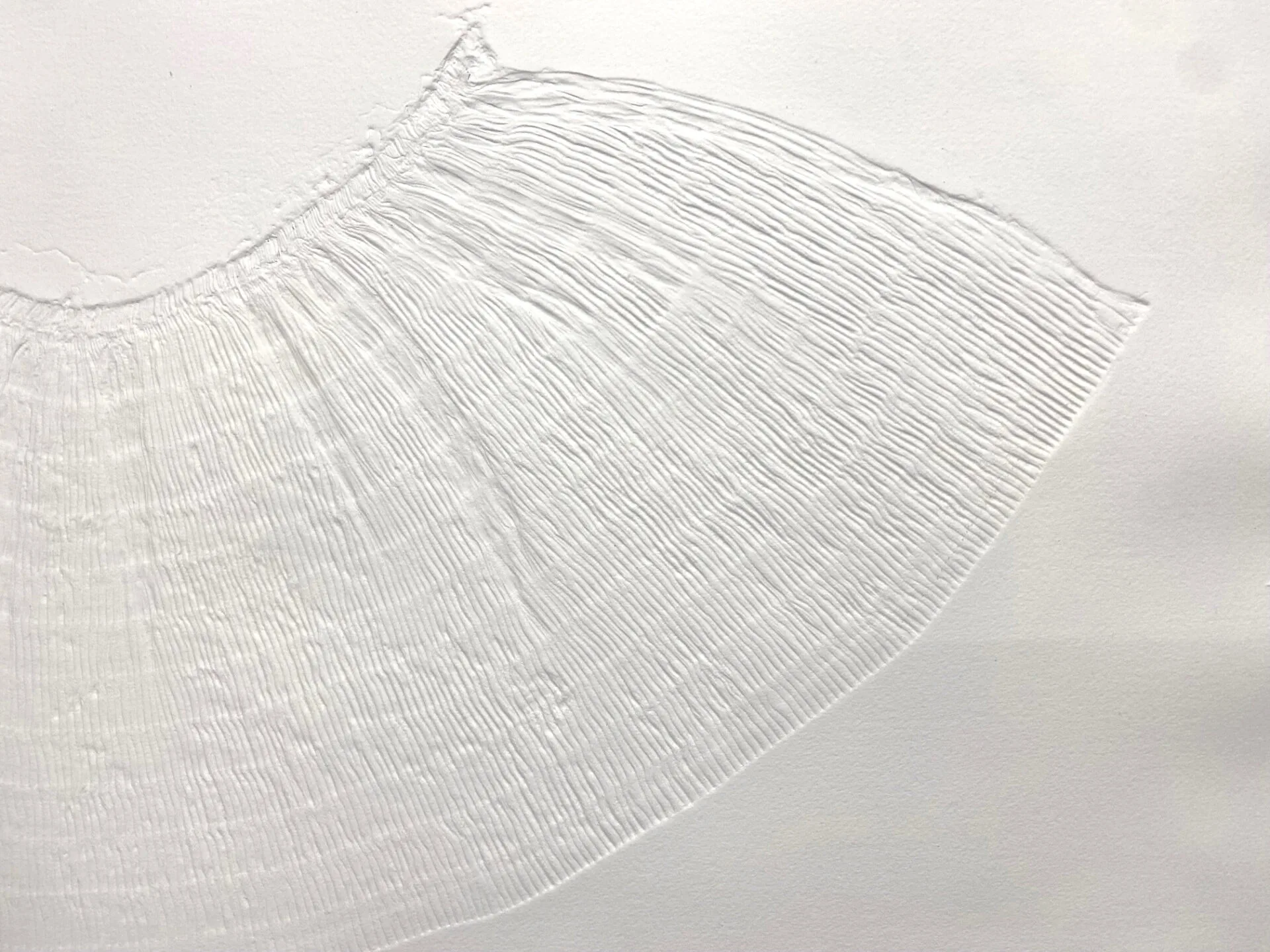
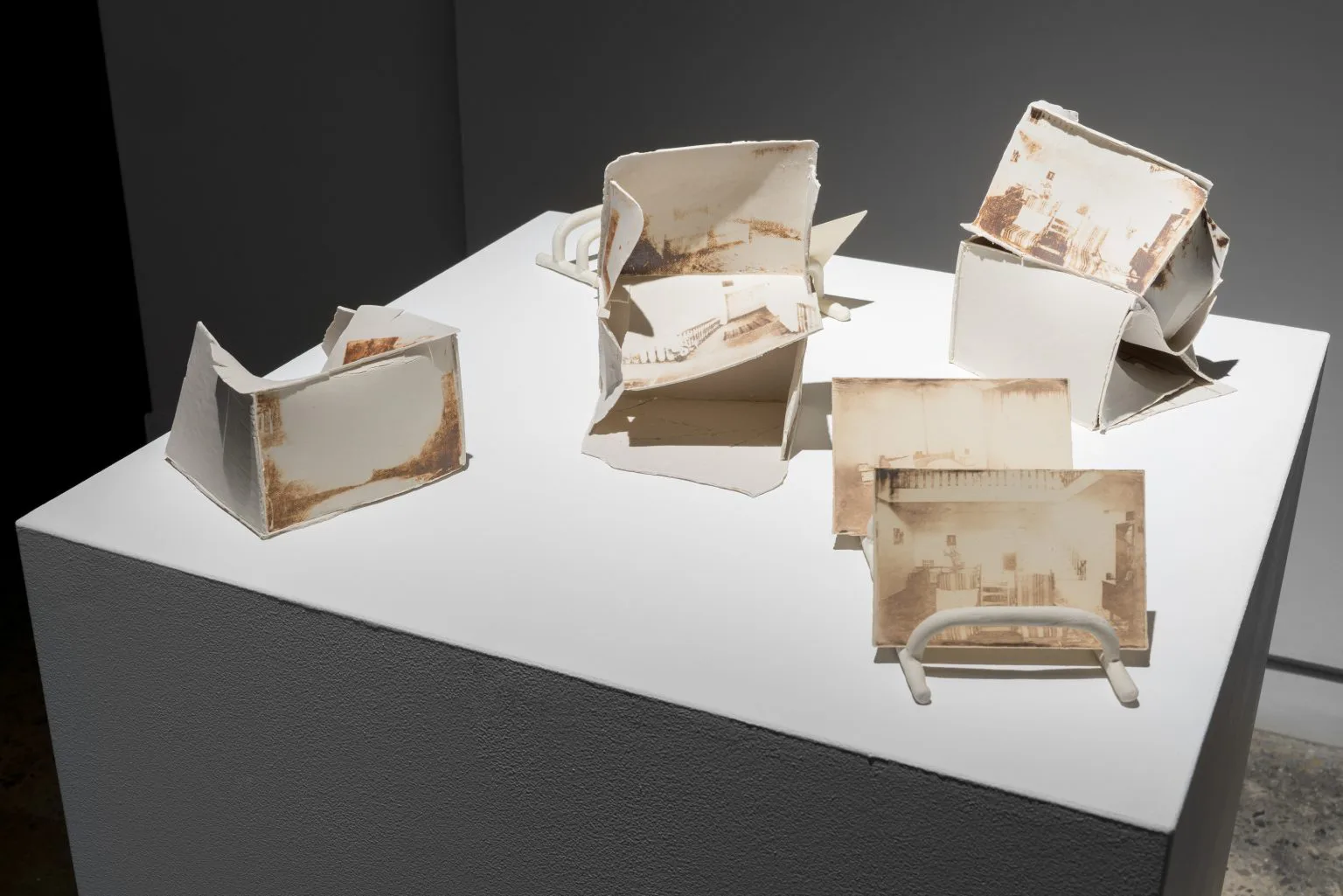
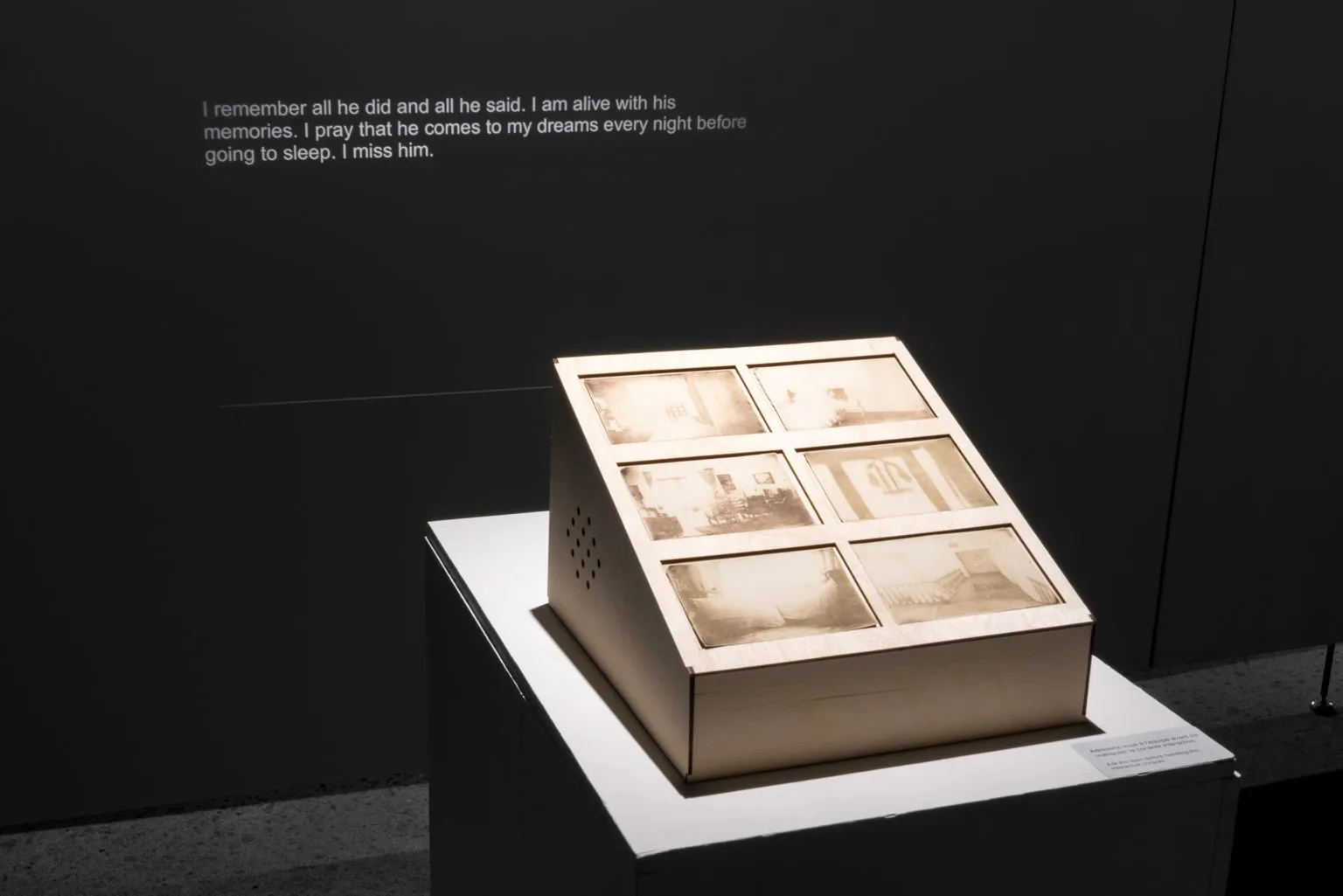
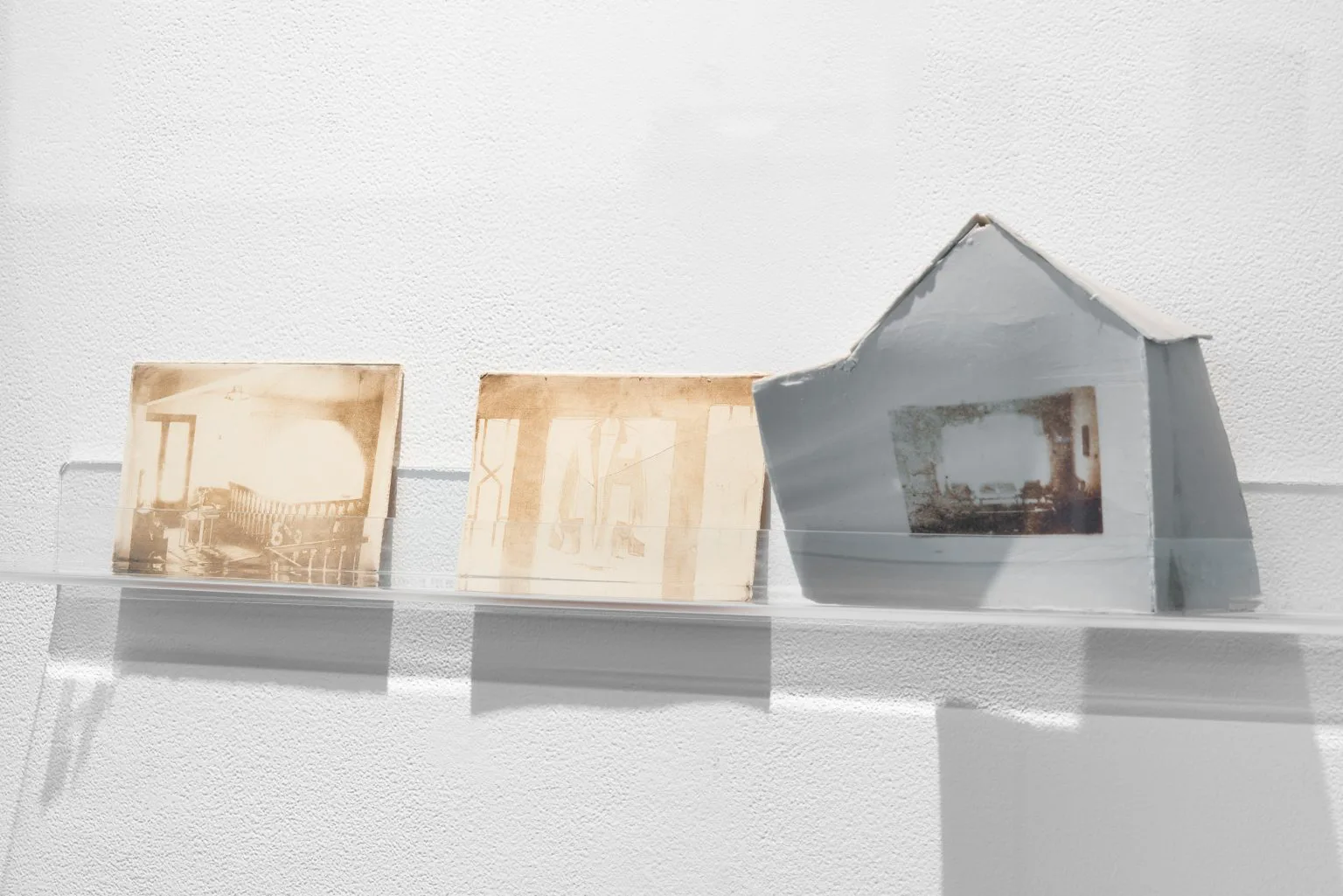
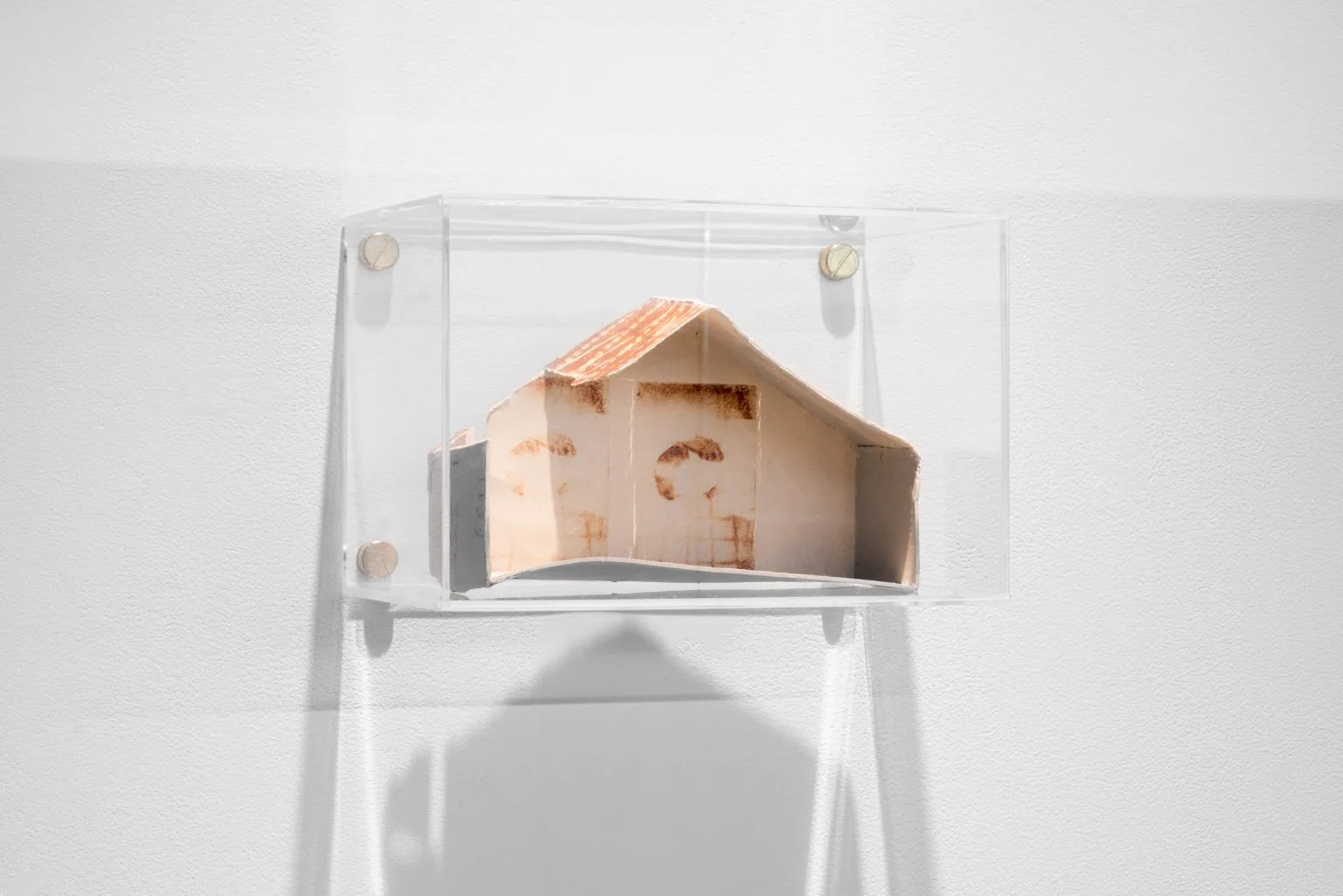
Heravi takes advantage of the ability of the printmaking arts to transform the photographic image, giving it both materiality and mystery. Her use of photopolymer etching on cellulose clay* or Japanese paper enables her to combine the evanescent character of the past with the fragility of these supports, while developing an aesthetic that resembles old photographs. The resulting artworks thus possess an aura of nostalgia or dreaminess; they seem to cast doubt on the veracity of memory, and take a sensitive and critical look at the distortions that physical distance and the passage of time induce in our own memories.
The fragmentation of multiple small images, the addition of which creates narratives in which each person injects his or her own subjectivity, is also a strategy used to convey the sense of erasure and deconstruction of temporal linearity. We find it again in the device by which the public can access the testimonies of Saba Heravi’s grandmother, by gently pressing on the cellulose clay tiles that each activate a part of a narrative whose order is always changing. Piece by piece, we try to reconstruct the path of a life that is foreign to us, but which nonetheless evokes familiar feelings of attachment and filiation. This is true despite the linguistic distance created by the use of Farsi in the recordings, a language undoubtedly unknown to most of us, but which certainly carries an emotional charge for the artist.
By reconciling a formal investigation of the printed image and interactive devices with a quest for meaning that goes beyond art, Lingering Traces explores identity and self-construction linked to family, intergenerational memory and roots in a context of immigration, while drawing inspiration from the memetic processes inherent in all human experience.
Text by Marie-Pier Bocquet
*Cellulosic clay, also known as paper clay, is a clay reinforced with paper fibers. Among other things, the fibers enable the clay to withstand passage through an etching press.
Saba Heravi is an Iranian-Canadian artist based in Tiohtiá:ke/Montreal. She was born in Iran and moved to Canada in 2012. After getting her BA in Architecture in Iran, she completed her M.Eng in Building Engineering at Concordia University. In 2015, Saba decided to study BFA in Studio Arts at Concordia University.
Saba graduated with a Bachelor of Fine Arts from Concordia University in 2019. Her art practice concentrates on drawing, ceramics, and printmaking. Saba’s works explore the idea of home, memory, and identity, which are an investigation of self. She has participated in research residencies in Quebec, such as Atelier Circulaire and Maison des métiers d’art de Québec. Her work has been exhibited in several exhibitions in Montreal. Most notably at Artch (2019), Centre Culturel Georges-Vanier (2019), McClure Gallery (2021), Maison de la Culture Notre-Dame-de-Grâce (2022), and Arprim (2023). Her most recent work will be shown at Atelier Circulaire (2024).
Her practice is a contemplation of home, memory, and identity. Memories of things past change through time and geography. As time passes by, her recollections are altered. Sometimes she chooses to forget parts consciously, and sometimes it happens without her knowledge. All these transformations in her memories define history and what makes the identity. She uses these transformations as gateways to re-examine her recollections and find different ways to depict them. Through various mediums such as drawing, ceramics, and printmaking, she tries to rebuild herself and figure out her identity through memories and past encounters. The fragility of clay captures her imagination, for it reflects the fragility of memory. Like memories, clay is both vulnerable and enduring, bearing the memory of what it has been through. Each fragment in the clay carries a narrative, much like the fragments of our memories that shape us. In her work, printmaking serves as a powerful tool for archiving the images and emotions she seeks to convey. Each print becomes a unique snapshot of a moment in time. Both printmaking and ceramics hold the power to archive and preserve, as they capture fragments of history and memory through their materiality. Through her work, she aims to create a dialogue around the interconnectedness of home, memory, and identity. By utilizing materials that carry their own histories and memories, she hopes to convey the idea that our individual experiences and identities are layered and complex, and can be both fragile and enduring.
Presentation and discussion
May 22, at 5:30p.m.