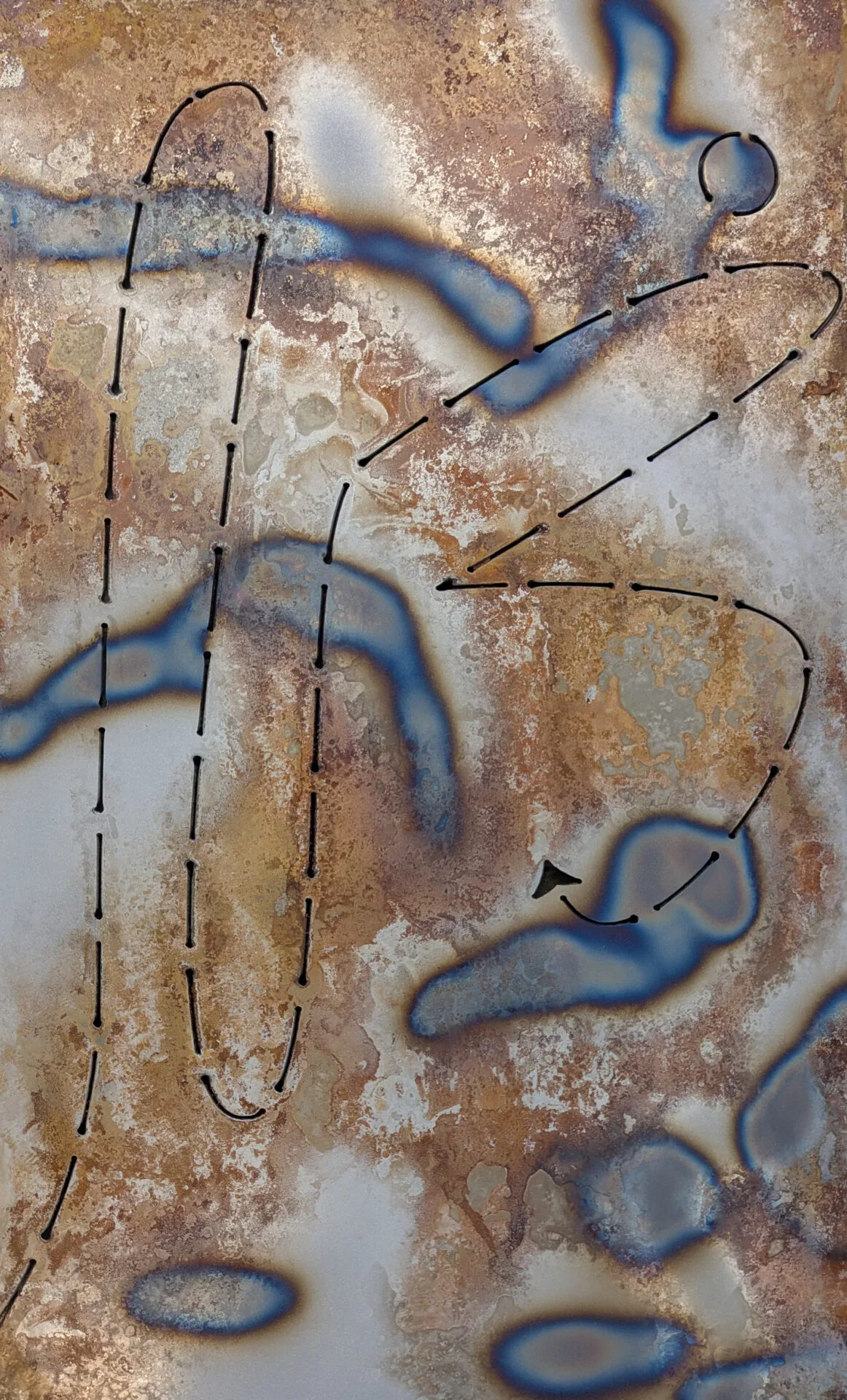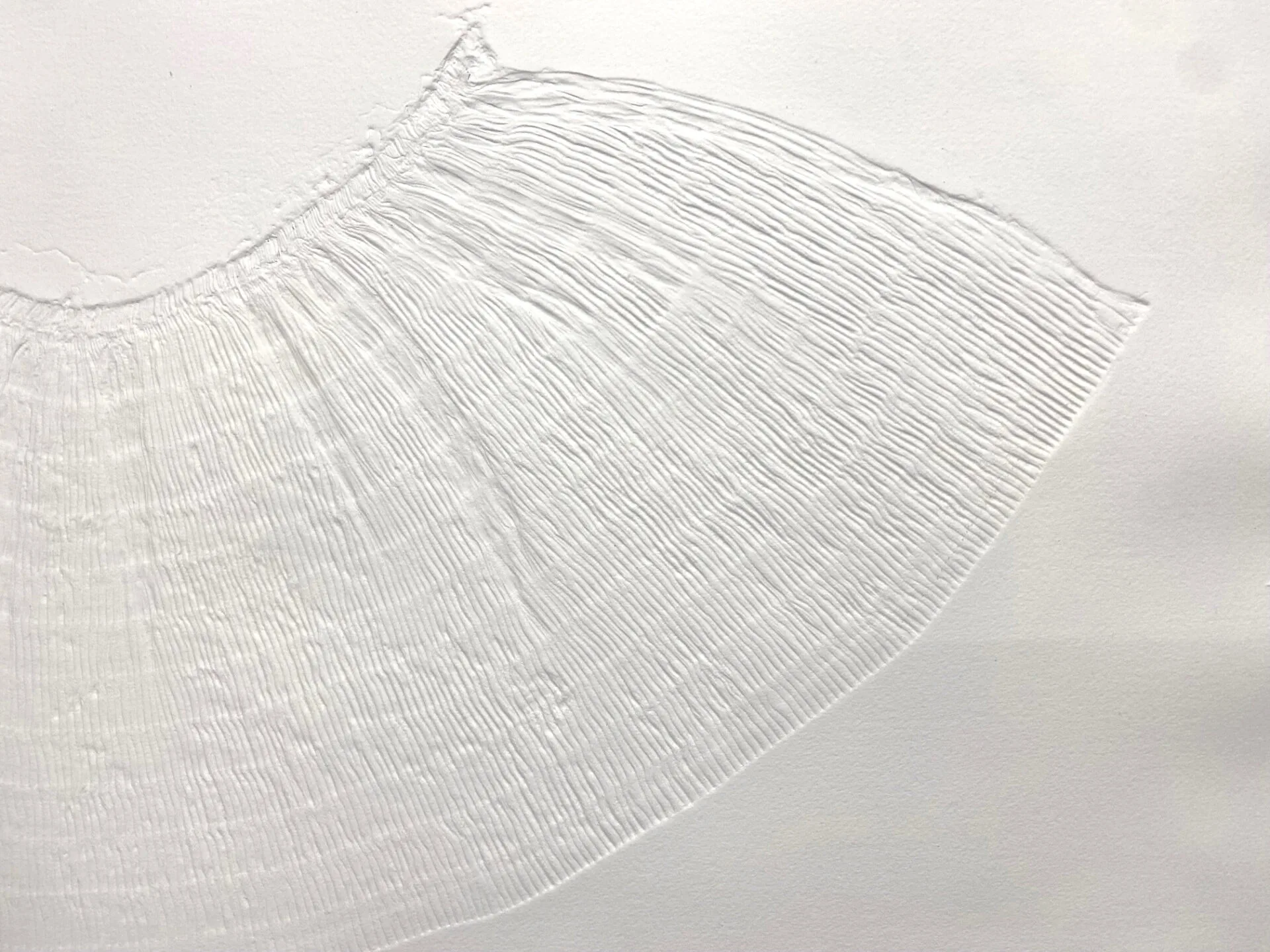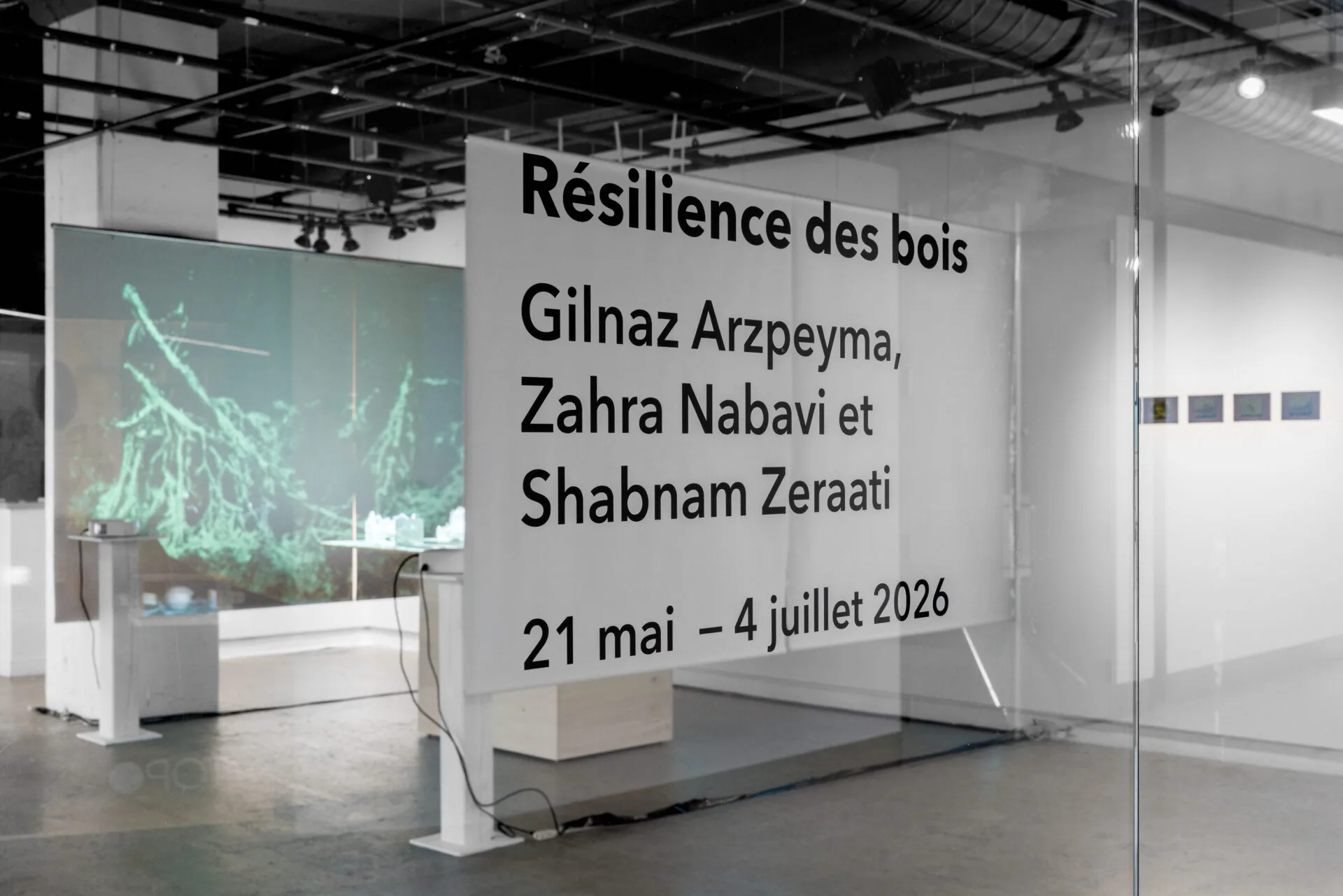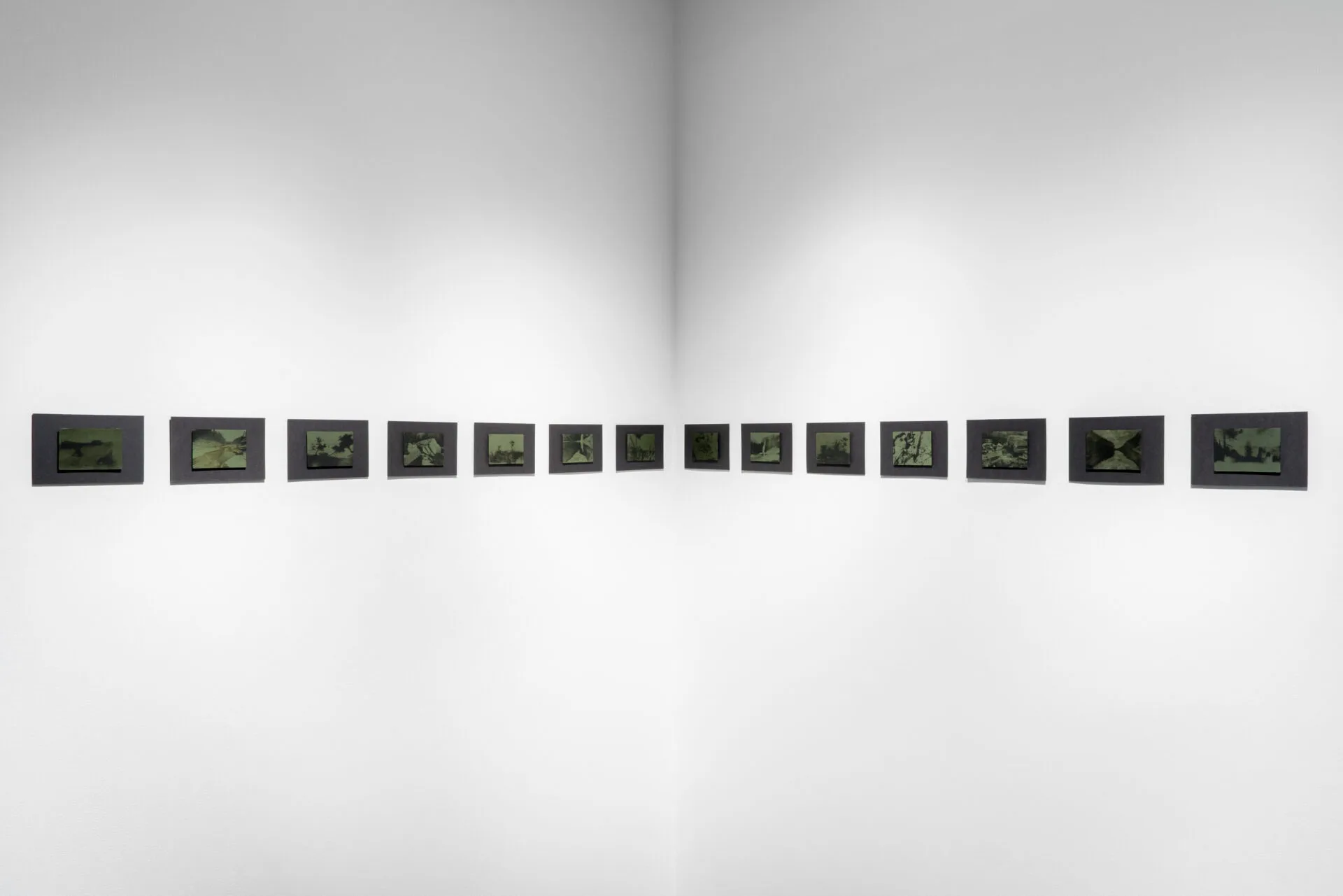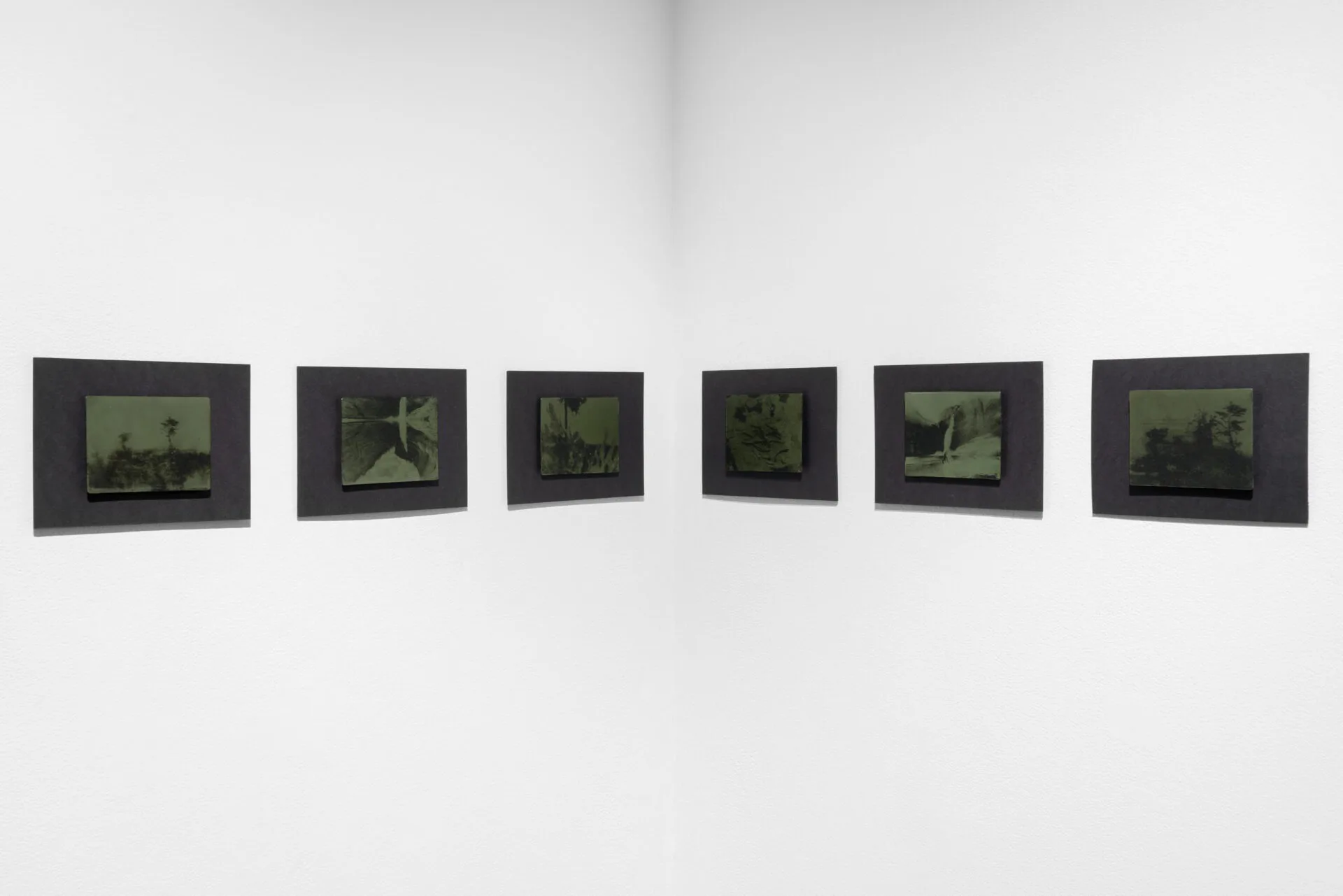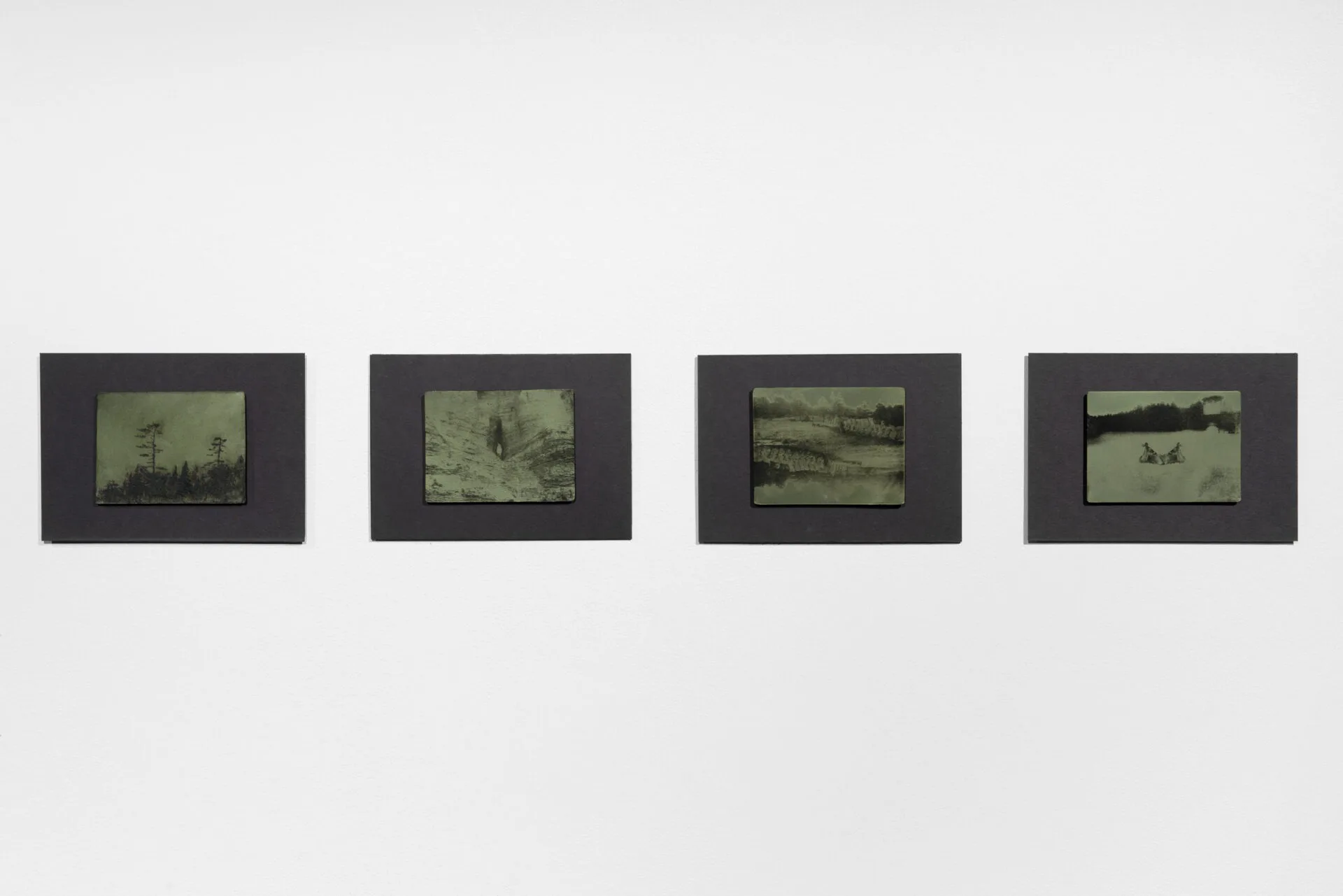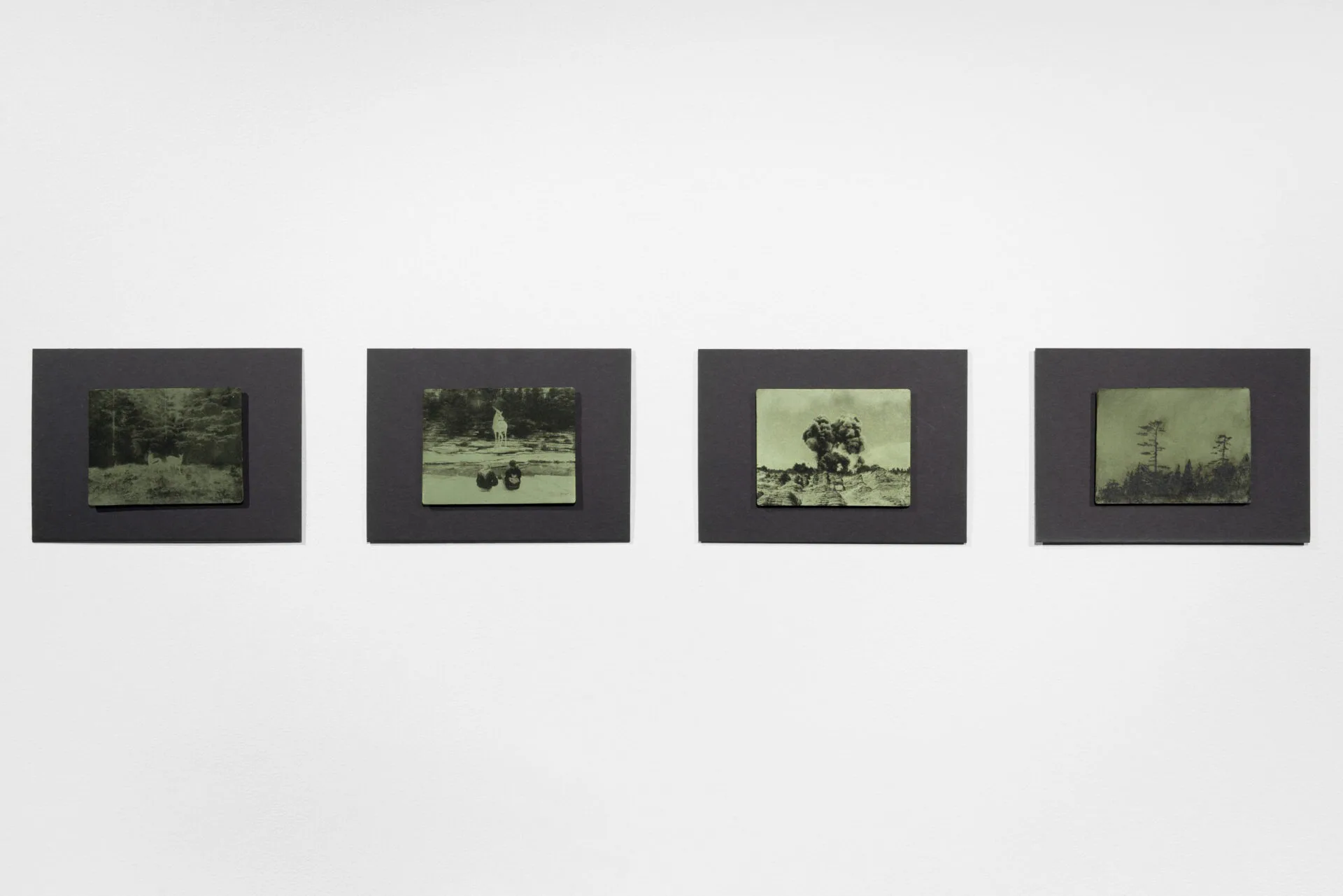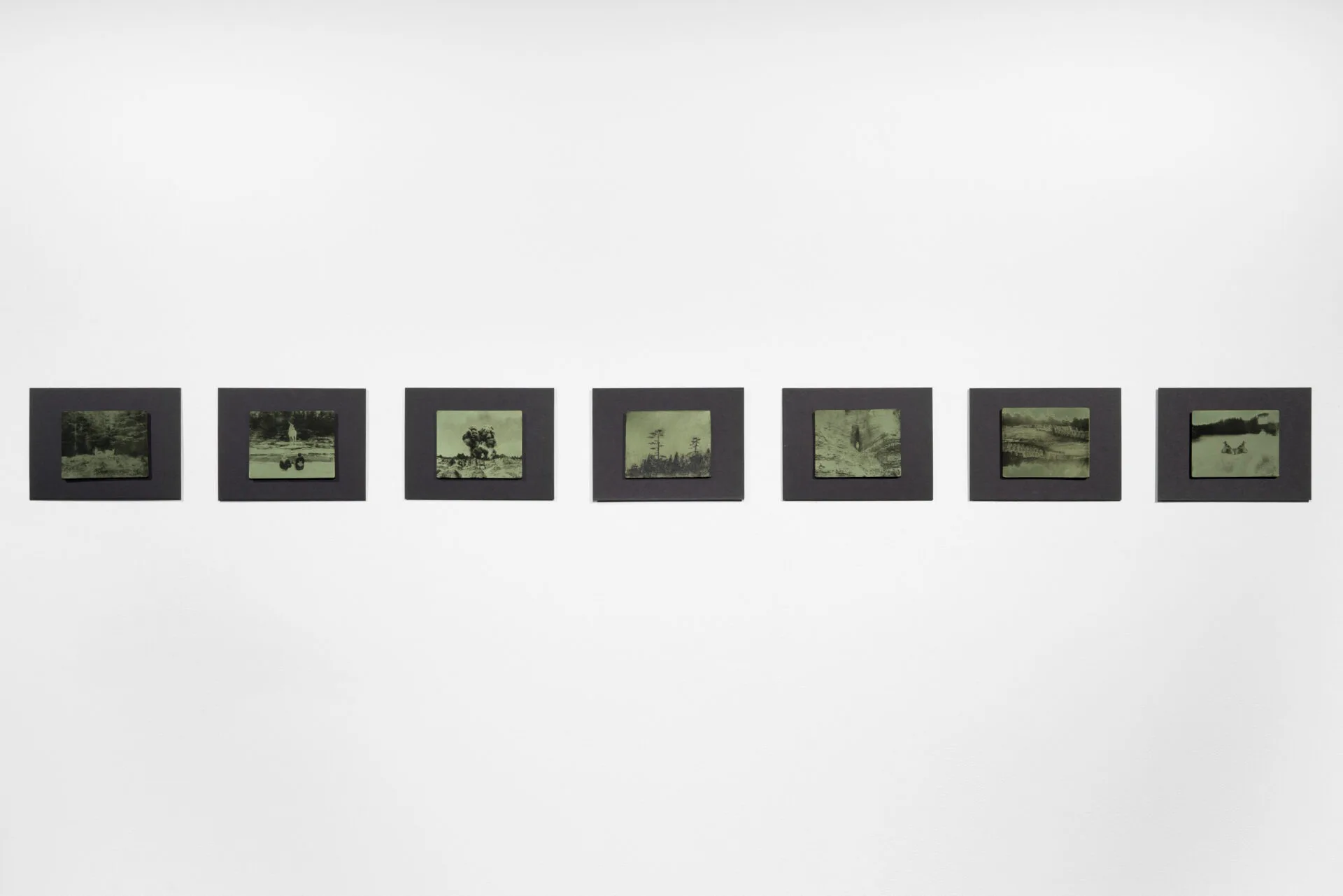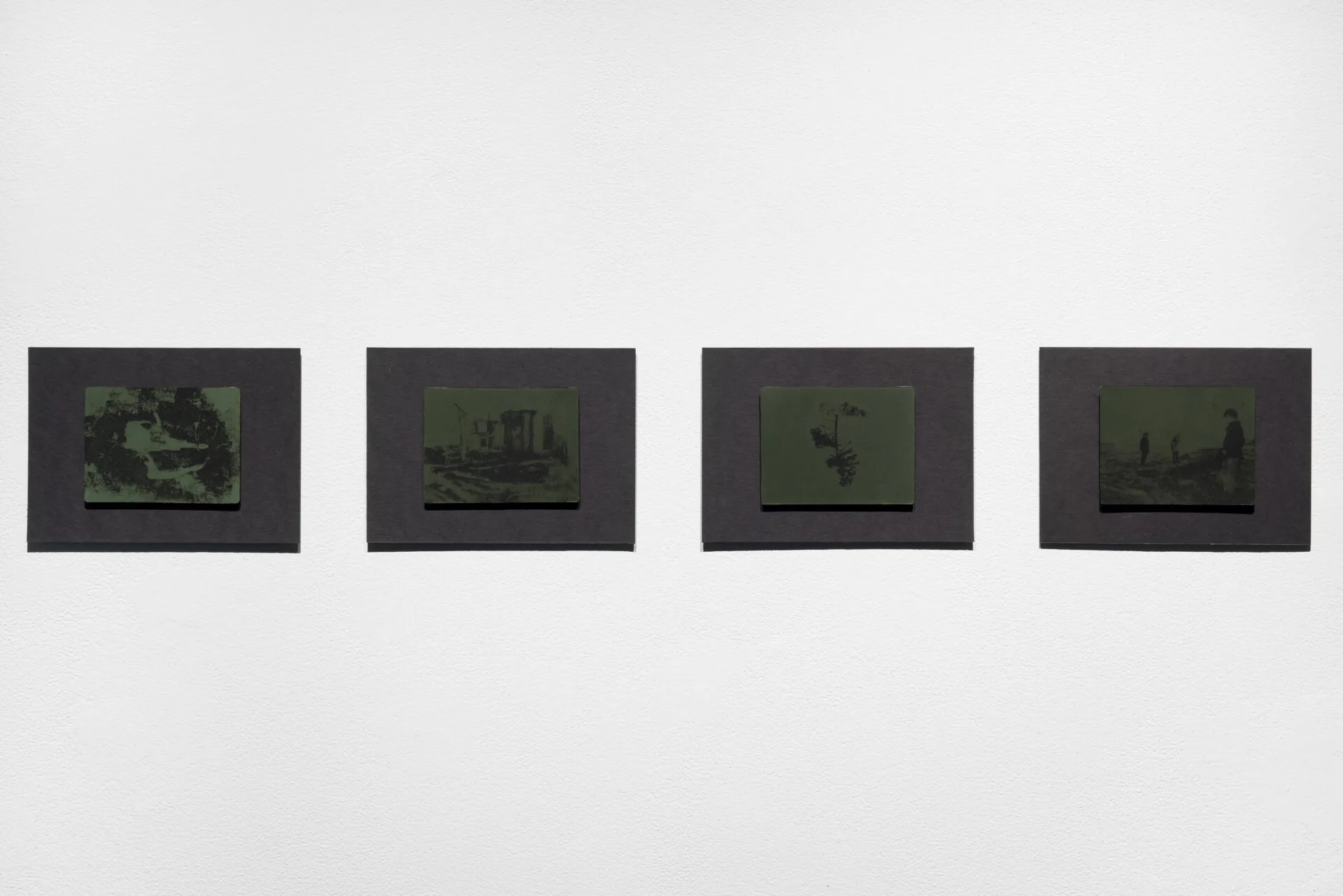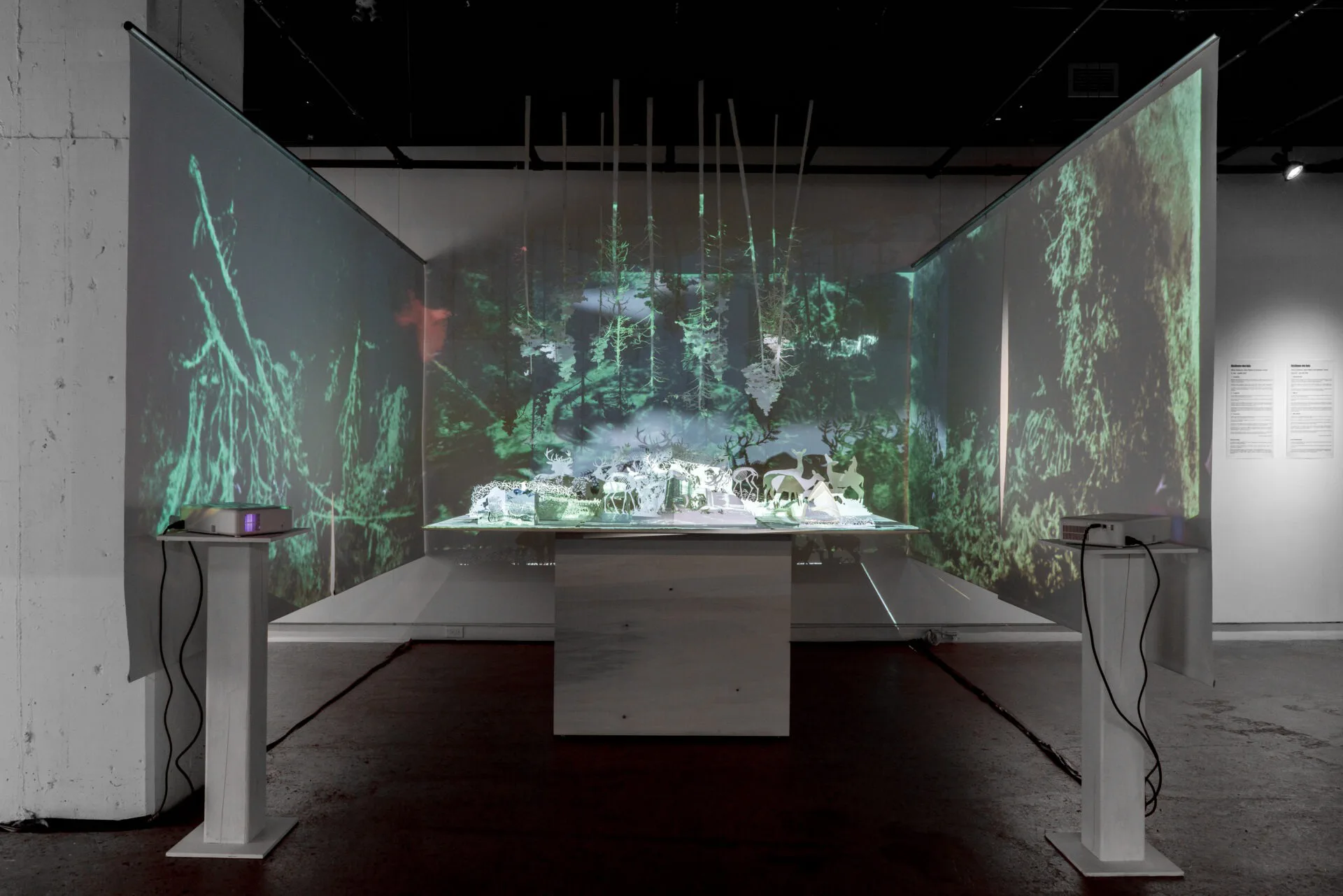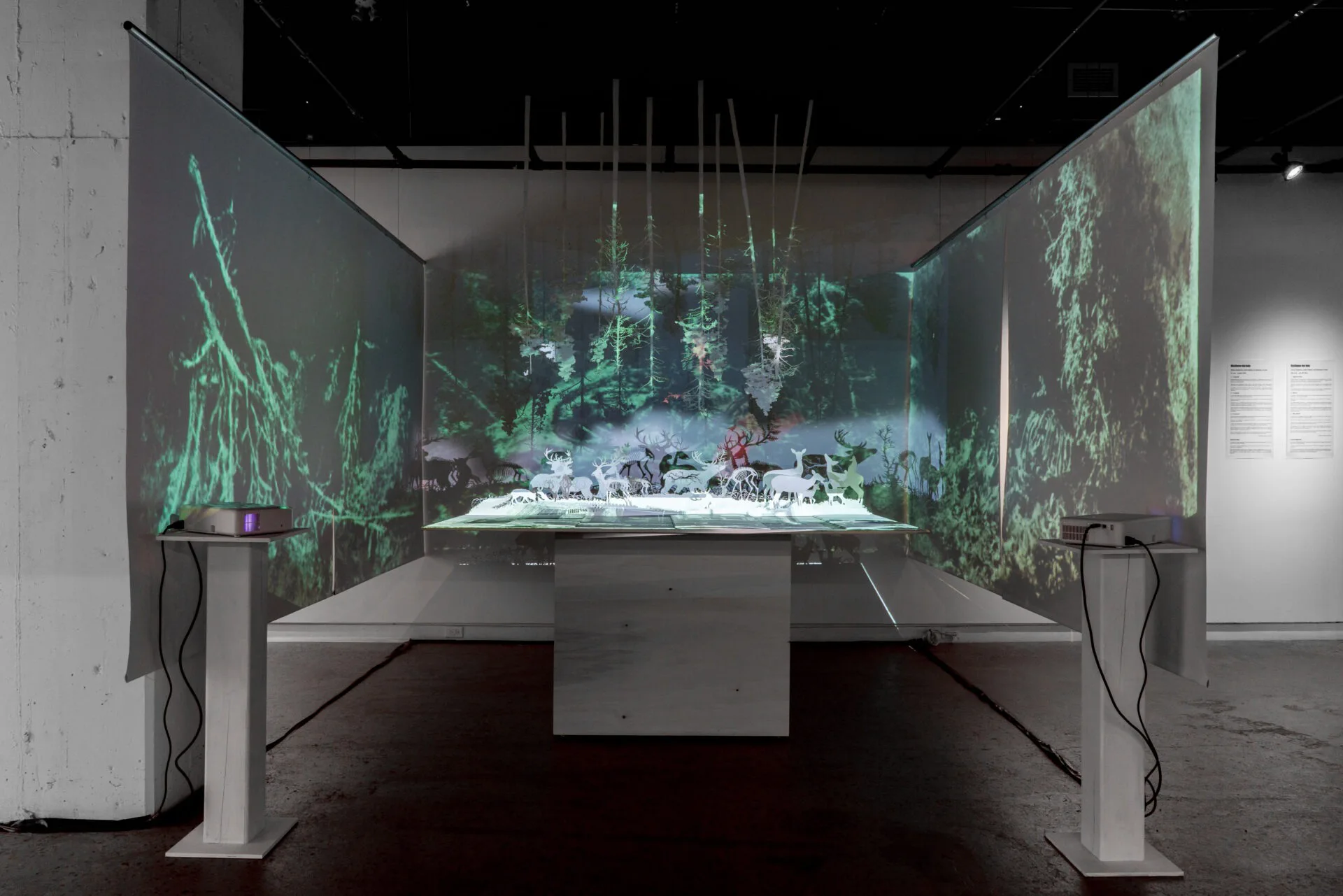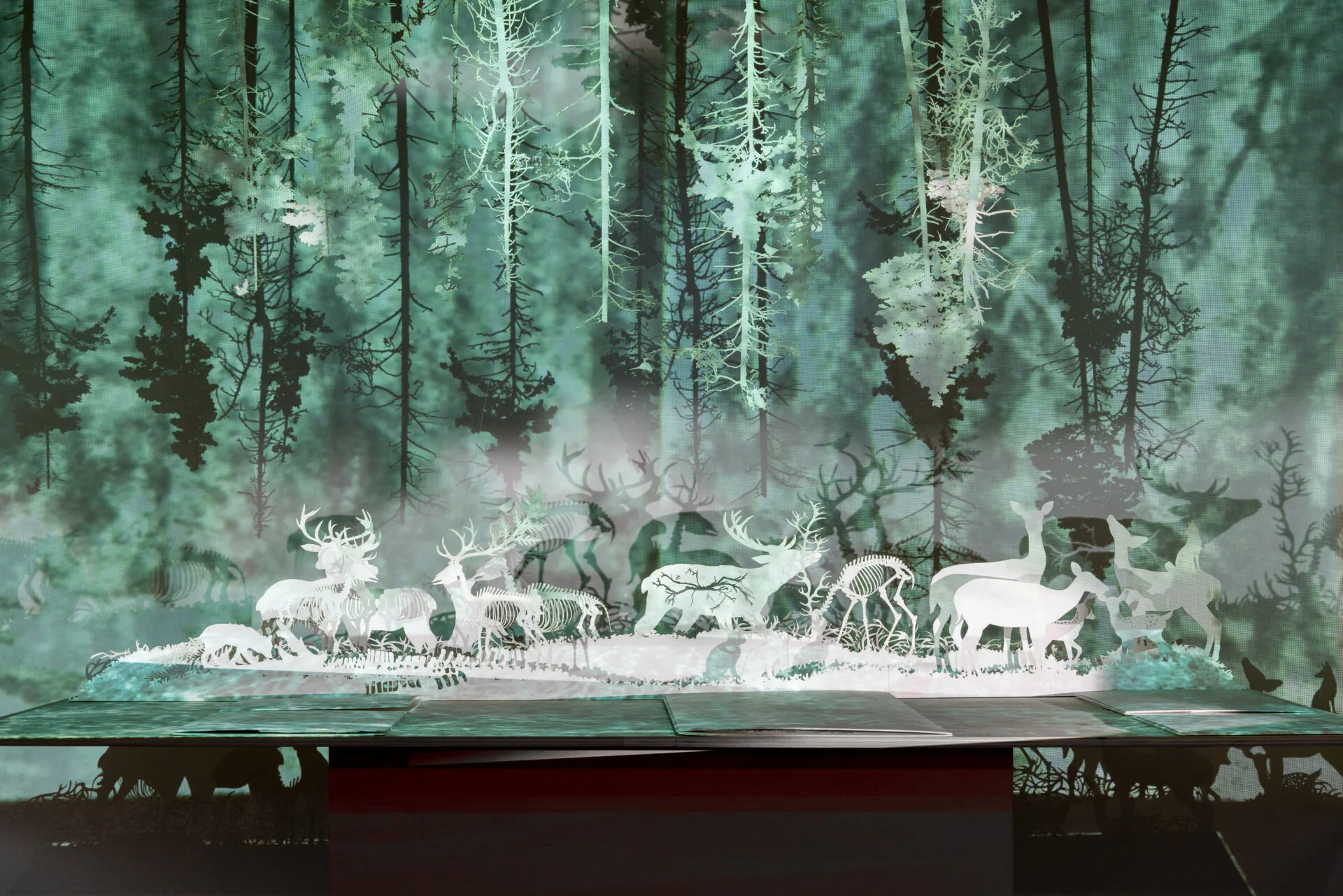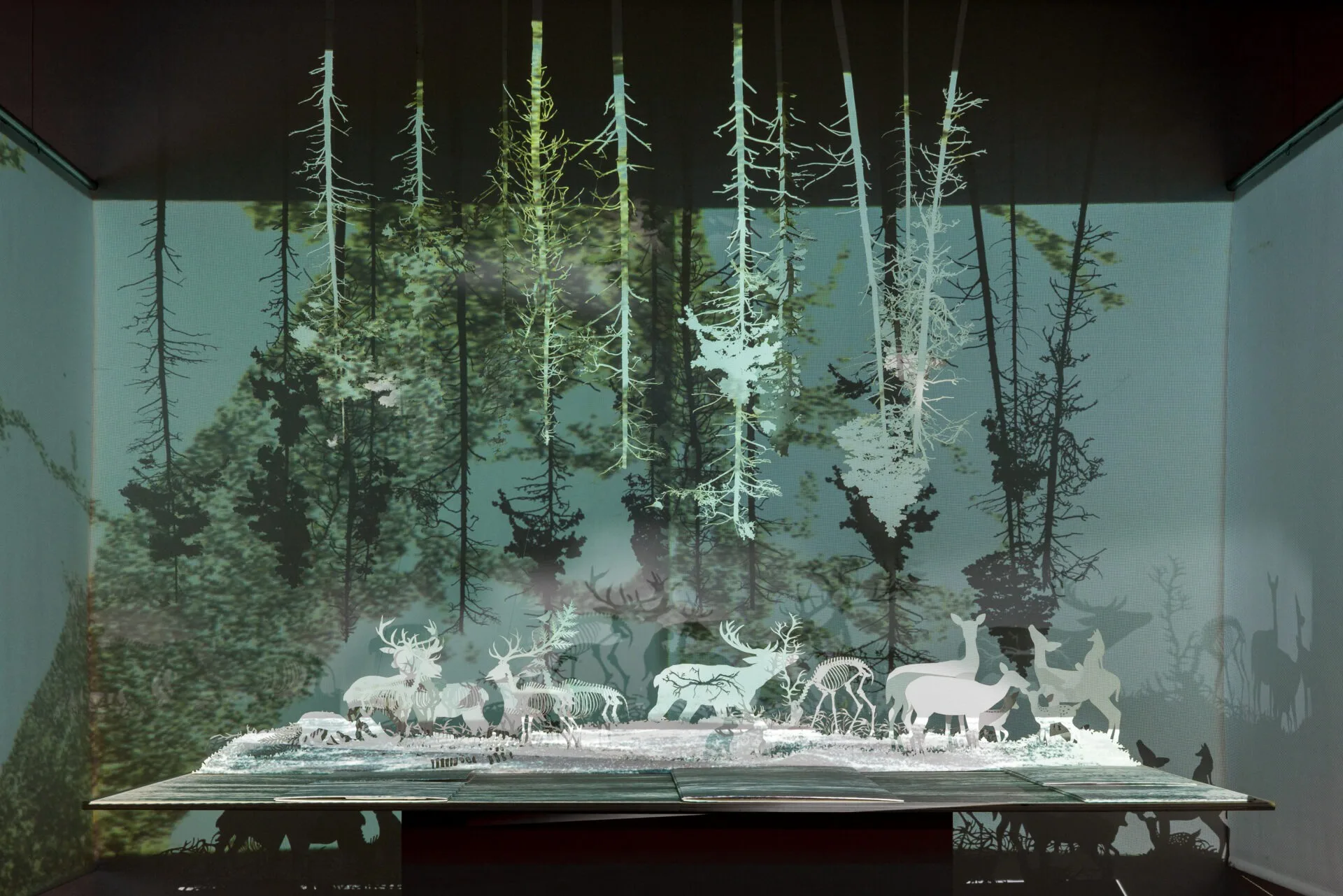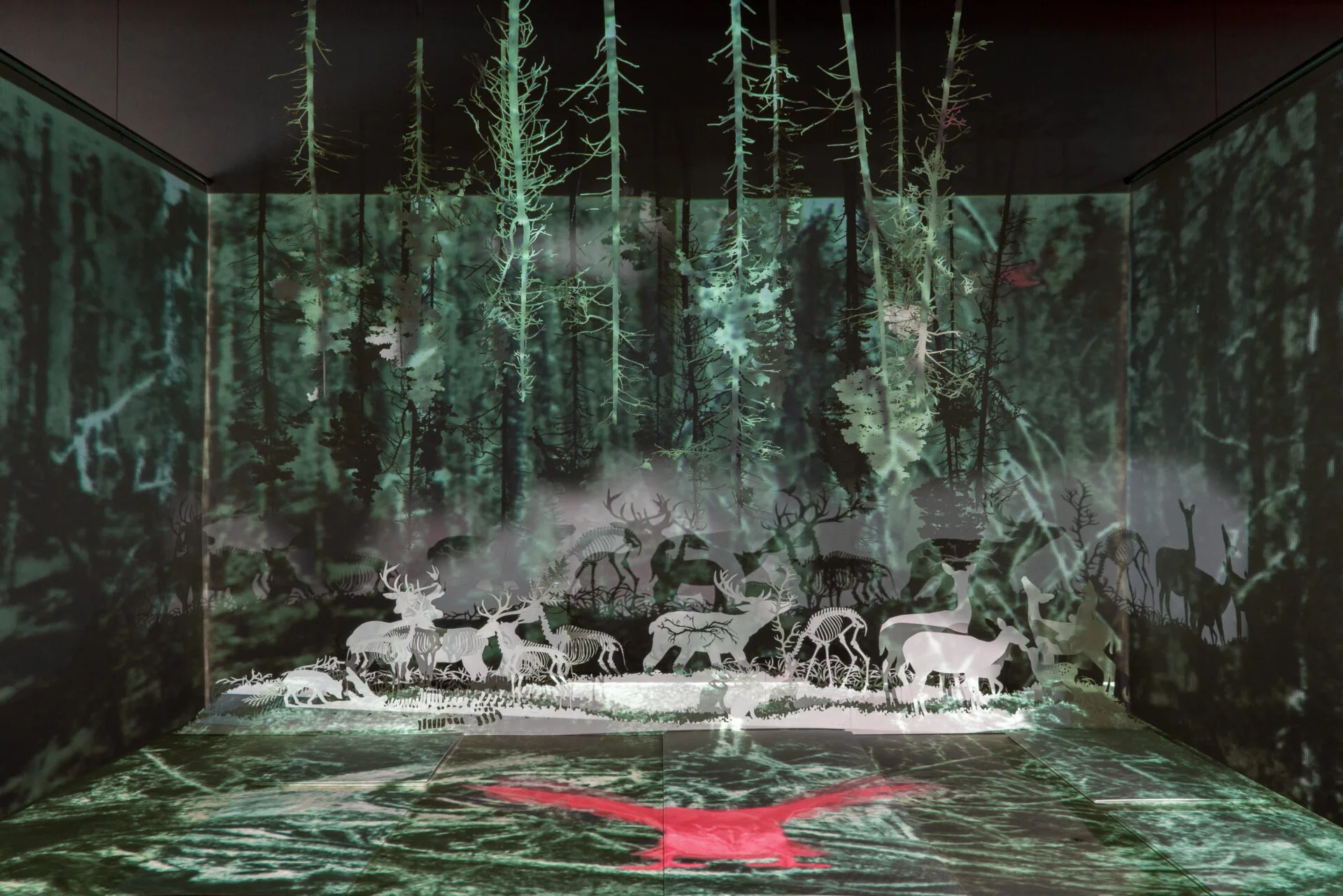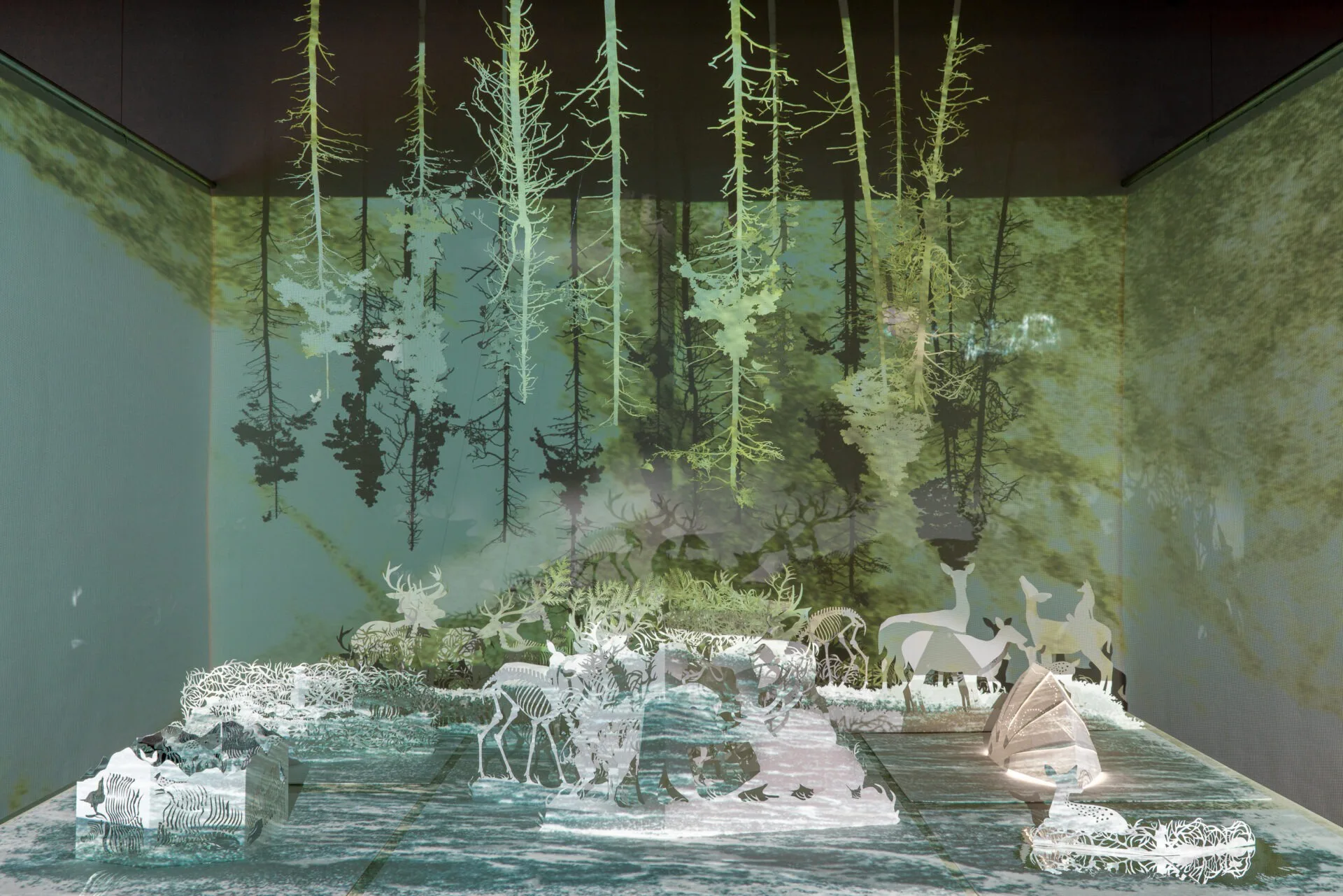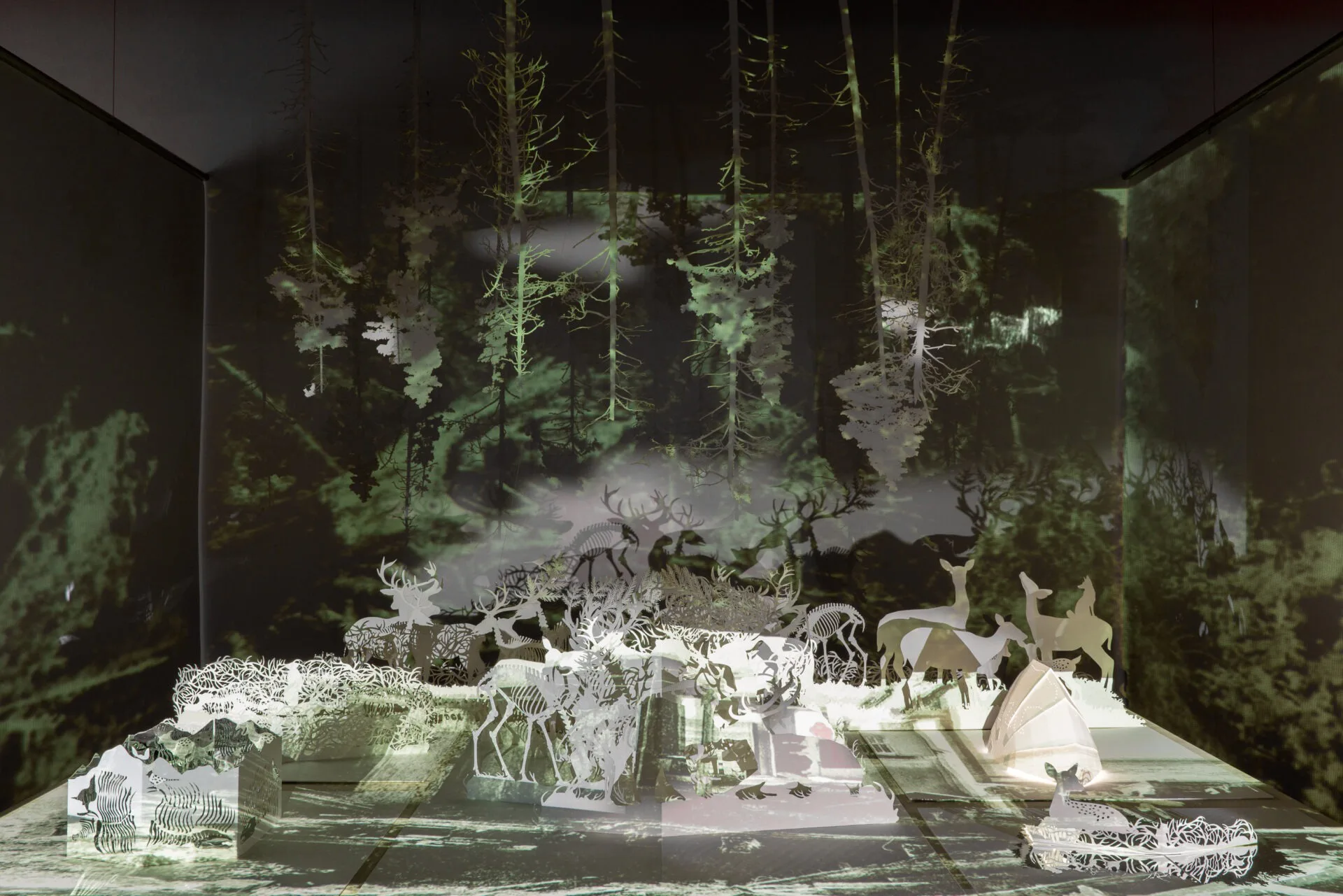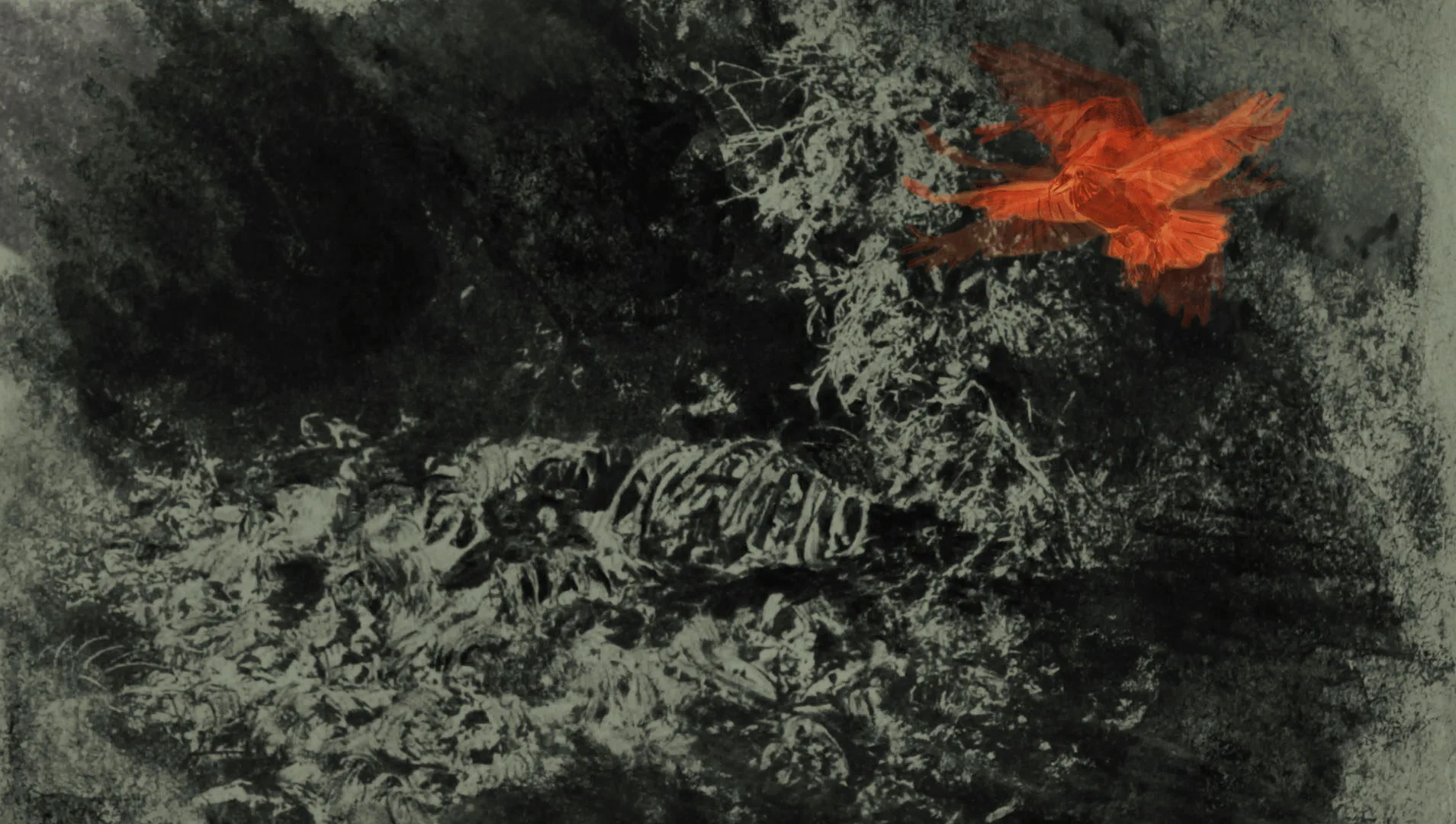
Résilience des bois emerges from a reflection on the history of the introduction, in the 19th century, of 200 white-tailed deer to Anticosti Island by Henri Menier, a wealthy French industrialist who wished to create a recreational hunting estate there.
Today, their population has reached nearly 200,000 individuals. This overpopulation has profoundly disrupted the boreal forests and led to the disappearance of the island’s black bears.
The privilege and power exercised by human beings over living systems — whether humans, animals, or ecosystems — lie at the heart of our research and this exhibition.
In August 2025, we traveled to Anticosti Island, a trip that had been postponed by one month due to the war between Israel and Iran.
During that period, we endured twelve days of anguish, without news from our families or loved ones.
Later, while creating this project, our homeland once again became exposed to the ongoing violence of the United States and Israel. The month preceding this new escalation had already been marked by sorrow and suffering in Iran.
This experience profoundly shaped our state of mind and gave both our journey and the creation of this project an intimate and deeply unsettling resonance, connecting our artistic practice to current events, to the tensions between power and vulnerability, and to our personal trajectories.
On the island, we were deeply struck by the fragile state of the boreal forest and by the visible effects of the overpopulation of white-tailed deer.
Deer bones and vegetation coexisted; life and death seemed to transform into one another.
With every step, this layering of living matter and remnants overwhelmed us. Faced with these traces of time, we felt tiny before the power of the territory.
This experience led us to reflect on the role of humans in the universe: wars, divisions, genocides, violence, and suffering inflicted upon living beings by authorities throughout history… What purpose does any of it serve?
Alas, the harmful effects of this limitless human thirst for power are not confined to the past; they continue to scar nature today and will shape the future.
— Shabnam Zeraati, April 2026
Founded in 2023 by Shabnam Zeraati, the collective brings together Zahra Nabavi and Gilnaz Arzpeyma in a collaboration dedicated to an immersive and interactive installation. All three are Iranian immigrant artists, a shared experience that has profoundly shaped their trajectories. Each has had to adapt to a new environment while learning to allow it to gradually inhabit and transform them.This shared experience informs their artistic practice, which focuses on examining the impact of historical legacies and power relations on living beings in all their dimensions, as well as on the ecosystems connected to them, regardless of their scale or significance. Another fundamental aspect that runs through their reflections is their conception of colonialism. For them, it is not simply a question of skin colour, but rather a system of power relations and domination. According to them, the term “colonialist” refers to an attitude or an action rather than to a particular ethnic or racial identity.
Gilnaz Arzpeyma is an Iranian-Canadian filmmaker and animation artist based in Montreal. She holds a BFA in Film Animation as well as a Master’s degree in Mechanical Engineering from Concordia University. Her interdisciplinary practice combines various techniques—from drawing to direct, frame-by-frame animation directly under the camera, including ink on glass, sand, water, and printmaking—to create experimental animated films, installations, and video projections. Her work explores the relationships between living bodies, technologies, and technological systems, with a particular focus on notions of adaptation and transformation. Through her work, she examines the persistent influence of colonialism and technology on the perception of time, memory, and aura. Her films have been presented at numerous international festivals, including the Annecy International Animation Film Festival, Animafest Zagreb, Glasgow Short Film Festival, Festival du Nouveau Cinéma, Tricky Women Tricky Realities, and at the Hammer Museum. Her short film ژن / Woman has been widely screened internationally and has received several distinctions, including the Grand Prize at the Accès Asie Festival, as well as Best Experimental Film awards from Vidéographe and the Filministes Festival. Alongside her artistic practice, she has collaborated on various film projects as an actress, editor, and animator.
Zahra Nabavi is an Iranian visual artist based in Canada. She holds a BA in sculpture (2005) and an MA in illustration (2008) from the University of Tehran, as well as a diploma from ENSAD, Strasbourg (2012). Her work has been exhibited in Iran and France. Her practice spans installation, artists’ books, and performance, engaging with socio-political questions. She explores relationships between language and image, at times touching on loss and the erosion of meaning. Her work may incorporate materials such as paper, mirrors, and text-based elements.
After more than a decade in the United States working as a graphic designer, she moved to Canada in 2025, marking a return to her visual art practice.
Originally from Iran, Shabnam Zeraati has been living and working in Sainte-Adèle, Quebec, since 2020. She moved to Canada in 2011 and holds degrees in graphic design from Azad University in Tehran (2002) and from ENSAD in Strasbourg (2008). Her work has been shown in numerous international exhibitions across Europe, Asia, Iran, and Canada. Since 2013, her practice has explored drawing and printmaking through screen printing, engraving, casting, and installation, creating environments where drawing, sculpture, and installation intersect. She presents solo exhibitions and major projects supported by internationally recognized contemporary cultural institutions.
The creation of this exhibition was made possible through the financial support of the Conseil des arts et des lettres du Québec. The artists would also like to thank the Canada Council for the Arts for its support of their research and exploration. They also wish to thank Nick Lavigne for the sound design, Manuel Bolduc and the SAT for their support with video mapping, SEPAQ for its generosity and understanding, as well as Espaces F, François Wells, Daniel Dionand Natacha and Chamko for their technical support.